Monday, May 6, 2013

The students speak up

2

Over the last several days, I've been going over final folders turned in by my various creative writing classes at UCA.  The contents of the folders vary according to the class.  My novel writing students had to turn in reflective statements about the semester and about their peer review experiences.  It's been gratifying to see exactly how much the students got out of the semester, but also eye-opening to see what worked and what didn't (which varied from student to student of course); and thrilling to see some students offer really interesting ideas for future renditions of the class.  Not all the ideas are tenable, but many are intriguing.  One student suggested that instead of having two novels that the whole class reads, have one shared novel and then one novel that each peer review group picks--a book that models the kind of novels that group is working on.  That's a fantastic idea--and would have worked well with the peer group that student was in--but not every group included students who were writing the same kinds of novels.  A more workable version of this idea would be to have each student select a model novel for himself/herself and anayze that one.  Many students wanted more frequent contact with their peer groups, which I can certainly understand and may very well do next time, although I also think it's important too to have time away from those groups.  Many students also wished they could have had more contact with the novels of the students not in their peer groups.  But without instituting full class workshops I'm not sure how to put that into practice.  One student suggested switching up the peer groups in the middle of the semester, but I think it's crucial that your review group have followed your novel from the start.  Having to play catch up with a new group's novels might, I fear, overwhelm the students with work.

Almost every student complained about No Plot? No Problem! by Chris Baty, our basic textbook.  Although it has some fine craft ideas embedded in it, it's essentially a motivational book.  While I think it's extremely entertaining, and it takes no time to read, some of the students didn't appreciate Baty's sense of humor; others they felt that what he was saying was too obvious.  One glaring issue with the book is that it's designed for people trying to complete NaNoWriMo, in which you draft a novel in a month; we were drafting a novel in a semester, so some of the urgency of his message didn't directly apply.  I guess I'll drop the book for next time, but I fear what will happen is that the students then will long for the kind of motivational speeches Baty can give, and in his rather unique style.   Most students really appeciated having so much writing time afforded in class each week; others felt that they didn't need it or want it.  (I have to say, though, that the differing opinions reflected how disciplined the students were or were not in making use of that time.)  One student thought we should read more novels; some thought two was plenty; some thought we should discuss the model novels differently (something I agree with and will have to change for next time); a couple thought we should not read any model novels at all.  Well, I can't accept that.  In fact, I would go so far as to say that if one gripes about having to read novels one should not be enrolled in a novel writing class.

Except for a single person, every student was seriously appreciative of the weekly word count deadlines and the fact that they were expected to finish a draft by the end of the semester.  Having taught this class another way--in which student started novels and workshopped chapters, but didn't even get halfway through--I can tell you I'm never doing it that way again.  Because 99% of them never worked a second more on their novels after the semester ended.  They never understood what it meant to follow a story all the way through.  That's a powerful experience; it's an educational experience.  One can learn some things from craft books; one can learn a great deal from reading other writers' novels.  But one learns the most about novel writing by actually writing a novel.  And then another one.  And then another one.  That's what my students have done, and I'm not denying them that experience the next time.  Here are some of their comments on what completing a full draft means:

What's important to accept is that I wrote over 55,000 words this semester. . .  Many of my friends are in shock and awe at what I've done.  Personally, I don't feel like I've actually done any work.  But I guess if you love what you're doing it doesn't really seem like labor.  Before this semester, I didn't truly define myself as a writer.  I was just a student doing writing assignments.  This class has made me realize that it's okay to be passionate about something, and it's okay to be confident in who you are.  I now say that I am a writer.  And I am damn good at what I do. --Colleen Hathaway, graduating senior

After printing out my novel, I'm honestly amazed.  I look at the huge stack of papers, and I can't believe that I wrote all of that--in a semester.  I keep showing all of my friends because I'm just so proud of myself.  Antoher thing that amazes me is how ready I am to write another novel.  During the process, I was quite honestly done with the whole novel writing idea.  I didn't want to do it again, and it seemed that my dreams of becoming an author were slowing being put on the backburner.  I can't explain it, but there's something so invigorating about actually finishing a draft.  Sure it needs work.  And sure, that work is going to take a while, but I'm just ready to feel that exhilaration again.-- Taylor Neal, graduating senior

I am grateful for many attributes of this class: that it was offered to the MFA students, that it was offered when it was, and this it was structured around a goal of completing a full draft of a novel.  I have started two other novels, but I have never gotten beyond 20 pages, so I thought of it as somehting I didn't know how to stick with.  This class changed how I think of myself and my abilities as a writer so much for the better, and for that I am so very grateful.--Stacey Margaret Jones, graduate student

Some changes are definitely in store for the next time I teach the course--assuming it's me that teaches it and not another professor--but the requirement to complete a draft is one thing I ain't changing!  Just like Taylor, I can't wait.


Monday, April 29, 2013

Results are in!

2

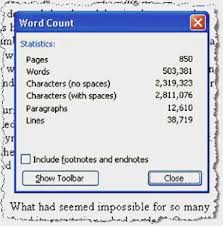
At the beginning of this semester, fifteen students--ten undergraduates and five graduate students--gathered in Thompson Hall on the campus of the University of Central Arkansas with one goal in mind: to finish a complete draft of a novel in less than four months and even while taking other courses.  To say nothing of all the other life matters they needed to tend to.  Indeed, several of the undergraduates were on the staff of our student-run campus literary magazine, which features both print and online editions, and necessitated not only the reading of submissions but regular late night, sometimes contentious, meetings.  Many of the students had other on-campus responsibilities and off-campus hobbies.  Some of them had spouses.  Three of the graduate students worked full-time jobs on top of taking a full graduate student load.  One had a child.  In spite of all that they knew was in front of them, and some that they couldn't anticipate, every student gathered that cold January night for Novel Writing Workshop professed to be ready to take on the challenge: 55,000 words of original fiction writing in one semester.  And not just any old fiction writing, but writing that developed a plot and characters over a single book-length work and that eventually found its way to a denoument.  55,000 words.  For those who don't understand what a challenge that is, I'll say that while on the short side for a novel, 55,000 words is roughly 10 times the amount of original writing typically asked for in a creative writing course.  10 times.

Well, last Wednesday we held our final class meeting of the semester (not counting our "exam" period), and so I figure it's time to release a semester report.  How did they do?  First, I'm happy to report that of the original fifteen students thirteen stuck with the class until the finish.  And of the two students who dropped, one was dropped by me; not because she was not able to keep up with her novel and not because she did not want to continue with the course, but because she almost never came to class, a violation that gets you dropped in my book.  Only one student--a single one--dropped herself because she found the assignment of composing a draft of a novel in one semester too imposing.  And it's a fact of life that no matter what the college class, students drop. There's nary a course offered at any college any semester in which someone, or several ones, don't choose to drop.  (For example, in one of my other creative writing courses this semster, three students dropped.)  In other words, the droppage rate for Novel Writing Workshop was at worst typical, and maybe even less than typical, for a university class.  Astounding.  As I told the group week after week, when I was an undergraduate I would never have dreamed of trying to write a novel in one semester--or even before I graduated!  None of the other creative writing students I knew would have dreamed of it either.   And yet this group--not without some occasional, and not very surprising, bouts of despair--took up the challenge and soldiered on, as if it were the most normal enterprise in the world.

Okay, okay, I hear  you saying, give us the results--numerical results!  Here they are:

The winner among the graduate students is Lynne Landis, a first year MFA student who, while working a full time job as a nurse and taking two other classes, wrote 79,841 words.  79,000!  Said another way, that's almost 300 pages of original work.  In one semester!  

The winner among the undergraduates is Chelsea Callantine, who wrote 57, 830 words.

Every other student in class, every single one, met the 55,000 word count requirement.  Most went over by several dozen or several hundred words.  These students are:


Darby Riales
Michelle Cates
Karen Cockrum
Colleen Hathaway
Taylor Hicks
Taylor Neal
Sarah Wilson
Jasmine Jobe
Stacey Margaret Jones
Louie Land

and

John Mitchel 

John Mitchel, I must note,  earned the unique distinction of hitting 55,000 words exactly.  This isn't so surprising, though, because John had a habit of writing exactly up to the word count requirement most weeks: not a single word more.  That's fine, John.  You got it done, after all.


And what I find most admirable is that these folks didn't merely pump out words, although I know it felt like that to them at times, but they wrote complete drafts.  Not one of them simply stopped at the word count goal.  They stopped when they had finished their stories.  Congratulations to all.  You have earned yourselves a week off.    

Monday, April 22, 2013

London here we come

2

I mentioned in a post several months ago that I will be reading at the Great Writing Conference, held at Imperial College, London at the end of June.   Well--after bureacratic delays that made the U.S. government look like a comparative bastion of efficiency--my university finally figured out how to extend a contribution toward the total cost of the trip, and so our travel plans were finalized just last Friday.  While we're paying more for our tickets than if we'd made the reservations back in October, when I submitted my funding request to the university, I'm excited that the trip is finally real.  We're actually going.  As I wrote in my previous post about the conference, I haven't attended or spoken at Great Writing since 2007, when it was held at Bangor.  While I'll always remember that trip as a lovely one--and certainly one I'd love to make again--there's no matching London as a summer destination.  (Well, so okay, there is Paris.)  Best of all is the conference itself, which in the past has always featured smart discussions, diverse topics, and plenty of time set aside for collegial conversation over coffee (or whatever else one prefers).  I always return home with new writers in mind and at least one really great pedagogical idea I'm dying to try out.  And last I heard, the conference is still willing to consider proposals in hopes of filling out its last few slots.  So while the American dollar is still fairly weak against the British pound, making the trip not exactly cheap, if you're an American creative writer in the academy looking for a place to present a provocative paper you've just written or looking for a new place to read from your own work, I urge you to--quickly!--consider the Great Writing conference.  Hey, it's London, people!


                                                                          *  *  *


Meanwhile, in Boston . . .  On to more somber thoughts.  It's ironic that when I first wrote about my intention on presenting at Great Writing, I also wrote about Boston, the site of this year's AWP conference.  Now I find myself, for much sadder reasons, writing about Boston again in a post about Great Writing.   At this point, the identities of both the victims and perpetrators of the Boston Marathon bombing have been well-publicized world wide.  We've watched as last Thursday night and Friday a literal explosion of activity happened in the search for those perpetrators and as an unprecedented manhunt occurred that ending up killing one perpetrator and wounding another.  We know who, we know when, and we know what.  The only real mystery remaining, and it's always the biggest, is the why.   All last week this question bugged me, since I couldn't see one outcome from the bombing that held any benefit for anybody.  The Boston marathon?  Why?  Even if the motivation was simply to kill as many innocent persons as possible, there were far more lethal methods the perpetrators could have employed.  The entire business made no sense.

Just since the manhunt on Friday, pieces of information have come out about the two perpetrators, especially the older brother: Tamerlan Tsarnaev.  It appears that in the last three years he had become, in the words of some who knew him, "very religious." And in the last year he had begun watching jihadist videos and even adding some of them to his YouTube channel.  And of course he took that six month trip to Chechnya and Dagistan, which has led to speculation that he received training there in terror tactics.  I read Saturday that Tamerlan Tsarnaev had been increasingly upset over what he regarded as a "lack of values" in the West.  Did this, in his mind, justify murder?  If so, I have to wonder why for him being a murderer didn't also indicate a "lack of values."  Most value systems, whether they be religious or secular, forbid murder.  It appears that Tamerlan Tsarnaev is the victim--for lack of a better word--of a particular kind of religious mind set.  (I say particular because I know for a fact that many religious people and religious systems do not endorse it.)  This particular religious mind set--utterly dualistic, harshly judgmental, prejudiced in the extreme--makes one so unable to recognize the common humanity in other people, or whole populations of people, that behavior as unthinkable as murder becomes justifiable.  This kind of thinking, it seems to me, is so twisted and so fundamentally contradictory as to border on mental illness.  It's also, as my wife pointed out, completely megalomaniacal: I am God; I get to decide who lives and who dies; and on my terms.  Most of all, of course, it is just sad.  Like everyone else, I hope investigators get some answers out of the younger brother, Dzhokhar Tsarnaev.  But I have my doubts.  I fear that he'll not be able to provide any explanation for what the brothers did.  At least not any explanation that makes sense.  But, then again, sense and murder are two words that don't belong together in the same sentence.

One positive note: As I write this, it is Sunday, April 21, 2013.  The London Marathon is underway, and nothing untoward has happened.  London and Boston again . . . But it looks like we can anticipate a happier ending this time.

Monday, April 15, 2013

Mind sets and noveling

2

As anyone who has run a long road race--or simply trained for one--knows, how tired you feel isn't only a function of your conditioning; it's also a function of your mind.  You can be dragging through the middle of a workout or a race, wondering how you'll make it through the next mile, and yet miles later you suddenly are enjoying a vigorous spring in your step, a surge of enthusiasm, a new certainty that you can polish off the race or the workout in good speed.  What's changed isn't your body--except that you've only added more mileage to it--but your attitude.  This is the subject of a really interesting article in this month's Runner's World magazine.   The author, Michelle Hamilton--who, coincidentally, runs a lot faster than I ever will--describes how her mental reactions during races and workouts were blocking her from making any real progress.  Fundamentally pessimistic in her outloook, she was constantly criticizing herself--regardless of whether she was running faster or slower than planned--as well as playing other self-defeating mind games: telling herself she was more tired than she really was, losing heart in races and essentially--albeit not literally--quitting on them when it appeared that she wouldn't reach her mile-pace goals, writing off "bad" races as failures and accusing herself of being a failure as a result of having run them.

Well, not surprisingly, Hamilton eventually decided she needed to reorient herself mentally and even hired a "mental-game coach" to help her in this effort.  In the article, Hamilton shares many of the approaches and lessons she learned from her coach.  One that really struck me was the difference between being "results-oriented" and being "process-oriented."  The former, which describes Hamilton before she started revamping her mental game, is essentially negative.  The latter is more positive.  "Mentally tough athletes are positive and process-oriented," Hamilton writes.  She quotes sports psychologist Stan Beecham: "If you focus on results, you take yourself out of the now.  And it's the now that allows for results later."  By beating herself up so badly for not reaching a certain, predetermined result, rather than seeing the "failure" as part of a process that could eventually lead to success, Hamilton kept herself from learning what the race could teach her; even more immediately, she caused the result of that specific race to be far worse than it might otherwise be, because she would buckle as soon as she ran into a performance obstacle (e.g., failure to reach a certain mid-point or three-quarter time; failure to meet the pace she wanted for her previous mile).

As soon as I read that paragraph, my head came up and I thought, That's just how it is with novelists.  Or, rather, some novelists.   I've been shocked and disheartened this semester, as I teach novel writing to a mixed group of undergraduates and graduates, at how down on themselves some of my students get.  The reason?  Their budding novels--which they drafting in one semester, for gosh sakes--strike them as being really bad.  So bad they can't stand it.  So bad they want to give up.  (Now, let me emphasize that several students feel exactly the oppositie.  They are perfectly pleased with their books.  And some of these, I'm happy to report, are students who once were beating themselves up but found a way through.)  Here, the lesson of Hamilton's article applies precisely.  If you look at the result of the most recent chapter or three in the first draft of your first ever novel, chances are you are going to find several glariing weaknesses in it.  How could anyone reasonably expect anything else?  A results-oriented thinker says to himself or herself, Well, if such is the result of this project, this project must be a failure.  So I might as well quit now.  (By their own admission, a few of my students told themselves this very thing.)  The problem with this thinking is that a draft is just that: it's part of a process.  What matters isn't what it looks like now; what matters is keeping the process of novel-writing going.  At least until one finishes the draft.  At that point, if one is a shrewd enough and intuitive enough and careful enough and patient enough rewriter, one can make something quite nice of that draft.  Perhaps something almost entirely different.  Perhaps something several dozen--or several thousand--people will want to read.  But that is the then that is only realized because one did the work of the now now.   It only happens then because one refuses to abandon the now.

This is not to say that every rough first draft eventually turns into a beautiful published novel.  Just about every successful novelist has a few manuscripts in his drawer or on his computer that finally proved unsalvageable.  But here's the rub, even those manuscripts have their value.  They might represent the first attempts at some subject matter that was better realized in a later work; and/or their weaknesses may contain vital lessons about how not to handle some specific aspect of fiction writing craft (e.g., description, characterization, back story, action); and/or maybe they might have simply enabled the writer to get something off his chest that he needed to express before he could move on to some other, more valuable type of expression.  Just like every race has something to teach its runner, every book has something to teach its author; even the books that don't turn out well.  So while some of my students might want to give up, they really shouldn't.  Even if their novels turn out to be the classic first unpublished novels that will forever be locked up in a boxes or in an attics and read by nobody (and I'm sure that will not be the case for some of them), those novels are serving crucial purposes for their authors.   They are stepping stones to whatever these young authors will write next.  But to get to the there, they have to first satisfy the now.  And that means finishing.    


Monday, April 8, 2013

Revisiting The Hours

0

In preparation for the class I'm teaching this semester on novel writing, I scoped around for some short novels to put on my syllabus.  (While craft books have their place, I still believe that the best education for how to write a novel is to read as many as you can.  And if that sounds like punishment instead of heaven, then you probably should consider another outlet for your creativity.)  While the average length for a published novel in this country, by most estimates, comes in at around 100,000 words, there are several examples of successful, even famous, novels at around the 60,000 word mark.  These I specifically sought out as I thought they would best serve as models for my students' short novels.  One novel about that length is The Hours, Michael Cunningham's Pulitzer Prize winner from the late 90s, the book--I think it's safe to say--that still defines him. I first read The Hours several years ago, shortly after it earned so much acclaim for winning the Pulitzer, and I saw the movie version when it appeared a couple years later.   I admired both, but hadn't returned to either after my initial experiences of them.  Indeed, last week as I prepared to teach The Hours in my Novel Writing Workshop, I realized exactly how much I had forgotten about the book, and how much about it I missed the first time around.

If The Hours does indeed end up defining Michael Cunningham's career--and realize that he's written several other valuable books (including A Home at the End of the World, which was also turned into a movie)--he could do far worse.   There are many different ways to enjoy and analyze  The Hours: its brilliant triple reiteration of Woolf's Mrs. Dallowayits economic but stunningly poetic language; its introduction--to a mostly straight reading audience--to the many and various faces of gay and lesbian life in late twentieth century America; its expansive humanism; its exposition of how enforced social and family roles finally can deform and even defeat a person; its implicit argument that mental illnesses we think of as being so au courant have actually been with us for quite some time.   Yes, it's all that, in a mere 60,000 words.

But it's also a tour de force of historical fiction.   In his three part story, Cunningham takes up the unique challege of trying to be contemporary and historical in the same work and having both parts (or in his case, three) feel equally immediate and real to the reader.  Unquestionably, he succeeds.  He captures London suburban life of 1923, Los Angeles suburban life of 1949, and Manhattan urban life of the late 1990s with equal veracity.  Given that Cunningham himself was not born until 1952, the former two strands of the novel clearly count as historical fiction (even knowing he was raised in California).  And he evokes those two eras with ferocious clarity.  It seems to me that the clarity is rooted in two sources: 1)  an attention to objects, and 2) a refined understanding of social milleau.  (Arguably, these are exactly the two qualities one finds most often in Woolf's fiction, be it Mrs. Dalloway or some other volume.)  Cunningham does not spend sentence after sentence or paragraph after paragraph detailing his settings. A lot of that is implied.  However, in both the Richmond and LA sections he extends specific narrative attention to certain household items that go a long way to reinforcing the time period.  In the Richmond, there is the tapestry handbag carried by the "suspicious old wife"on Mt. Ararat Road, the China tea and sugared ginger that Virginia is so intent on serving to her sister that she makes her servant Nelly take the train to London for it--even while Nelly is trying to put together a luncheon!  There is the twine with which Marjorie wraps the latest products of Leonard's press.  In L.A., Cunningham evokes the shiny new post-war landscape Laura and Dan Brown exist in with details like the "smart" green face of the clock in Laura's bedroom, the aluminum cup measure and filmy white curtains in Laura's kitchen, the "halo" of her neighbor's bright blonde-brown hair.  And later, when Laura escapes to the Normandy hotel, we are directed to the "tall, angular chrome letters" forming the hotel's name and, inside, the "horizontal line of brilliant red numerals" above the elevator door.  Most of all, Cunningham focuses narrative attention on the cake Laura struggles to make (from scratch) for her husband.  As it turns out, it was cagy for Cunningham to set the L.A. scenes in 1949.  In that year, Betty Crocker had only just begun widespread marketing of its cake mixes; and Duncan Hines cake mixes hadn't even been invented.  Thus Laura's insistence that she must either make a cake for Dan or "declare [herself] hopeless" and order one from a bakery. (And she refuses to make such a damning admission.)  There is no third option.  Unlike Virginia Woolf and Clarissa Dalloway, Laura Brown has no servant.

This brings us to Cunningham's other point of attention: the social climates of competing eras. Both through Virginia Woolf's (that is, Virginia Woolf the character in The Hours) memories and the details from Mrs. Dalloway that Cunningham passes on, we are able to visualize what London of the 1920s means to Woolf and how comparatively isolated she feels in Richmond.  It is as if London is light to her and Richmond gloom.  And this has as much to do with whom she can see and visit, what she can do, as it does for physical particularities.   She feels she has been expelled from a milleau she adored and is only barely surviving at the bottom of another.  Similarly, Laura Brown shrewdly sees exactly how and why she fits into the social strata of her shiny L.A. suburb.  (In L.A. there is almost nothing but light, but it becomes an oppressive light to Laura, who constantly seeks out interiors, and solitude and, in some cases, literal dimness.)  Laura's social esteem has nothing to do with herself but comes from the fact that she has one child and is pregnant with another, and she has a good-natured, succesful husband who is a veteran of a recently concluded, heroic conflict.   Her neighbor Kitty is prettier and used to be far more popular, yet the fact that she is still childless after several years of marriage and that her husband appears to be physically falling apart, has knocked Kitty below Laura on the social scale.  This is an irony that Laura appreciates and exploits but also finds maddening.  Clearly, she wishes both she and Killy could be defined by standards that have nothing to do with who they are married to and how many children they have.   In both the Richmond and L.A. sections, therefore, Cunningham evokes historical eras by evoking--with an almost impossibly fine-tuned ear--his character's social positions and social dilemmas.  It's never abstract; it's never wordily written; and it's always specifically focused on character; and yet it reveals so much about the history behind his historical fictions.  Just another example of an obvious lesson: for historical fiction to breathe right, it can't be fundamentally about history but about the characters living inside the history.

Publication note: Because at times I've written on this blog about long distance running and its connection to novel writing, I thought I should pass on a little publication news.  A collage-style essay I wrote about marathon running has been accepted for publication by 1966, a journal of "research-driven creative nonfiction."  The essay evokes the history of marathon running, a couple deaths that occurred in marathon races I have run and one that occured in an Olympic qualifying event, as well as my own particular struggles when I trained for and ran my first marathon.   As someone who typically publishes fiction rather than nonfiction, I'll be excited to see this rather personal essay in print.   I'll let you know when it appears.

Monday, April 1, 2013

The photo plot thickens

16

As you know if read this blog, I've posted a few times about a minor controversy surrounding a photograph that was unearthed in the 1990s in a Massachusetts' antiques shop.  Some who have observed the photo are convinced that it is a picture of Vincent Van Gogh, taken during the years he lived in Paris with his brother Theo.  If true, this would be important in that it stands as the only portrait photograph taken of Vincent as an adult; in fact, the only picture in existence that shows his adult face.  The truest believer in this theory is Joseph Buberger, a photographer and historian of photography who conducted a forensic comparison of the photograph with several of Van Gogh's painted self-portraits.  (An exhibit detailing Joseph's work ran in the Seton Gallery at the University of New Haven back in 2004.)   Joseph believes that he has proven that the features of the man in the photograph and the man in the paintings are identical.  Previously, I've expressed my doubts about the hypothesis.  Check out this earlier post and this one.  I've suggested that the photograph, to me, doesn't really look like the same person that we see in earlier, and widely verfiied, photographs of Van Gogh.   Others, however, are more sympathetic to Joseph's argument.  Several weeks ago, Joseph sent me a copy of an email he received from Pascal Bonafoux, an art critic and curator centered in Paris.  Bonafoux seems to accept without question that the man in the photograph is Van Gogh:


Thank you very much! Your discovery is fantastic!!!
As you can imagine, I would like to know how you have found this 
photograph of Vincent van Gogh as well as il would be very interreting 
to read the text by Albert Harper, even if, looking at this photograph 
I have no doubt: this man is Vincent him-self.
Let me apologise if I didn't gave you an answer immediately, but I am 
in charge of an exhibition to be opened at the end of the month here in 
Paris (MOI! autoportraits du XXe sicle or if you Prefer I, self 
portraits of the last century.) This exhibition will present more than 
150 pieces. As you can imagine I am a little bit busy
But, one more time, thank you very much for this wonderful discovery.
Best regards
Pascal Bonafoux 

However, while I was away at the AWP conference in Boston in early March, I received an intriguing e-mail from one Hazel Smith, a Canadian who lives in Toronto, who loves Van Gogh, and who has been following this photo controversy with interest.  According to Hazel, the photographer whose name is clearly plastered across the face of the photograph in question--Victor Morin of "42 Rue St. Francois, St. Hyacinthe"--was not a 19th century Parisian but a 19th century Canadian!  There is a Rue St. Francois in Paris, but, to quote Hazel, "There is only one St. Hyacinthe in the world, and that is in Quebec, Canada."  To further make her point, Hazel attached a photo of a page from a Quebecois business directory from the late 1800s.  The name Victor Morin is clearly apparent (as part of the team of Morin & Messier).  And the address? 42 Rue St. Francois! (I don't know if readers can enlarge the photograph above, but if you do you will see Morin & Messier listed on the first column of the first page.  If anybody's interested I can email you this photograph.  Just contact me at johnv@uca.edu.) This puts to rest any possibility that a French photographer took the picture in question.  And since Vincent never lived outside of Europe--he never so much as took an excursion trip to the New World--it's impossible that Morin took his picture during a time that Vincent happened to find himself in Quebec.  Did Morin travel to Paris and set up shop temporarily as a portrait photographer in that city and thus happen to get Vincent's business one afternoon?  Now we seem to traveling farther and farther from the reasonable.   First, one would need to prove that Morin took such a trip, and so far no such proof exists.  Second, why would a photographer working in Paris affix a Quebecois address on a picture that he took?  He's not likely to drum up a lot of business in Paris for his portrait studio in Quebec!  


That fact that Victor Morin worked in North America and not Paris certainly does clear up one question I've had from the beginning: How did the album (which, by the way, includes mostly pictures of clergymen) containing this photograph find its way to an antiques shop in Massachusetts in the first place?  If it originated in Quebec rather than Paris, the travel distance to Massachusetts gets significantly smaller.   I'm afraid Occam's Razor shows us the clearest path to the truth in this situation.  The least complicated explanation among the various competing explanations is that man in the photograph is not Vincent Van Gogh but an anonymous, nineteenth century citizen of Quebec who bears some resemblance to Van Gogh but can't really be regarded as identical.  Someone who bears a passing resemblance to famous person--that's not exactly rare is it?

Monday, March 25, 2013

Novel class update #2

0

 It continues to be a nourishing semester in my Novel Writing Workshop at UCA.  We've been on Spring Break this past week, but I can tell from various Facebook posts my students have put up--early on, they established a Facebook page for the class--that many of them have been keeping their noses to the grindstone.  (They have to.  Two weeks worth of word count are due when next we meet.)  Some of them are still encountering plot and character breakthroughs; one student just realized her novel will have to be a trilogy (she seems excited rather than depressed); another student, Taylor Neal, warmed my heart with some philosophical musings the other day: a list of ten truths about novel writing which, for me, only reinforced why offering this class is so important.  (Are you listening, creative writing professors and curriculum committees?)  Of course, many of Taylor's "truths" deal with how hard novel writing can be--and who says it isn't?--but at the same time I was glad to see comments like this one: As frustrating as the lows are, the highs are 100 times more sweet. There's an exhilaration from writing a good scene, even a good sentence. It's like a peace that settles over you. It keeps you going, and reminds you that this can be done.  And this one: When you're writing, there are a million other things you would rather be doing. When you can't write, there's nothing you would rather be doing than writing.  And this one: Nothing is impossible (cheesy, but true. There were times when I was convinced I would never write a book, and look at me now, almost 40,000 words in)

Perhaps her most important comment, given that the framework for Taylor's novel writing this semester has been our class, and a crucial component of the class is small peer review groups, is the following: Writing a novel is truly a group effort. There's a reason it never really worked out when I was going at it alone. Critique partners are indispensable when it comes to feedback, encouragement, and ranting about your novel.  You have no idea how good that made me feel to read.  Because it means the class is working precisely as, and why, it should.  I would never deny that writing a novel--or any book--is fundamentally a tussle with your own soul, your own knowledge, your own wisdom, your own discipline (or lack thereof), but it's an age-old truth that writers have always needed to share their work and receive feedback on that work.  In my very first semester of graduate school, the then-MFA director, Peter Klappert, who was also my poetry professor, preached this gospel non-stop, probably because of an anti-MFA sentiment that was already breeding in some writing circles and still abides today.  Workshop or no workshop, writers have always shared their work with someone; they've needed to; they've sought it out.  Pulitizer Prize winners have their beta readers, for heaven's sakes.  Some of them belong to writing groups.  (Just ask Jennifer Egan.) The image of the lonely writer in the candlelit garret really should be gone by now, and especially should be gone from the minds of young, budding novelists--that is, if they ever hope to accomplish anything.  What a novel writing class can provide for student authors is a place and a process.  It provides a classroom to bring questions to as well as new discoveries and bitchy, self-loathing complaints.  It provides regular fixed deadlines.  And, perhaps best of all, it provides (or should provide) intelligent, sympathetic, practiced readers.  (By sympathetic, I don't mean they are going to approve of everything that you do, but that they understand what it is you are attempting.  They are informed novel readers, at least more so than your boyfriend or the manager at your bank job.)  At least this was my hope when I established the outlines for Novel Writing Workshop, and, for some of the students at least, it appears to be working exactly as planned.  And I can only hope that the lessons my students learn about novel-writing from having to draft an entire book this semester will carry over to the next time they want to write a novel, but won't have a Novel Writing Workshop to join.  Hopefully, they'll be able to find their own workable substitute.

Last time I wrote about this class, I joked that, given how well many of them were doing, maybe I was being too easy on them this semester.  Maybe I should up the work count next time.  (55,000 words, after all, does make for a fairly short novel.)  When I mentioned this in class, several said No, No, No, this is about as much work as we can handle.  But the truth is, except for one student, everyone has kept up with word count and several are ahead.  A couple students informed me that they intended to finish their drafts over spring break and then edit for the rest of the semester.  I'm astonished and delighted at this continuing state of affairs.  So, why not encourage future classes to get closer to the 80-100K average for a published novel in this country?  (Closer, I'm saying, you realize.  I would never ask undergraduates to write 80K.)  Alternatively, I am considering assigning another model novel or two for them to read.  (Short novels.)  I find it very instructive to read a novel while thinking about how the writer handles the various elements of craft in the span of the book that you yourself are working through.  In other words, while developing the first third of your book, to look at what the author of the model novel establishes in the first third of hers.  And so on.  I've tried to do some of that with the two novels I've assigned this semester, but I would need to assign at least one more to create a perfect bridge for the arc of the students' drafts. 

In short, it's been a fun, productive semester in Novel Writing.  And it almost always works out that way.  (Note to self: There's probably a paper to be written on why that's true.)  My semester novel?  I kind of sort of finished my draft two days ago, although not surprisingly there are several serious matters that need to be tended to before I can really regard it as a done first draft.  My own word count is at 73,700.  (Even I'm writing more than I did last time I taught the class!)