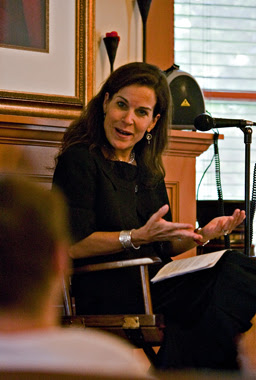
Monday, July 29, 2013

Days on Fire is PUBLISHED!!

3

In my last post, I wrote about meeting with the directors of Elan Sud and discussing a possible French-language edition of my Van Gogh novel.  Well, how fitting that with this post I can finally announce the publication of the original English language version of the book.  That's right, Days on Fire is finally out and available!  The book can be purchased through Amazon. com here; also through Barnes & Noble.com here; and through Lulu.com here.  It can also be special ordered by your favorite neighborhood bookstore through Ingram Distributors.  Finally, for readers in the UK, the book is available through Amazon.co.uk.  Click here for that link.

This sure has been a long time coming.  I started this blog, after all,  back in 2009.  Along the way, various readers have been asking me, "Why can't I buy a copy of your book?"  Well, the simple and most truthful reason is that all good things take time, and I think it took a fair amount of time for the book to finally take the shape it needed to be.  But here it is.  If you decide to get it, I hope it is the pleasure for you to read that it always was for me to write--even despite how long it took!

Tuesday, July 16, 2013

Enjoy the unexpected

0


Last week, I had one of the more unique experiences of my writing life: meeting with the directors of Elan Sud, a boutique French publisher, at their cozy headquarters on a quiet side street in Orange. The interview was arranged by the woman who owns the house we were renting in Rapheles-les-Arles, an avid book reader and the friend of an author who publishes with this press.  It was a wonderful experience talking with Madame Corinne Neidegger and her partner Monsieur Dominique Lin. Madame Neidegger understands spoken English but speaks little herself; Dominque speaks and understands English, yet it is, of course, very far from being a first language for him; I understand spoken French somewhat, but I don’t speak it well at all.  So for over an hour we engaged in a fascinating triangulated conversation.  Madame Neidegger asked me questions in French, and I answered them mostly in English, with interpretations and amplifications provided by Dominique, a working writer himself--I bought one of his novels (Toca Leon!) during my visit--with long experience in the publishing industry, as has Madame Neidegger.  In fact, Madame Neidegger once worked for Actes-Sud, one of the largest publishers in all of France and a company headquartered in Arles.

A passion for well-written, well-edited books is what encouraged them to start Elan Sud.  Like many niche presses, it is a labor of love and one that tries to address important needs left behind by mainstream publishers.  For Elan Sud, this means publishing, among other things, graphic novels, novels by young first time writers (through a labor intensive, multi-stage submissions and drafting process), and publishing fiction set in atypical settings, like Cuba.  We spent a good deal of time discussing my Van Gogh novel, but also many minutes reviewing the state of publishing in France.  What was striking was how similar their complaints were to complaints made about publishing in the United States; e.g., a few massive houses buying up many smaller presses, a lack of courage and originality in what they publish, too many examples of patently bad books—with little evidence of editorial oversight—being not only allowed into the market but turning into bestsellers.  The subject of Fifty Shades of Gray came up.  (Yes, the book has been published in France too.)  I told them what I tell everyone: I hear that it’s pretty badly written.  Dominique was beside himself.  “Of course, of course, it’s badly written. That’s what everyone says.  And I don’t understand.  When somebody  tells me this food smells terrible and tries to give it to me, I will not eat it.  But if someone says , this book is terrible, people want to read it!” 

They are both lovely, dedicated, and shrewd people, with wonderful senses of humor and an abiding interest in publishing provocative work.  Here I thought I was driving to Orange from Arles just to drop off a copy of my novel, and I found myself invited in, given a place to sit, offered coffee, and engaging in a chat that lasted seventy minutes long and covered everything from my own life history to the history of my book to the characteristic of my book to the characteristics of their press to the state of “the book” to the practical challenges of literary translation.  We even talked over their philosophy on book covers.  I’ve never had a more engaging if nerve-wracking hour, an hour I could never have imagined for myself years ago when I first started my book.  One I could have never imagined for myself when I first thought of visiting France.  Sometimes, it’s simply amazing where a project can take you.  In this case, I really mean where.


Monday, July 8, 2013

Toujours Montmajour

0

Van Gogh visited the abandoned abbey of Montmajour several times when he lived in Arles.  For a dedicated hiker like himself, the long steady trudge up the side of a hill a few miles outside of town presented no great obstacle, even with an easel strapped to his back, and from inside the abbey the views of the surrounding countryside were spectacular, well worth to him whatever effort it took to get them.  Right now in Provence we are starting to feel the heat of
midsummer--something of course the area is known for, along with the intensely bright sunshine that beams at you from cloudless blue
skies--and the heat, like the long walks, never seemed to bother Van Gogh either, despite his fair Dutch skin.  Even during the dog days of August he claimed to be as happy working in the heat as a cicada singing in a tree.  (Something else the area is known for.)

So I feel it's appropriate that I visited Montmajour for the fourth time myself the other day, during the middle of a heat wave.  It's the kind of place that seems forever unchanging but at the same time wears a new face each time you visit.  Kind of like provence itself.  A bit of a side note here: I was just thinking to myself the other morning, and jotting down in my journal, that Provence seems
to have a very different idea of progress than other places I know.  It's not that nothing changes here--inevitably that happens--but at a significantly slower, steadier pace and in ways that are intentionally meant to integrate with life and the rhythms of life that have been long established.  New houses get built, but not so many as to wreak wholesale havoc on the landscape.  And the houses themselves are built to fit in with the overall look of the region.  It's what people want.  It's what house buyers want.  The idea is that the new houses look like they have been there for decades.  The roads are well-maintained, but they are almost uniformly narrow, and that's not going to change.  For instance, the road that takes you from  Raphele to Arles--D453--features beautiful rows of plane trees bordering both sides for a stretch that goes on for miles.  It would be impossible to expand that road without getting rid of the bordering plane trees.  So will they ever do that?  Of course not.  In America, especially recently, and especially in central Arkansas, where I happen to live, politicians and city planners seem to think that nothing says progress more than ripped up roads and more ripped up roads.  New housing developments and more new housing developments.  That, from the American view, is progress.  From the Provencal point of view that is regress.  Change that integrates with a centuries old way of life is beneficial and acceptable; change that threatens that way of life is unthinkable.  No wonder this place seems so significantly the same each time I visit--and no wonder its rustic beauty endures.


Back to Montmajour.  Due to the very slow pace of change, it's possible to get views from the abbey that are identical, or nearly so, to what Van Gogh saw when he tramped up there: wheat fields, pasturing lands for horses, a single farm house bordered by tall trees acting as a wind break, a tall rocky hill in the near distance, the ancient cityscape of Arles much farther away.  As I said, it's worth the visit just to see that view.  But the abbey itself always maintains a shadowy solemn stone grandeur, something that didn't particularly interest Van Gogh--who rarely sketched or painted the abbey itself--but never fails to affect me.  When you visit, you start in the crypt area of the abbey and slowly wind your way upward.  First to the tall, empty walls of the church--a sign informs you that despite its current bare appearance the church was extremely ornamented and decorated during its day--and then to open courtyard bordered by several small chambers.  Rooms for the monks long ago.  Finally outside to the upper rim of the abbey, where one finds those great views.  But it hardly stops there.  A defensive tower was installed at the abbey in the fourteenth century at the command of the abbot in reaction to troops from Les Baux who were attacking Arles.  Today one can climb a tall, tightly winding stone staircase to reach the  top of the tower and there be rewarded with even longer, more distant views.  One can see clear all the way to Tarascon.  Coming down from and out of the tower, your self-guided tour naturally leads to the back of the outer area where you see a series of rectangular, box-like holes cuts into the rocky terrain.  (Check the picture above.)  And by rocky I mean literally into a sheet of rock itself.  These holes are the remains of a very old burial ground.  Indeed, it was this burial ground which necessitated the abbey being built in the first place.  As you stand outside looking at these tiny graves carved into rock, the wind blows past your ears, the road outside is silent, and you can still feel the presence of ideas and people--and ideas of people--long past but still whispering.

It's a quiet experience, visiting the abbey.  It's certainly a tourist spot, but not exactly overrun--not during any of the four times I've come.  The abbey keeps itself current today by hosting a series of art exhibits all year long.  Fascinating to see these old stone rooms enlivened with contemporary art.  Some might see that as a violation, but I don't.  The art, while not expressly religious, seems appropriately selected for the space.  Given that the abbey is most famous now for the hold it once kept on a single lonely Dutch painter, who lived in Arles for merely a year, I love to see that Montmajour's administrators honor its connection to art in what I think is the best way possible--by featuring the output of current, working artists.   The stone structure of a dead abbey shines with the creations of living imaginations--and stirs the living imagination of any who walk through it.

Tuesday, July 2, 2013

Great Writing great

0

While in the United States most people are still sound asleep, I'm typing this post from what is just about my favorite locale in the world: a little provencal town called Raphele-les-Arles and an elegantly restored farm house its owners call Mas Ballot.  We just came over yesterday from London where the Great Writing conference convened last weekend.  As usual, Great Writing was superb, with an astonishing variety of participants and a palpable spirit of collaboration.  I talked with a Scottish woman who long ago migrated to northern Israel and now teaches in a university there.  I talked with an Australian woman who lives in Turkey.  I talked with a Mexican-American woman from California who teaches writing in Germany.  I talked with an American poet who before coming to the conference had done the grand tour of Europe with his grandchildren and his daughter--Nicole Cooley--who, as it turned out, was one of the stars of the conference.  (She's pictured below.)  I talked with an Irish woman who not quite so long ago migrated to New Zealand, where she is currently finishing a Ph.D., although she may soon need to move to California because it appears that her partner is set to take a job there.  I talked with a South African woman who lived three years in the U.S. and has for sixteen in England.  I talked with an Englishman who teaches in Scotland and an Irishman who teaches in England.

I heard a researcher from South Africa present a paper comparing the approaches of two separate primary school teachers in her country and how the assignments they used--and the results they got--reflected their two very different attitudes toward creative writing itself.  (Not surprisingly, the teacher who trusted in and encouraged her students' originality, who saw creative writing as an important act in and of itself, not merely a means to teach a variety of language arts terms, achieved much more with her students.)  What I couldn't help but think was that this all sounded exactly like the problem with language arts instruction in my son's own school back in Conway, Arkansas.  I heard a poet read who is half-Tanzanian and half-British but who was raised in northern Canada, where she still lives and teaches and farms.  (Yes, by choice and it's no easier to farm there--organically, no less--than you might expect.)  I heard a French woman who lives in Australia read a paper on the work of the Irish poet Seamus Heaney.  I heard an Australian fiction writer who teaches in England and whose last novel was a considerable literary success in America--i.e. David Rain (author of The Heat of the Sun)--give a wonderful presentation on the "Seven Myths of Writing."  (That's him pictured above.)  I heard an academic from New Zealand read a homage to Flannery O'Connor, a paper that focused on O'Connor's days as a student in the Iowa Writers Workshop, where the New Zealander academic had spent a summer two years earlier participating in fiction workshops led by Lan Samantha Chang.

It was inspiring to see so much thought, so much concern, so much passion expressed on the subject of writing and writing instruction--and from so many corners of the world.  We teachers of writing walk around with the notion, I think, that we are all so provincial, suffering in our own little salt mines with nobody much paying attention or understanding.  But Great Writing demonstrated again, as it always does, how hopelessly wrong such ideas are. With a conference so globally aware and globally focused, it should come as no surprise that even the meeting's two main
organizer's--Graeme Harper and Simon Holloway--are from elsewhere.  (Graeme currently lives and teaches in Michigan, and Simon teaches in Manchester, England.)  Not a single person associated with the conference actually works for Imperial College, London, where the gathering took place.  Everything about Great Writing--from its planning to its outreach to its intentions--is "from afar."  That's what makes it such a fascinating gathering, especially for writers like me whose experience with writers conferences mostly derives from the enormous and inward-looking AWP conference.  Great Writing is much less enormous and much more outwardly focused.

Nowhere was this more apparent than in the Great Writing Keynote Lecture, which this year was not so much a lecture but a series of short (five minutes) presentations on various issues surrounding creative writing from ten different speakers from around the world.  Graeme called it "10 X 5," and it might have been the highlight of the gathering, because not only was it fascinating to hear what concerns different people from different parts of the creative writing universe, but it stimulated a terrific amount of discussion immediately afterwards, which was exactly the point.  An English writer and teacher expressed concern that with his students increasing fascination with, and commitment to, electronic media they might lose their connection to the immediate, visceral world around them.  Thus he takes them to an old but still functioning train station in Staffordshire and makes them observe the living stories being written moment by moment in that building by those who pass through it.  A Scottish writer noted that with the growing independence movement in Scotland, a movement that has embraced Scottish writers among other aspects of Scottish culture, being a working creative writer in Scotland today is implicitly a political act.  Nicole Cooley decried that outrageous cost of many American MFA programs and also their lily-white color (too few teachers, students, and visiting writers of color, she rightly companied).  Her applause line: "No one should have to go $60,000 in debt to become a poet."  Another speaker from England, a woman who is a poet and archivist, argued that creative writers ought to take better advantage of the archives of their local institutions.  There is no end to the number of stories embedded in those documents, she said.

It's to be expected that any discussion about issues in creative writing practice and creative writing instruction leads to complaints about creative writing's place in the academy.  This was certainly true Saturday evening in the post-lecture discussion.  There is, after all, much to complain about.  And some of the complaints--not all but some--are amazingly consistent from continent to continent.  But finally Simon Holloway raised a good point.  He said that in all the years he had participated in Great Writing he had constantly heard creative writing instructors strike up defensive poses, as if they had to justify the very existence of their discipline.  (Unfortunately, they probably did--and in many places, my own university included, they still do.)  "But when," Simon asked, "are we going to go on the offensive?  When are we going to say to these administrators, 'Look at all the students we bring in; look at all the tuition funds we raise; look at all the prestige and good press we generate.  What are you going to do for us in return?'"  Simon suggested that maybe it's about time to turn the tables and offer a few "help us or else" ultimatums.  It was great to hear, great to consider, and probably long overdue.  It's a kind of fighting spirit I'll need to remember when long after this exquisite French rest stop is over and I'm back in the academic trenches in Arkansas.


Monday, June 24, 2013

Over the pond and keep going

0

While I continue with my summer fiction writing course at UCA, and while I'm getting close to the bottom of the stack of novels from my spring Novel Writing Workshop class, I am also furiously working out last minute preparations for our trip across the ocean to UK's Great Writing Conference, which will be held this coming Saturday and Sunday at Imperial College, London.  My wife's cousin, Brendan Pettei, is kindly hosting us for the weekend at his flat in Chelsea.  (Brendan is on semi-temporary assignment in London for a New York-based financial services company.)  It will be great to be met by family so far from home.  Meanwhile, the conference is shaping up to be a stunner.  America's AWP Conference prides itself on being the largest creative writing conference in the world--and it sure is that--but AWP cannot match Great Writing for its international flavor.  As many as fifteen different countries will be represented at next weekend's gathering, including Japan, Finland, Spain, the United Arab Emirates, Portugal, South Africa, South Korea, and Jordan.  As one might expect, there will be numerous speakers from England, Scotland, Canada, and the United States, along with several from Australia and New Zealand.  It won't be an AWP-sized event (thank goodness), but it appears to be the biggest Great Writing ever, and perhaps one of the best.

Like many of the presenters, I will wear dual hats: moderating a session on Saturday morning and then presenting in a session Sunday afternoon (the final slot of the conference).  The theme of the Saturday session will be "Gothic Surrealism."  The readers in that one are all creative writers (and academics) from England: Tim Rhys, Paul Houghton, and Lisa Mansell.  They are, respectively, two novelists and an avant-garde poet.  I'm very much looking forward to the session.  Not only does their individual work sound fascinating, but it's a special pleasure of the Great Writing Conference to meet and hear writers one would otherwise never have the opportunity to encounter--or even know about.  

My session on Sunday is an intriguing mixed-bag with each speaker embracing places, people, or writers from the past.  I will read from a historical fiction set on Nantucket Island, Massachusetts, part of a collection I have developed called Island Fog.   The second presenter, Sarah Penny, a native of South Africa and a lecturer in creative writing at London's Brunel University, is the author of a series for children called The Bundu Bashers.   (That's her in the photo below.)  In her presentation Penny will recount her experience interviewing Ouma Una.  Ouma Una was part of a community of Khomani San (bushmen) who once lived in a section of the Kalahari Desert before the South African government forced them off the land in 1931 and turned it into a national park.  The South African government then required the Khomani San to work for white farmers in the region and forbade them from speaking their native language, N/uu.  Penny interviewed Ouma Una as background for one of her books and based one of her characters on the woman.   At the time of the interview, Ouma Una was the last person alive to have lived in the park before the explusion and one of only two remaining speakers of N/uu.  Sounds fascinating.  The final presenter, Tatheer Faiq (pictured above), is an academic from Griffith University in Brisbane.  She will discuss the work of the nineteenth century Arab writer Mohammad al-Muwaylihi.  According to Faiq, al-Muwaylihi, "promoted a culture of resistance to a prescribed ideological standpoint."  (Always a good thing.)  Faiq will go on to explain that al-Muwaylihi's notion of nationhood was one in which "an idealized Occident met the Orient in a global context."  Sounds like Great Writing in a nutshell!  And thus a perfect last paper for the conference.

When we're done at Great Writing it's off for a little R and R in France, where we will be joined by my brother Jerry and his family.   Well, semi-R and R, I should say, because I will at the same time be reviewing the final projects of my summer fiction writing students--who will email them to me--and then figuring and posting their semester grades.  Sometimes you just have to be very thankful for the internet.

Tuesday, June 18, 2013

The bard in Arkansas

0

It's not always appreciated but certainly true that writing--like other artistic endeavors--doesn't usually occur in a cultural vacuum.  The fine arts tend to flourish together--with a singular, unstoppable energy--in certain places and certain eras; feeding each other, challenging each other, and even collaborating with each other.  I feel like I am living through such a time right now in the place where I live and the university where I work.  When I first started teaching at UCA, the creative writers were a small band of spirited artists, eager to try out new courses, engage our students, and see how far this writing thing could go.  Several years later we had in place an undegraduate degree in creative writing--with an unprecedented variety of classes, I might add--and now we've added a masters degree.  Over the same period of time, our university's film program codified an undergraduate degree in digital film and then a MFA degree of the same.  Our music department, already exemplary when I arrived in central Arkansas, has only gotten bettter, regularly attracting world-class faculty and students from around the globe.  (Yes, to Arkansas!)  And the students in our studio art program have never failed to stun me with their semester end shows in the Baum Gallery, as fine a museum space as I have seen at any of the universities at which I've taught or been in a student.  Meanwhile, seven years ago, our theatre department presented an inspired idea to UCA's College of Fine Arts and Communication: to create a professional summer theater company dedicated to performing the works of Shakespeare.  Following the model of other summer Shakespeare companies, Arkansas Shakespeare Theatre would recruit from everywhere, combining actors with national stage and screen experience with experienced local performers.

Well, it worked.  The support was there; the enthusiasm was there; the artistic energy of this place and time was palpable.   Seven years later, AST--the only professional Shakespeare company in Arkansas-- has been an amazing success.  And by that I simply mean that they put on great performances.  I'll never forget their rendition of A Comedy of Errors from a few summers ago.  An early Shakespeare work, the play is considered one of the rougher and simpler in his oeuvre.  But the AST actors took on their roles with such energy, and the show was directed with such smarts and such whimsy, that it ranks as the best production of a Shakespeare comedy I have ever seen.  Anywhere.  No kidding, I was howling.  Last summer, AST did a haunting rendition of Richard III that surpassed a rendition I saw some years ago put on by the eminent Folger Shakespeare company of Washington, DC (and starring Stacy Keach, no less).  AST's show was better.   And it's not just Shakespeare they do.  Each years they take on one non-Shakespeare play and a children's play.  A couple years ago they did Dracula--the original Dracula--a production that featured an incredibly inventive, almost illusory, set; really smart staging; and some inspired performances.  The play was literally chilling.  I took my younger son to the show, and he decided to dress up as a vampire.  These days, post-Twilight, it's hard to see vampires as anything but foolish fun and games.  That's what my son expected.  But he spent most of the show with his head hidden behind his cape.  It was reminder to me how even in this era of Hollywood blockbuster special effects, live theatre can still be incredibly affecting.  (More affecting than Hollywood if you ask me.)

This season is off to a roaring start with Much Ado About Nothing and Oliver both currently running.  King Lear opens on Thursday, and I have my ticket.  Two years ago, AST tried a new innovation by taking one of their shows on the road and into the open air.  Thus, since 2011 Love's Labours Lost, Twelfth Night, and, this season, Much Ado have been performed on the lawn at Hendrix Village, next to Hendrix College in Conway.  Outdoors in summer is just such a natural setting for the bard.  Few people know it, but I grew up in the southern Maryland woods, part of a community of eccentric refugees who in the 1960s and 70s decided to escape Washington, DC and its suburbs and hole up in the country.  Back in the 1930s, the original eccentric, a woman named Alice Ferguson, built a small concrete stage in the woods on her property so that she and her Washingtonian friends who visited on the weekends could have a proper space to recite Shakespeare and perform skits.   By the time I lived in the area, Alice Ferguson had died, but a longer, deeper wooden stage had been built beside the original one.  And other members of the community had decided to carry on Alice Ferguson's ambition to perform works of the bard.  So it was on that wooden stage, in the heart of the humid, summer-heavy southern Maryland woods that I first experienced Shakespeare, both as a participant (they always needed kids to fill out the cast) and as an observer.  Thus, the smell of bug spray, the feeling of wooden benches and lawn chairs, the odor of relaxing evening heat, and the sounds of insects and light animals in the woods have always seemed to me like perfect accompaniment to Shakespeare.  (Midsummer Night's Dream was the perfect show for that space.)  When later I confronted Shakespeare in my high school English class it was okay--it's impossible not to like Shakespeare--but studying the plays felt entirely inorganic.  Something was missing.  How great that AST has brought back the excitement and enthusiasm and energy of seeing the bard performed outdoors.  Unfortunately, the reality of outdoor performances is that sometimes you get weather.  The other night, we caught exactly one half of Much Ado before lightning began to flash and rain to fall.   Such a shame for both the actors and the audience, both of which were just starting to really warm up and appreciate each other.

No rain, though, inside Reynolds Performance Hall at UCA for King Lear and for Oliver.  We hope to see both before our trip across the pond for the UK's Great Writing Conference.  (More thoughts on that next week.)  Meanwhile, Much Ado heads this weekend to the Argenta Arts District in North Little Rock, Arkansas.   If you are within earshot of this blog, or central Arkansas, come out and see AST.  You won't be disappointed!

Thursday, June 13, 2013

Me and my writing machines, Part 2

0

(This is the continuation of a post about my history with writing machines.  Fiction writer and blogger Cathy Day has issued a challenge for any and all bloggers to document how the technology they use, and how they use the technology, has evolved.  You can check out her story here.  Meanwhile, you can check out the beginning of my story in my previous post.  After you finish this here Part 2, dear reader, why don't you write up your own history with writing machines?  But please do link to mine, if you don't mind.)

By the time I entered graduate school I was a proficient typist but hardly a fast one.  Suddenly, with my Mac's keyboard, I felt like I was zooming.   The idea that I could write faster than I could type was long gone.  It seemed crazy that I ever believed that.  Thing is, though, at George Mason I only used the computer for document creation.  There was no online culture in the late 80s/early 90s-- because there wasn't a world wide web yet.  It took me five years to earn my MFA; then I taught as an adjunct for two years.  Then, in 1993, newly married, I began a second graduate program, this one a Ph.D. program at the University of Louisiana-Lafayette.   Of course I brought my Mac with me.  It was still going strong.  Before I left the DC area for Lafayette I ponied up for a personal laser printer.  A computer literate friend of mine sold me on the idea, saying they were the wave of the future.  It sounded like--and was--a much more elegant, even beautiful machine than the terrible dot matrix printers I was used to.  I was so ready to give them up that I essentially succumbed to an indulgence.  The printer looked something like the picture on the left.  I loved having the personal laser printer, but I eventually decided it was a mistake.  The machine was heavy for one; worse, the replacement cartridges were ridiculously expensive, equal to about 1/4 of the cost of the machine itself.

In our first semester at ULL, my wife, in a Research Methods class, learned about something called
e-mail, and her professor insisted the whole class sign up for it.  So I did too.  I sent a few experimental e-mails but didn't really use it much, not until later in our Louisiana stay.  Even then it wasn't something I felt compelled to check regularly.  While we were at ULL the internet started taking babysteps.  America Online and Prodigy got big, and the chat room culture started to develop.  I pretty much ignored all that.  I had classes to complete and stories to write.  (It was a Ph.D. in English, but one that included a large creative writing component.)  In my last year there, I also had an infant son.  If I ever went "online" (and I can't remember the mechanism exactly because when we first started at ULL not only did Google not exist but neither did its immediate predecessors, like Alta Vista) it was to look at the holdings of the LSU library and other libraries.  Meanwhile, I did eventually need to replace my original Mac with the newer, somewhat prettier Mac Classic.  I remember it looking like the one in the picture.  This was during Apple's dark years without Steve Jobs.  Rumors started that their products weren't as pristine as they used to be--and I knew people at ULL that wouldn't think of even going near a Mac--but I remained loyal, if only because all my word processing files were in a program that only worked on Macs.  If I switched to a PC, I could never again open up my files.  All those stories and papers would be lost!  Speaking of lost, I nearly lost my dissertation in 1997 shortly before I was supposed to turn it in.  The file I was using got corrupted and wouldn't open--a common problem back when everything we wrote was stored on 3.5 inch discs.  (A feature of both Macs and PCs back in the 80s and 90s.)  I held my breath and tried to open a backup file I had made (and which was probably stored on the same disc).  Yes!  It worked!  Now I could graduate!

We moved to Arkansas in 1997.  Within a couple years of our coming here, the internet was going gangbusters.  It's all you heard about.  And while I'd started using it for a lot more than checking library holdings, I still wasn't somebody who wanted to be on the computer all day.  If anything, this technological revolution was throwing me a nasty personal challenge.  I'd begun graduate school in a time when most people still didn't own a personal computer; I'd finished it in a time when the internet still didn't rule the world.  I was trying to jumpstart both my career as a teacher and my career as a writer, to say nothing of trying to be an active father--in other words, I had no free time--and suddenly technology I had no experience with was being used regularly in the classroom by several of my colleagues.  Despite the fact that I used a computer everyday, I felt like a Luddite.  I was done with my formal education, and now I had so much more to learn.  I did try; I really did.  I remember one long ago student complimenting me on how capable and willing I was with email.  Hah!  I was stupidly proud of the comment, but of course it seems like not too many years later when we started hearing that "email is for old people."

When I went from being a part time instructor to a full-time one at UCA, I received my own office and my own PC.  So now I worked on both kinds of personal computers, but sharing files was impossible.  Some things were Mac files--mostly my creative output--and some things were PC files: mostly work stuff.  Given how clearly dominant PCs were in both the business and publishing worlds, I realized I might be limiting myself by continuing to only generate short stories on my Mac, but that's what I did.  Meanwhile, about a year or so after they were introduced in 1998 I upgraded to one of the first generation iMacs.  As silly as they look now, those bright boxes with their handles on top were considered revolutionary at the time, and I loved mine.  Not only was it cute--an indigo colored computer!--but it was a workhouse.  The thing never died.  It barely hiccupped.  I wrote my first (never to be published, thank god) novel on it, and my followup (Burnt Norway),  along with an ungodly number of short stories and teacher material of all sorts.  Realizing 3.5 inch discs were both unreliable and on their way out, I started using an external CD-ROM drive and CD-RWs to store backup files of everything.  (My budget version iMac opened most CD-ROMS but not CD-RWs.)  I still have the CD-RWs around, although I never have need for them anymore.  The CD-ROM, you'll recall, was quickly outpaced by the jump drive and then, about two seconds later, by the emminently practical, and more powerful, portable hard drive.

After a while, though, I just could no longer get software to work on my beloved indigo blue iMac.  So about six years ago I upgraded once more to the latest iMac line: those with wide flat screens that sit atop a stem.  (An idea that supposedly came to Steve Jobs as he stared at sunflowers.)  It's a great machine.   I wrote my Van Gogh novel on it, along with the three (mostly top secret) other novels.  It works fantastically well, like Macs usually do; but the best part of all is that when I bought it I could also purchase Word for Mac.  Now I could work in Word regardless of what computer I was using.  This literally changed my life.  No more worries about how to convert when a journal insisted on Word documents (as most did).  No more emailing myself large blocks of text and then playing with them on my work computer.  No, everything was in Word from the get-go.  Things got even better when I signed up for Dropbox two years ago.  Now, I didn't even need a jump drive or portable hard drive to carry my files from computer to computer.  I could just store it to Dropbox and access it anywhere.  What an impossible luxury.  (By the way, the picture on the right shows my actual, lovely, dear current computer--my favorite writing machine of all time!)


My entry into social media and blogging are relatively new developments.  For years I'd heard that "you have to be on Facebook."   I resisted for the longest time but finally signed up a few years ago.  For the first year or so I was barely active at all on it.  Even now, I don't check it everyday.  I'm just not someone who thinks to run to Facebook as soon as something happens to me, even less so as it's happening to me.  Meanwhile, I started on Twitter only last March.  As someone who tends to write too long (sorry!) it's probably good for me that on Twitter you're limited to 140 characters.  I find Twitter interesting, but truth is I don't check it nearly as much as I should.  And I barely ever post.  It's like texting.  I can do it.  I just don't do it very much.  That will probably change, just like everything that's ever gone on between me and writing technology.  One exception to my late adaptor habits: For some reason when the iPads began appearing in 2010 I became very interested very quickly, despite the fact that owning an iPhone has never interested me.   The e-reader component interested me more than anything, along with being able to do things like watch Netflix.  So I eventually bought one.  It's a handy device.  I use it in a variety of ways--checking email, surfing the web, reading iBook files--and it's how I signed on to Twitter.  When I'm on the road, it's how I check on and post to Facebook.  But I don't really write with it.  Some people--some of my students I mean--can type using that tiny little iPad virtual keyboard.  I can't, even though otherwise I can and do type like a demon nowadays.  I've had so much practice.

My biggest online writing presence, something I started with my current iMac, is this blog.  I began it in 2009 during my sabbatical.  At the time I thought it might be interesting to share with the world what I was learning about Van Gogh and how I was using what I was learning in the novel about him I was writing.  Even from the start, however, I did not want the blog to be just about me or  my novel or Van Gogh.  I wanted to discuss historical fiction generally.  And I have, although I've wandered into other subjects from time to time: like what happens in my classes, and what's happening at my university, and what is my history with writing machines!  Finally, the real subject of my blog is writing.  Period.  And that makes sense.  It's what I know the most about.  I love blogging, but typical of me, by the time I started doing it some people began saying that blogs were passĆ©.   Maybe they are.  Maybe Twitter is doing them in.  But as a long form writer, I can't stay away.