Showing posts with label Arkansas Philological Association. Show all posts

Thursday, October 29, 2009

Reverse historical fiction

0


In two earlier posts, I wrote about the APA conference I attended recently, but I wanted to add one more note. In the same session in which I read, a colleague of mine at UCA, Conrad Shumaker, presented a terrific piece that I can only describe as "reverse historical fiction." In many historical fictions people out of real life are rendered anew in the imagined universe of a novel or short story. There are so many examples of this, both in adult and young adult historical fiction, that I don't think I need to prove it to you. But here's the thing about Conrad's piece: he took a very familiar fictional character and moved him into the real world. Sort of. Conrad's story is an epistolary one in which a literature professor describes the troubled history of a (deceased) colleague's doctoral dissertation, one that the colleague was forced to drop. The long and short of it is that while a graduate student, this man discovered that Huckleberry Finn was no fictitious character but a real person who wrote down his life story and gave it to Samuel Clemens, merely hoping for assistance in getting the memoir published. Except Clemens up and stole the manuscript, recreating it--with only minor changes, and no acknowledgement of the real Huck--in his own The Adventures of Huckleberry Finn, a book that of course won Clemens considerable critical acclaim and not a little income. The real Huck, as it turned out, didn't quite "light out for the territories," or, rather, he did but only to wind up the owner of a greasy spoon in Missouri. The protagonist of Conrad's story had uncovered and proven Twain's literary theft, but the discovery was so provocative, so potentionally threatening to the American literature canon, that he was forced to give up the project and his (typewritten) manuscript (this was the 1950s) was destroyed.

My brief summary can hardly do justice to Conrad's comic/academic/detective tour de force. It was intoxicating in the way of all great stories but also eyeopening. It reminded me that the door between the fictional and the historical--through which writers of historical fiction so often pull real people kicking and screaming--swings both ways. We can also take fictional characters and push them into our tawdry, duplicitious world.

Sunday, October 11, 2009

The First Unveiling

0


I took my novel on the road this weekend when I attended, and read at, the annual conference of the Arkansas Philological Association. This group puts on a comfortable and very welcoming get together every year in some lovely regional locations. This year the gathering was held in the grand old Ozarks mountain town of Eureka Springs, and given that my novel is just begging to be heard, even if it's still in progress, I jumped on the invitation from Conference Director Chuck Bane to participate in a creative writing session. I did read a tiny bit of the novel to a class of mine about a year ago, but the APA conference was the very first time I'd revealed it in anything approximating a public forum. And it also happened to be the very first time my wife heard it--something I'm a little chagrined to admit, but only a little, because I'm about to dump the entire, and too long, manuscript on her.

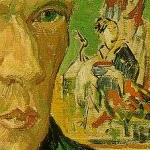
As you can imagine, I was rather tense. I've talk about what I'm doing to many people--family, colleagues, students, friends, readers of this blog--but never actually exposed it. But, honestly, what really frazzled me was deciding which scenes to read. This, I've learned, is a whole other level of difficulty from deciding which of one's short stories to read. After all, the novel scenes must effectively represent an entire book. The story needs only be itself. And in my case, it was the first time "out of the house" for this book. Ahhhh! I figured I had time enough (20 mins.) to read two scenes. But which? Good gosh, there are scores of scenes in this book, at least in its current form. How would I decide which two are absolute right two? The day before I left I ran off about ten different scenes and started rehearsing them over and over, trying to figure which two would best strike an audience as well as best fit the time limit and best present the range of characters and perspectives that are in the book. I finally chose to read the scene about the party in Paris attended by Suzanne Valadon (see a previous post) and a scene in which Vincent paints the well known portrait of his Belgian friend Boch. I guess it was a fine enough choice, because I received many compliments afterwards, but what interested me most about the whole experience was realizing once again how much you learn about your own writing by reading it aloud. I know, I know, this is a very old and boring truth. It doesn't sound like a revelation. In fact, I tell it to my own students all the time, but this weekend I learned that I can afford to be reminded of it myself. After all, I thought these scenes were fairly polished already, and yet I found myself--as I practiced reading them--slashing through them with pen: cutting words, cutting more words, cutting more words, changing words, inserting other words, changing names, attacking whole paragraphs. Whew! I put those suckers through the wringer. How could I have not realized before how much additional editing they needed?

Garry Craig Powell, a great writer and a good friend of mine in the Writing Department at UCA, told me last spring that the most valuable thing he did when revising his own novel was to read a chapter of it aloud every night to his girlfriend. Not only because she is his best critic but because by reading aloud he learned so well what worked in the sentences and what simply didn't. At the time I told him that I understood what he meant--because I did--but now I really understand. And now my wife has not only a mammoth manuscript to wade through but will be forced to listen to it every night as I start a new phase of revision: reading the entire thing aloud. Thanks Garry, thanks APA, and thanks Chuck Bane. You've already made my book a lot better.

Quick note: I received a lovely note from the poet Anne Whitehouse, who has published a poem called "Van Gogh in Arles." Click on the title to get to the poem. As I told Anne, she's really captured well the physicality of Van Gogh's attraction to the landscape of the region. Anne's poem reminds us too how this once utterly unknown painter has so captivated the imaginations of myriad literary artists. I know he did mine. That's something of a miracle, as are his paintings.