Showing posts with label historical fiction workshop class. Show all posts

Tuesday, December 16, 2014

The students speak!

0


[As Creating Van Gogh readers may have noticed, for most of this semester I have been dual-posting  entries to CVG and my teaching-oriented blog Payperazzi.  This, of course, is because the Historical Fiction Workshop class I have been teaching relates to both blogs.  Today's entry represents my last report on that class.  (For now.)]


In recent semesters I've been moving away from asking for the standard end-of-semester reflective papers that typically accompany my students' final portfolios.  Now I ask for a paper the discusses a particular craft issue in a given genre, or analyzes a form within that genre.  While I expect and encourage the students to mention their own creative work in the discussion I also insist that they quote, take support from, or contend with the model stories and novels we read, or articles they encountered, over the course of the semester.  The point is to push the students toward end-of-the-semester pieces that are more academic in tone and, frankly, more probing.  I did this with Historical Fiction Workshop class and received some very interesting responses in return.

First, I'm happy to report that most of the students felt that exploring this form for a semester has helped their writing broadly.  I know one grad student, without planning to, started working on the novel that will become his MFA thesis.  Another grad student was able to make serious revisions on and new explorations into her (already first-drafted) historical novel.   A third grad student, who previously wrote mostly flash fiction and nonfiction, found herself churning out 15 page historical stories before the semester ended.  And that's a good thing, as she will be in my Novel Writing Workshop next semester!  Many of the undergraduates reported satisfaction with being able to imagine and research time periods [e.g., the slavery era in the United States] or world events [e.g., a major battle in World War One; the voyage of the Titanic] or figures out of history [e.g., Joan of Arc, Maria Monk, Vince Lombardi (pictured above)] that they've always been intrigued by.

But as I was hoping, the papers also raised many issues with and insights into historical fiction as a form; in some cases, issues and insights that had never come up despite a whole semester spent on the subject; issues and insights that I'm chagrined to say had never occurred to me.  So I'm glad they raised them!  For instance, two students--Isabella Evans and Rene Rains--discussed the issue of using historical fiction in an academic class in order to facilitate the understanding of an earlier period.  It had never occurred to me that a history teacher would want to do that, but, as Rene explains, some teachers believe that fiction makes the individual in history more real than any textbook can.  Fiction is much less likely to demonize or heroize an historical individual than to show that person as a rounded being.   On the other hand, Isabella points to a statement she found on the website of teachinghistory.org to show there are dangers in going to fiction for a clear picture of history: "When students read historical fiction, then, they are encouraged not to think of the past as just one thing after another but to look for patterns and sequences, for causes and consequences, for agents and their motivations."  In other words, fiction is overdetermined by its authors; whereas real history, at least we hope, is not determined at all but a complex web of barely associated actualities stemming from myriad possibilities.

TJ Heffers coined the term "fictional autobiography" in his paper and considered the nature of writing history altogether for explaining why, in detailing with certain family stories, fictionalizing them is not just preferred but impossible to avoid: "There is no recorded history of people like my great-grandparents, who worked unimportant jobs and were generally just average people. History books are written about the big people, the Lincolns and the Charlemagnes and the Ramseses who have been powerful enough to shape the rise and fall of nations. What records we have of little people tends to be things like census reports, birth certificates, and records from Ellis Island, which gives us dates but no personality, no conflict, and no day-to-day narrative. Stories based simply on dates would barely be stories at all, and even with large amounts of documented facts would honestly be boring without dramatic techniques applied to them." Indeed, not just TJ but other writers in class used historical fiction as a means of getting close to aspects of their family's history that have been lost to the unrecorded past.  [Pictured on right: immigrants arrive at Ellis Island.]

Lynne Landis surveyed how the different model authors we read over the course of the semester developed their characters, breaking with, or merely hiding from, history when necessary.  In historical ficton, Lynne asserts, the writer's attention needs to be focused on characterization almost to the exclusion of all other concerns.  Most people, she argues (I think rightly), assume that the big challenge of historical fiction is researching and representing the external realities of a past period.  But for Lynne it's the opposite: "If the characters are not special, somehow within and yet beyond their world, then all the facts in the world, all the detail and historical accuracy will not help you. Perhaps it’s simply because people are people, no matter the time or place, and that readers know and need that."

Audrey Carroll, among others in class, tried to get to the nature of what makes historical fiction a separate genre from fiction in general.  Audrey suggests that the case could be made for historical fiction being no different at all.  But she had more fun with exploring the notion of a distinction between literary historical fiction (also known as "high end historical fiction," according to student Stacey Margaret Jones)  and genre historical fiction.  Audrey quotes commentator Sarah Johnson to offer a very canny distinction: "Johnson, who writes specifically about literary historical fiction, claims that it's distinguished by 'fiction set in the past but which emphasizes themes that pertain back to the present' where the writer 'simply use[s] the past as a vehicle of making their plot more believable.'"  That's an important and eloquently rendered formation, I think.  I said repeatedly in class that historical fiction, at least when it's done seriously, says more about the time period in which it was written than it can about the period depicted--whether or not the author means to--and it sounds like Johnson is more or less in agreement.

Other students warmed my heart with their highly personal statements about the pleasure they took in developing their historical fictions.  The one and only Chris Hall, a history major, says with admirable succinctness that "I felt like I was writing in a Creative Nonfiction class with a kick" [pictured on left]; Rene Rains drew out an intriguing metaphor comparing historical fiction writers with rock stars (who both labor in their "studios" for long periods before their projects crash upon the world); while Courtney Ragland pointed to what might be the most entrancing thing about historical fiction for all of us: "There is no limit whatsoever to where it can go. As long as it is set in some time passed—anywhere from fifty years ago to The Beginning—it is historical fiction. No culture, no time period, no situation is off limits. The writer of historical fiction literally has the entirety of the world at his fingertips."  As one who writes in this genre regularly--and who's a committed mind explorer and time traveler from way back--I can only say Amen.

Students: Thanks to all of you for your insights and for your hard work.   And most of all for your wonderful, original stories.

Monday, December 8, 2014

Historical fiction violence!

0


We finished workshopping last week in my historical fiction workshop class.  This week I receive final portfolios that will include revisions of the creative work along with a paper on a particular aspect of the craft of historical fiction writing.  I'm very much looking forward to those, and seeing what about historical fiction the students find either the most intriguing or the most debatable.  In the meantime, though, I'm simply happy to report that in a very full semester, one in which I asked a lot of them and on top of that many of them--both grads and undergrads alike--were faced with various personal, professional, and departmental challenges,  they produced a considerable amount of intriguing and promising work.  With a few exceptions, none of the students had written historical fiction before; and, going in, just about none regarded it as a genre through which they eventually hoped to define themselves.   They were amateurs, gamely trying, thrusting themselves into into historical eras they had not personally seen but somehow had to make real on the page for a reader.  Not surprisingly, all but three of them chose twentieth-century subjects exclusively.  And two of those three split their stories between twentieth-century and nineteenth-century subject matter.  (The students were given a choice of writing three separate fictions or one long sustained fiction.)  Only one student wrote a story set deep in the past; in this case in biblical times.  And while I'm glad she did that, she was clearly motivated by a story she knew well (the standoff between Rachel, Leah, and Jacob) and that could provide her with several key details both for her plot and her setting.   It's not as if she chose that era on a whim.

Aside from the emphasis on twentieth-century stories, the most apparent thread between the stories was an emphasis on war or, more broadly, disaster.   And again, this should have come as no surprise to me, even though I hardly predicted it before the semester began.  After all, if one has only a cursory knowledge of a particular time period, the wars are what is likely to stand out.  More to the point, wars, disasters, and violent conflicts are innately dramatic and can come fully embedded with countless side stories to engage a fiction writer's imagination.  As I said half-jokingly to the class this semester, "Thank God for World War Two.  There are so many stories to be found within that big huge story that we'll never run out."  And I think that's true.  It's impossible to count the number of fine stories, novels, plays, memoirs, movies, and television series that have already come from that conflict.  And they keep coming!  It's worth noting too that one of the model short stories we read--"Delicate Edible Birds" by Lauren Groff--was a World War Two story, set against the backdrop of the Nazi invasion of France; one of the model novels we read-- The Good Lord Bird by James McBride--told the story of John Brown's violent exploits as he tried, years before the Civil War, to single-handedly free the slave population.  And another model novel--The Toss of a Lemon by Padma Viswanathan--referenced in its enormity both world wars as well as, more importantly, the explosive social and political climate in mid-century India as that country struggled to throw off first British rule and then its own inherited tradition of caste hierarchy.  In other words, there was a lot of violence in what we read to stimulate violence in the students' own stories.

Here's the final tally on the war/disaster/violence front: one Vietnam story; four World War Two stories; two World War One stories;  a story featuring ritualized cult killings; a story featuring a physically and sexually abusive husband;  a story about a runaway teenager who almost certainly is dead (we don't know for sure); a story about a labor riot in the 30s; a story about the Titanic, a story about slavery; and a story about Joan of Arc and her call to arms.  That's a lot of violence!  And on the whole I'm quite impressed by the care the students took--given the short amount of time they had--to try to make sure the details of their stories historically accurate.  Their research efforts ranged from interviews with relatives, little known books, archival film footage, television specials, history volumes, and, of course, the ever trusty (or untrusty) internet.   

The most successful of their stories refrained from trying to portray events that are well known to the point of being overexposed, and instead approached their events from unexpected angles.  For instance, one of the World War Two stories is all about the struggles of the family back home after it has learned that their father and husband has died; another of the World War Two stories explores the long term effect of any incident that happened before the husband even left to go to the war; the Vietnam story shows that war through the exploits of a young Associated Press photographer who has recently landed in country.  The less successful stories replayed territory that felt very familiar already--e.g., the fall of Paris, the D-Day invasion, the sinking of the Titanic, the difficult lives of slaves in the American south prior to the Civil War.  But I'm satisfied that through the workshop experience the writers of those stories received suggestions for how to make those stories feel new again.  For instance, one student wisely counseled the writer of the Titanic story to begin her fiction, and not end it, with the ship sinking.  With the fact of James Cameron's movie still too large in the collective consciousness, it seems pointless to try all over again to make the sinking of that ship seem dramatic, unexpected, tragic.  The stories that have been told far less often are the stories of what came next.   I'm embarrassed to say it did not occur to me to offer this piece of rather obvious advice.  But someone in class did, so fortunately the lesson was transmitted.

For a class of newcomers to historical fiction, my group made several remarkable strides forward even if occasionally they descended into the cliched or outworn.  Best of all, having tried historical fiction once, they can, and I expect will, try it again--maybe soon--and only do it better. 

Next week: The students speak!

Monday, November 17, 2014

Finally seeing what we're up to

0


In historical fiction workshop class a couple weeks ago, one of my grad students expressed a lovely thought on his response paper to a novel we were reading (The Toss of a Lemon by Padma Viswanathan).  Noting that in one chapter the protagonist of the novel was living through the same year of the 20th century as the protagonst of his own novella, the student had a flash of recognition in which he saw all the different characters of the different stories his classmates were working on as inhabiting different eras of the same world.  He said he couldn't wait to begin reading his classmates' stories to see which eras and which characters we'd all brought to life.  Too see what different kinds of people might have been co-existing, if oceans part, in our class's fictional universe.  (On the left, a hundred different fictional characters.)

It was a beautiful sentiment, and I was thrilled to read it, but for me, the teacher, it pointed to one (I think necessary) drawback in how I've formed the course this semester.  Heading into November, the students remained unaware of what each other was doing, except for the one or two other students in their peer groups.  Well, to be more exact, there is one person in class we knows what everyone is working on: me.  And that's only because I decided not to place myself in a peer group, as I often do for my Novel Writing Workshop class.  (Although I am working on my own historical piece too, currently up to 82 pages.)

Relying on peer groups rather than full-class workshops always feels to me like a tenuous arrangement.  After all, who's to say that the two or three other students in your group are ultimately the best readers, or even decent readers, of your work?  And what if one or more in your group simply decides to bail?  What if there is open acrimony in a group?  Full-class workshops provide students the richer response sample they need to ensure that at least a few readers get their story and can provide constructive and insightful feedback.  And any acrimony can be more easily navigated.  But since I was asking, as I usually do for a 4000 or higher level class, for three stories from each student, and there are fifteen students in the class, peer groups were the only way to ensure the students received feedback on each piece.  (Unless I wanted to do nothing but workshop all semester.) And they have; and it hasn't been the worst possible solution.  But as our legislated round of full-class workshops were set to begin, I recognized how late in the semester it was to for them to finally start reading each other's work.  The good news about all this, however, is that students who have taken the option of making their three pieces all part of the same same longer story are sharing the full story with the class.  They will be workshopped on their full story.  (Note: The writing workshop pictured above contains eight students and a teacher, close to a perfect arrangement.)

Fitting in sufficient amount of peer feedback has been only one of the pressing challenges I've encountered this semester.  Most challenging of all has been finding that golden balance between wrting, reading, and commenting on peer work: all crucial components of a rounded writing class experience.  Most historical fictions come in novel, rather than short story, form, so I've devoted a bit more time than usual (and maybe more than finally was practical) to pacing the class through two longish novels as well as two batches of stories.  But with historical fiction there is an addtional joker in the room: the need for a writer to conduct research. (When you carry out the research and how much are open questions, answered differently by different writers, but that you must do so is never really debated.)  I knew going in that my students would have to carry out research for the historical stories they committed themselves to.  And I built in a loose research component; i.e., everytime they turned in a story, they would also have to turn in a two page statement about the research they conducted for that story.   This, I figured, was better than no research requirement--and a few of my students have carried out quite original and quite extensive and very useful research--but one of the takeaways from the course has been the need, if I ever teach it again, to build in more "downtime" for student research.

Time.  Time.  Time.  Isn't that always the way, though, with any course?  How do we best utilize the limited number of sessions the semester provides us?  Thing is, though, there never is or can be a perfect system, a perfect solution.  Because the needs of every student are different.  So you set it up the best you can and let it go.  At least now we're getting to the semester's truly fun part.  

Just in time.

Monday, October 13, 2014

Changing history, refining character, winning the story

0


Last week in my historical fiction workshop class we were discussing the second half of one of the model novels I assigned them: The Good Lord Bird by James McBride.  Virtually to a person, the class loved the book: its narrator, his dialect, the humorous situations, the seeming fidelity to the time period, the insight into crucial historical figures (e.g., John BrownFrederick DouglassHarriet Tubman) and an event (the raid on Harper's Ferry) that proved to be one of the most significant catalysts for the Civil War.  But what proved especially interesting to the class, and significant to me as a writer, is the extent to which McBride gently--or not so gently--toyed with historical facts in order to reinforce the characterizations that he was consciously trying to establish.

Before we begin, the obvious needs to stated: John Brown's reputation has been pretty low for a pretty long time.  There have been some recent efforts to revise our inherited notions about him and his raid, but--and the comments of my students bore this out--our general understanding of the man is that he was violent, self-righteous, and humorless; a religious zealot on the order of a terrorist; and that his plan to take the federal arsenal at Harper's Ferry and lead a slave rebellion was the height of lunacy.  Guaranteed to fail.  It's safe to say that James McBride doesn't--and never did--see Brown this way.  In fact, he dedicates the book to the man and to all who have helped keep Brown's memory alive.  In interviews, McBride is not afraid to admit that he regards John Brown as one of his personal heroes.

The challenge for McBride as an historical novelist, therefore, is to show John Brown and his failed raid in a way that does not repel a reader inclined to be suspicious of the man.  The challenge is to find a way to lead such a reader into the narrative and keep him there.  One immediately apparent way is his choice of a narrator.  McBride doesn't even consider having Brown tell his own story.  Instead, the job of narrating falls to Henry Shackleford.  Henry is a fictional creation, a character who when he knew Brown and was drawn into the events at Harper's Ferry was a young boy, barely an adolescent.  (He ages from roughly 12 to 15 over the course of the novel.)  Henry, or "Onion" as Brown calls him, is funny, honest, and salty.  He's a fantastic narrator, one whose living situation--he is made to dress like a girl and tries to fool everyone, white and black alike, about his real gender--is not exactly original but is handled in a thoroughly entertaining manner by McBride.  With the Onion narrating one can't help but listen to the story of John Brown.  

But what's more revealing, and more instructive, are the many subtle and not so subtle ways that McBride alters the historical record in order to make Brown more sympathetic, his character more in keeping with the gruff and loopy but good-hearted and uniquely likeable "Old Man" that McBride tries to establish.  Whereas in real life, Brown was the one making decisions and making mistakes, in the novel Brown is seen in many separate instances as the victim of others' wrongheaded choices or lapses in duty or outright criminality.  In the book he trusts people too much and seems convinced people will do the right thing when given the choice to.  One can't help but admire and even love a person like that, even as his trust and high opinion of others leads him into personal disaster.   Without doubt, Onion loves John Brown by book's end, he would do practically anything for the old coot.  But, again, this depiction is the result of some very cagy nudging of and yanking on the historical record.   For instance,  in one riveting chapter, Brown, after many weeks of exhausting fundraising among abolitionists groups on the east coast, turns over all the money he has raised to an Englishman named Hugh Forbes.  Forbes promises to meet up with Brown in Iowa, where Brown's army is quartered, and train Brown's men as only a professional soldier can.   Brown is ecstatic at this development, on fire with optimism, convinced that Forbe's aid will be the difference between his men being a ragged militia and an effective, fighting army.  In the novel, Forbes walks off with Brown's money and never shows up in Iowa.  Poor Brown, one thinks, how could he have been so trusting, and what is he going to do for money now?  Well, in real life too there was an Englishman named Hugh Forbes who Brown enlisted to train his men.   That Forbes did go to Iowa, and did try to train the men.  In fact he stayed on the job for three months.  He only left because Brown was not paying him his promised salary and Brown was also meddling with Forbes's efforts.

In the book Brown sends one of his men ahead to Harpers Ferry to rent a large house for his army.  This man, Cook, is a complete ne'er-do-well, a womanizer who will put his own desires above the needs of a group at any time.  Brown knows this, he's warned of it, and yet he believes in Cook enough to give him the important job anyway.  He also sends along Onion to keep an eye on Cook and, more importantly, recruit blacks for the rebellion.  As the reader expects, Cook royally botches his responsibilty, renting a house that is in such a terrible location (in order to be near a buxom working girl) that the essential plan is compromised and must be critically altered.  Onion, meanwhile, mostly fails in his recruitment efforts and then also fails in what proves to be his singlemost important duty: to pass on a secret password to Brown's men, a password that will tell a large contingent of blacks, arriving on a train from Baltimore, that the attack is on.  Because Brown's men never receive the password, and thus have none to give, the blacks turn away (as Onion had been warned they would).  They don't join the rebellion, leaving Brown and his men to face the army of the U.S. government alone.  In real life, Brown rented the house himself, and the failure to recruit a sufficient number of black men for his army lay in the unfeasibility of the plan itself.  

These are just a couple examples of the many historical alterations rendered by McBride.  I should say that in several matters McBride does stay true to what events happened and when; also to the names of principal historical figures.  It's not like he's just rewriting history out of whole cloth.  No, he's far more strategic and artful than that: bending facts here and there to color impressions.  One more example, this involving Frederick Douglass.  The renowned abolitionist spokesman and former slave was of course the most respected and listened to black voice at the time.  And Brown did indeed know Frederick Douglass and tried to enlist his moral support for the Harpers Ferry raid.  In the book, as in real life, Douglass does not support the raid.  He thinks it is suicidal and says so.  But what in real life comes across as a cautious and reasonable--if not exactly heroic--calculation, is presented in the novel as an act of betrayal by a hypocritical, thin-skinned, dandified man who has forgotten where he came from.   Douglass is presented as having two wives at the same time--one white, one black--as well as shown trying to loosen up the young Onion with alcohol so he can have his way with "her," in his own house, with his wives only rooms away.

As several students pointed out, despite Douglass's idealistic fervor in support of freeing the Negro, in the novel he has no trouble "enslaving" women to his desires, keeping them essentially as chattel.  Crucially, in The Good Lord Bird only slaves-- both men and women--are able to see immediately into Onion's true nature.  It's the whites and fancy, free negroes who are fooled (constantly) by his dress and by his smooth, young, mulatto face.   The fact that Douglass cannot tell that Onion is really a boy tells you exactly on which side of the divide McBride wants to set the great orator.  (In contrast, at novel's end we find out that Brown knew all along that Onion was a boy.) Through the voice of Onion, McBride ridicules Douglass as a man who just likes to hear himself talk, who won't ever really risk anything, even for the sake of the Negro, and who so can't handle liquor that he gets drunk under the table by a 14-year-old.  In real life, Douglass was never married to two woman at the same time.  He took a second wife only after his first died (as many widowers do).  He was actually an impassioned advocate for women's suffrage, speaking at the Seneca Falls Convention and at one point even serving as the running mate of Victoria Woodhull, the presidential nominee of the Equal Rights Party ticket.  And since Onion is a complete fiction, we can't say whether or not Douglass was able to recognize 14 year-old-boys disguised as girls. 

I hope this discussion does not make it sound like I'm criticizing McBride.  Far from it.  Instead I am trying to suggest (once again) the difference between writing history and writing historical fiction.  The latter uses history--as faithfully as possible--but finally the historical fiction must be  committed to story and character above all else.  If it wants to succeed in the eyes of a reader, that is; if it wants to earn a reader's love and admiration.  Even if that means winking at the historical record and giving that record a conscious, cagy twist.  

Monday, October 6, 2014

The burden of the opinionator

0


I return to my writing classes tomorrow after canceling for a week to allow my students to attend the many different writing-related activities that went on during UCA's LGBT History Month celebration.  (See last's week's post.)  I'm grateful to return to the classroom, and eager to hear the students' impressions of the writers who came to campus, but there's one aspect of the teaching business that I won't exactly welcome back with open arms.  And that is the necessity of always having an opinion.  For a long time, but especially the last few years, this has increasingly been the single aspect of my job that I've struggled with.  One hears now and again about teacher burnout.  Usually what's evoked is misbehaving students; or meddlesome, government-enforced testing requirements; or ill-informed administrators; or a lack of financial support for important educational initiatives; or a widespread lack of respect in the community.  And I'm sure that for K-12 teachers those factors are extremely prominent.  But for a university writing teacher, especially a creative writing teacher, I thinkwhat burdens them more often is simply the matter of having to constantly deliver opinions about student writing.

Don't get me wrong.  I'm not talking about the burden of reading student writing.  I am thrilled to see what my students come up with.  Sure, not all of it is world-changing, but to see what ideas and approaches they employ can be insipring.  Just this semester, for example, the different stories my students are working on in historical fiction workshop class make a study in the variety of human curiosity: a young mother goes missing in Kansas in the 30s, a teenager goes missing in New York City in the 70s, the son of a musician struggles to cope in German-occupied Paris,  Canadian soldiers battle on the front lines in World War I, a nineteenth-century woman invents a lurid, bestselling tale about sexual abuse in a convent, a miner in the 20s falls for a woman he can't have, a patient in a dubious mental asylum in the 60s resists authority, Leah (from the bibilcal account) expresses her secret resentment of Rachel, workers riot in the 30s.  Reading these stories is never a burden.  But having to constantly lay down judgements about them, and advice for them, can be exhausting.  Not because I don't think I have good advice to offer--at least part of the time I certainly do--and not because my opinion-making is restricting the students' access to others' opinions.  (There are several possible mechanisms for feedback in a workshop course.)  But because reading with the idea that I will have to present at least one typed page of feedback on the story--and the student is waiting impatiently for such feedback--is a very different and demanding reading experience from any other reading experience in daily life.

When I read an author for pleasure, I tend to read rather forgivingly.  This is not to say that I do not notice weaknesses in some of the books and stories I read, or that I won't finally grow testy about those weaknesses, but that I tend to grant the author the benefit of the doubt for a good long time.  I tend to give a book a chance to prove itself to me on its own terms; to withhold judgement until I have a better sense of what the book is "about," what it's up to, how it's put together.   In short, I tend to read with an open mind.  But when reading in order to give opinions one must read with considerable more ferocity. Sometimes that's a good thing, because it means you are also reading with a great deal more attention.  But many times it just feels more draining.  Having to be the expert, the one with all the answers, can indeed be a burden.   Sometimes you just feel like saying, "This looks pretty good.   Keep going."  (And occasionally this is, more or less, what I say.)  But I tend to think that if that's all I say too often, the students will feel cheated of their tuition money.  And they would be right.  Indeed, the weird truth of the matter is that I am paid to have opinions.  So I do the best I can, sometimes stating what is working and what isn't with more absolutism than I actually feel.  (Other times, however, those determinations seem perfectly obvious.)

I say a second time, don't get me wrong.  I feel extremely fortunate to have the job I do and to work where I do.  Most days at most hours I am content, even quietly blissful.  But even good jobs have their tough parts; that is, the parts that don't match up so well with one's personality.  I think the fundamental problem is that creative writing--especially in the heady first draft stage--is almost entirely a matter of opening yourself up, flipping the switch so the current flows and keeps flowing.  It's not about being critical or doubting or judgmental.  It's getting started, letting yourself go, and forgiving all the temporary lapses.  It feels great,  it's absolutely crucial, and I'm convinced it's what hooks so many people so early on creative writing.  And it's what keeps us there.   Reading in order to have an opinion about what's wrong is the exact opposite mental condition.  It's like having to hold one huge muscle in my mind in abeyance while stressing another entirely, even unnaturally, almost to the point of taxation.  And it's not exactly soul-satisfying.  I don't know if this  comes as a surprise to anyone or not.  I suspect that most students think they're professors are enthralled by the idea of being the expert, the one at the front, the one with all the answers.  I suppose some professors do feel that way.  But I believe that more probably feel like I do: that being the expert can be an awful pain in the rear.  As well as being at odds with who you are and what you do.  Being an expert isn't how I get any story started.  Being an amateur explorer, a dubious risk-taker, and a weekend cliff diver is.  That way the education comes to you from the writing itself.  And so too does all the fun.

                                                       *  *  *

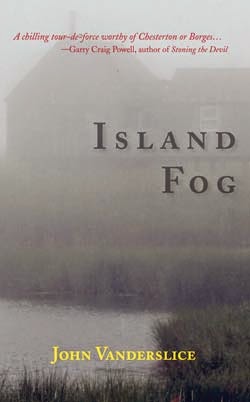
More book news!  (Please excuse the self-promotion.)  Island Fog is fully out!  The paperback can be purchased through Amazonbn.com, and lavenderink.org.  Meanwhile, a Kindle e-book version is available through Amazon and Amazon.co.uk.  If you do read it, please put up a review on Goodreads and/or Amazon and/or bn.com, etc.  I'd love to know how it struck you.


                                                    *  *  * 

Goodreads giveaway winners!  The Goodreads giveaway contest was a lot of fun.  Thanks to author/blogger Erika Dreifus for insisting that I get it started.   In the end, 873 people signed up, and three of them won free books: Melanie Ciaccio of Brandon, Florida; Ken Gilmour of Petersborough, Ontario; and Tasha Mellins-cohen of Bristol, England.  Congrats to Melanie, Ken, and Tasha.

                                                    *  *  *

I'll be on the radio today!  An interview I completed with KUAF radio in Fayetteville, Arkansas will be broadcast today (Oct. 6, 2014) at noon and 7 pm (central time, USA) as part of their daily Ozarks at Large program.   You can listen live via the internet at www.kuaf.com.  If you miss the live broadcast, an archived version should be avaiable soon.   Happy listening!

                                                   *  *  *

My new website!  Dang, I've forgotten to tell blog readers about my new website, gorgeously designed by UCA MFA-er Rebecca Hawkins.  Go to johnvanderslicebooks.com to get the latest news on appearances and or reviews.


Monday, September 1, 2014

At long last--the historical fiction class

0


[This post is being dual-posted on my other blog, Payperazzi.   For weekly reflections on writing, teaching writing, publishing, and the writing life, check out Payperazzi.]


For years at UCA we've talked about it: running a workshop class solely devoted to historical fiction.  There seemed to be a pressing need.  After all, as I've written about repeatedly on my other blog Creating Van Gogh, historical fiction is enjoying an especially fruitful time right now: as popular as it's ever been in terms of mass market sales, while at the same time its writers routinely win or make the short lists for prestigious prizes like the Man Booker, the Pulitzer, and the National Book Award.  Most importantly, the students want to try the form out.  They want to focus on it.  They want to study it.  So really it's about time.  And, yes, now it's happening, and I'm honored to be the instructor allowed to teach it.  The crop of students in the class--a nice mix of graduate students and undergrads--are all genuinely interested in the form and eager to throw themselves into at least one, if not three different, past times in order to write a story or stories.  (I've given them the option of writing three separate fictions or one longer one.)  One of the undergrads is a history major.  Another is a business major/writing minor with an interest in the form that dates back several years, when I first had him in workshop.  Then he was writing about medieval Japan; now he's interested in Joan of Arc.  One of the graduate students is working on an historical novel for her MFA thesis; another wants to explore family stories from out of Kansas.  They're excited.  I'm excited.


Because the course was created under our Topics in Creative Writing rubric, for now it's a one-time shot.  Let's hope the class succeeds, which means the students like what they read and, more crucially, what they write.  And because it's a brand new course, it's an utter experiment, as any brand new course is--making it, from the teacher's standpoint, both thrilling and anxious at the same time.  I'm giving the students quite a mixed bag of work to do: required readings in historical fiction (including two longish novels), presentations on articles about historical fiction as a craft, the original fictions that they compose, in-class journal writings and reflections, peer group meetings, and, later in the semester, full class workshops.  It will be a full room of fifteen people and, as is usually the case with any workshop course, trying to figure how to balance all the different elements within the time alloted will be the biggest test.


I got the ball rolling last Wednesday with a short presentation on some of the issues surrounding the form.  First of all: What is historical fiction anyway?  Opinions definitely vary.  (Does historical fantasy count?  What about alternative histories?)  And: What are the "rules" of writing it? Here opinions vary even more widely.  I was hardly trying to lay down the rules myself but instead trying to suggest some of the areas of most sensitive and commited disagreement.  For instance, when employing an actual person out of history in your story, can you make things up that you know never happened?  When setting the story in a much earlier period is the writer required to describe in detail the physical setting of that period?  How closely should you--or even can you--try to mimick the way people spoke in the time period?  And what if the language they would have spoken is medieval French or Turkish or Russian, and you're writing in English for an English language audience?  How do you approximate one language through the other?  I do have my own measured opinions on these questions.  Opinions I'll certainly share with the students.  But I'm hoping and expecting that as the students write their own fictions and research what others have to say about the form, they'll uncover lots of different opinions about such questions as well as plenty of questions that I haven't yet brought before them.  It seems true, in the end, that what the governing rules are for historical fiction is something that each writer of historical fiction has to decide for himself or herself, just as the governing rules of any novel have to be determined by that novel itself.  So in the end what rules my students choose for themselves will likely be as varied as the projects they are working on.  But we're only at the beginning now; the ending is quite far off indeed.  I'm excited and anxious to see how this ride goes.

                                                                  *   *   *

Giveaway reminder:  Just another reminder that through Goodreads I'm running a giveaway promotion (on three continents!) for Island Fog, my forthcoming book of linked short stories.  The book is half historical fictions, one of which my class is reading for this coming Wednesday.   Let's hope they like it!  And if you haven't yet, let's hope you sign up for the giveaway.  Just follow this link.  The promotion ends on Oct. 1, which is the official release date for the book.