
Showing posts with label anachronisms in historical fiction. Show all posts

Monday, September 17, 2012

Only in the multiverse

2


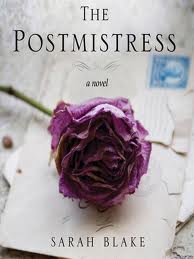
Last weekend, my wife and I were discussing the 2010 novel The Postmistress, a book she consulted in order to see how other writers handle fictional material set in World War Two.  She feels there are many positive aspects to The Postmistress, but one important facet of the novel seems troubling.  The book's hero, in an integral twist of the plot, travels to Europe with a portable recording device.  (This is early in the war, before direct U.S. involvement.) There she records accounts of ordinary people taking part in a widespread exodus from Nazi-controlled territories. The problem?  The recording technology the character uses was not invented until several years after the end of the war.  Okay, you might say, that's an anachronism--apparently a pretty big one--but they happen sometimes, don't they, in historical fiction?  If a writer is too sure of her own conception of reality, one shaped by the era she lives in, and if she isn't sufficiently thorough in her research, mistakes happen.  Yes, they do.  And inevitably readers catch those mistakes and advertise them, and sometimes they disable a book's essential credibility--or the author's.  But from whom did my wife find out that the portable recording technology was not invented until well after the end of the war?  The author herself!  In the author's own afterword!  Yes, Sarah Blake, author of The Postmistress, wrote an afterword in which, while describing the extensive research she undertook for the sake of the book, she also admits that the recording technology depicted in her World War Two novel did not exist during World War Two.  One can only conclude that Ms. Blake is more upset by the possibility that readers would think she's ignorant than by the possibility that they think she's being deceitful.

Wait a minute.  Sorry about that.  One should never talk about aesthetic decisions in moralistic terms.  This is an author's choice, not a crime.  But we should admit that there's a kind of historical fiction code that Ms. Blake broke along the way to completing The Postmistress.  Let me step back for a second and admit--as I have in several occasions before--that my historical fictions are not always 100% accurate to biographical fact.  The most glaring example of this is inventing a whole  (and extremely short-lived) second attempt at an art dealing career that the historical Vincent Van Gogh never tried.  In that case I was guilty of knowingly departing from the historical record, something that certain authors of historical fiction claim one can never do under any circumstances.  But it seems to me there's a crucial difference between depicting something that didn't happen but could have and depicting something that could never have happened.  One of my professors in graduate school, a fine writer named Wendell Mayo, spent regular time in, and frequently wrote about, Lithuania.  His stories were sometimes criticized as being unlikely, unbelievable, too extraordinary.  Wendell didn't immediately dismiss the claims.  If someone who knew Lithuania well (like, say, a Lithuanian) objected to a plot element on grounds of credibility, he tried out to find out more from the person.  "You mean this could never happen?" he might ask. Sometimes the answer was yes.  And that, for Wendell, was a legitimate concern.  Most of the time, however the answer was something closer to: "No; it's not impossible; it's just not likely.  I can't see it."  Or: "Well, I've never heard of it happening!"  That was good enough for Wendell.  As long as a situation was theoretically possible, it was fair game for fiction; which is, after all, fiction.


Applying Wendell's rule of thumb, you can see the problem with The Postmistress.  Ms. Blake hasn't developed an improbable plot but an impossible one.  Unless, that is, she's writing not for and about our commonly shared and understood reality but the reality of the multiverse, in which, due to its infinite number of universes and infinite number of chronologies, every possibiity, even the impossible ones, are somewhere realized.   But that certainly isn't how writers of historical fiction typically define what they do--or ever define what they do.  And it's certainly no claim made anywhere else in The Postmistress, which, last I heard, was not being talked about as science fiction.

Tuesday, July 31, 2012

The ironies of language

1


In a couple of recent posts I've been writing about the challenge of making historical fiction "sound" historical.  Yes, of course, there is factual history to get accurate, and there is the historically correct physical look that should guide your descriptions; there is contemporary slang that must be avoided in dialogue and even contemporary attitudes with which you should endow your characters only warily and only for specific purposes.  (Some argue you should never do this at all.)  But there is also the specific words used in the narration.  Especially if one is employing a first person narrator, but even if one's narrator is third person, a writer must work to include only language that feels right for the person and the era and struggle against language that finally isn't, at the same time being careful not to create a too cliched historical sound, something that sounds too much like what we expect, for instance, an American puritan to sound like, or an Enlightenment era Englishman, or a nineteenth century servant to the emperor of China.  Your characters and your narrators must seem historically accurate and yet never cliches.

This effort becomes all the more complicated when one starts to examine the etymylogical history of specific words.  Words one might use without questioning turn out to be "historically challenged," whereas other words that sound thoroughly modern turn out to actually have an extensive literary lineage.   This issue is in my mind currently because of revisions I made to a short story set in 1820 on Nantucket Island, Massachusetts.  The narrator is a twelve year old white boy of English descent.  One editor who read the story questioned several of my word choices, and quite rightly I should add.  For instance, when she saw my narrator make a reference to chocolate she wondered aloud if a young island boy in the early decades of the nineteenth century would have any notion of chocolate at all.  And I thought: Damned if I bet she isn't right.  I didn't know much about chocolate, but I knew enough to know that.  Some simple research revealed that while drinking chocolate was not unknown in the United States prior to the 19th century, chocolate did not become a confection until the 1830s in England; not until the 1850s did Americans taste bonbons, chocolate creams, and hard candies; and not until the invention of milk chocolate in 1875 could chocolate candy become widely affordable and thus consumable by the masses.   (My narrator, by the way, was hardly from the upper classes, who were almost the exclusive consumers of chocolate for several centuries.)


So I struck the reference to chocolate and began examing other of my word choices.   I wondered about kid (as in "boy"); I questioned stuff (as in junky items) and slug (as in "to hit").  If chocolate was an anachronism, surely these were too, right?  Well, interesting what I found out.  Hardly a newsprung word, kid is derived from Old Norse.  Its use as a slang term for "child" can be found as far back as the 1590s.  Okay, so kid could stay, but surely not so undignified a word as stuff, right? Ho ho, not so fast!  Turns out our contemporary stuff is derived from the old French verb estoffer ("to equip or stock") and by the 1570s was used to mean "matter of an unspecified kind."  So stuff could stay as well.  How about slug?  Three for three?  Slug sounded like such a good old Anglo-Saxon word that I expected only good news.  Yet here the research tripped me.  While using slug to refer to the animal was well in place by the early nineteeenth century--as well as its slang meaning as "strong drink"--the word was not used to refer to a physical blow until 1830.  So, sad to say, slug had to go.

This struggle with individual words makes up, for me, some of the most interesting moments of my writing life, and is certainly part of the exciting challenge of historical fiction.  But finally, no matter how important accuracy is, it can't only be about the research.  Finally what matters is what works for a story.  As I once heard in a fiction writing workshop after a class questioned the feasibility of certain events in a student's story and she responded by saying they actually happened, "the truth is no defense."  In fiction writing it's what seems truthful, seems possible, seems believable that matters.  Because the reader is not going to know or care about the real life events that happened to your best friend or your mother or your dead ex-husband.  The reader only knows the characters in your story.  Similarly, what seems to fit the characters and the story is the final gauge with which a fiction writer needs to measure his words.   But to have his decisions backed up by a little etymological research surely makes him feel better.  Believe me, I know.


Thursday, April 22, 2010

Throwing the F bomb in historical fiction

0


I blogged last weekend about an issue that arose during a historical fiction section at the recent AWP conference in Denver. In that entry, I took novelist Ron Hansen to task for his rule that a writer of historical fiction should never "knowingly part from fact." Hansen said many things during that session that I do agree with, one of which is that a writer of historical fiction should not use slang or terminology that postdates the era he or she is writing about. That seems a straightforward rule, one that I think most people would find reasonable and even useful. Part of the joy of writing historical fiction, after all, is finding out about previous decades and centuries, including the kinds of phrases used back then. When one is writing a novel set in North America or another English-speaking part of the world, Hansen's rule is easy enough to process and to follow. If Americans didn't say "by the skin of our teeth" in 1791, then you probably don't want to have the characters in your 1790s Boston novel use that phrase.


Things become more complicated, however, when your novel is set in a non-English speaking country or, as in the case of my Van Gogh novel, countries. If you are writing in English for an English speaking audience, then part of the long process of creating your novel is finding the right tone in English for conversations that would have actually occurred in French or German or Dutch or Swahili or whatever. (Assuming, of course, that your made up conversation ever actually happened at all.) So when a word came into parlance in English is less of a pressing matter than whether or not that word effectively renders the flavor of the character's thought. To be specific: At various points in my novel, different characters have reason to express disgust or anger or severe frustration. In a contemporary novel (in English), a character might simply say "F*** it." But can I have the characters in my nineteenth century novel--set in a non-English speaking countries--say this? My answer, so far, has been yes. In fact, the F word might be one of the easier linguisitic issues to put to rest. First, when I use that phrase, or a version of it, (and I don't use it very often) I do it because I think the word fits the emotional tone of the thoughts or conversation depicted. Would Van Gogh have actually used the word "f***"? Probably not. (Although he was fluent in English.) Would Gauguin? Not at all. But that's because they were not native English speakers. In fact, none of what I have them say in the novel they could ever have said--not the precise way I write it--because my characters weren't speaking in English back in Nuenen or Antwerp or Paris or Arles in the 1880s. I realize this may sound like an obvious point, but I make it to emphasize that a writer who is, essentially, trying to translate nineteenth century continental speech into English that a contemporary audience can read and emotionally appreciate, automatically earns a little leeway in terms of the application of Hansen's rule. Besides which, those who have looked into the etymology of the F word--and, by the way, I understand there is a fascinating documentary about this very subject, available through Netflix, titled The F-Bomb: A Documentary--have discovered that in English the word has been used for hundreds of years, well before the dawn of the 1880s. Not only that, but it seems likely this English language slang word is NOT derived from some silly acronym, but from simillar sounding words in Dutch (Van Gogh's native language!), German, Swedish, and Norwegian that mean "to strike" and/or "to copulate." (In fact, the Swedish word for "penis" is fock.) So given that the word existed in English at the same time as the real Van Gogh and the real Gauguin lived in continental Europe I feel all the more justified in using the word for my English-speaking audience--if I feel it accurately expresses the tenor of the characters' thoughts.


Language in a historical fiction is an extremely tricky issue, we can all agree, no matter what we think of Hansen's rule. Some would say, "Isn't the point of any novel to reach and touch the contemporary reading audience?" And "Can any of us really know how people talked and thought day-to-day in a world from 300 or 500 or 1000 years ago?" The answers are Yes and No. Given that, can we just go ahead and use contemporary English, no matter what the era is we're depicting? My answer: Not so fast. The simple fact is that in order to be affecting to the reader the language has to be credible, and in order to be credible it has to feel as if it could belong to the era depicted, even if it finally doesn't. And that's where applying Hansen's rule can be very useful for establishing and maintaining just that credibility.

Friday, March 19, 2010

Mississippi Women

0


Following Erika Dreifus's recommendation on her excellent blog Practicing Writing, I picked up Kathryn Stockett's novel The Help recently. You've probably heard of the novel already. Not only is it a major bestseller--a literary book that has "broken out"-- but it is already being developed into a major motion picture. I heartily recommend The Help. Although you hear this sort of thing said all the time, I literally "could not put it down." It explores a flash point issue--the relationship between black house servants and their white employees--at a flash point time in our history--the early 1960s, when civil rights struggles were becoming white hot. These various tensions are expertly explored and manipulated by Stockett. Most impressive is how Stockett manages to capture a variety of white and black voices. I believe every one of her characters. I feel them as individuals not types.


My own definition of historical fiction is fiction that is set in a time prior to the author's birth. For the author, therefore, that time period is not simply remembered and described but a part of history to be evoked through imagination and research. That's a crucial difference. Stockett did grow up in Jackson, Mississippi--the setting for her novel--and did have personal experience with African-American help who worked for white employers (she recounts her own history in an afterword), but given that she was not alive in 1962-1964, I'll call her novel historical. Besides, given that the 60s were one of the most contentious and important decades America ever lived through, it's hard not to see any novel set in that time as evoking history. All that said, I must hold Stockett's feet to the fire for one or two instances of historical inaccuracy. For the most part she does superbly well, mentioning and/or dramatically using the events of 1962, 1963, and 1964 in credible and careful fashion. I did notice a big anachronism, however. One of her characters--in the summer of 1963--disparagingly describes a group of Yankee civil rights activists as "hippies" who flash peace signs all the time. No. Not in 1963. Not before Kennedy's death. The peace movement, and the peace sign, came out of the anti-Vietnam war movement. And as long as Kennedy was president, Vietnam was a minor footnote on the American political landscape. Civil rights was the much more prominent issue. Not until Johnson became president and greatly escalated our involvement in Vietnam--and the number of American deaths became noticeable--were there any peace protesters or peace signs. Certainly, "hippies" is a purely late-60s coinage. Just looking at photos of the northerners who traveled to the south in the early 60s to assist with voter registration reveals that these were not "hippies." (Not even the Beatles had very long hair in 1963.)

It's a minor flaw in a very good book that demonstrates few historical missteps, but given the glaring anachronism it did stick out to, and disappoint, me. It's an example of how easy it is for even a talented writer of historical fiction to go awry if she's not careful. Even so, go buy and read The Help.