





 0
0 It continues to be a nourishing semester in my Novel Writing Workshop at UCA. We've been on Spring Break this past week, but I can tell from various Facebook posts my students have put up--early on, they established a Facebook page for the class--that many of them have been keeping their noses to the grindstone. (They have to. Two weeks worth of word count are due when next we meet.) Some of them are still encountering plot and character breakthroughs; one student just realized her novel will have to be a trilogy (she seems excited rather than depressed); another student, Taylor Neal, warmed my heart with some philosophical musings the other day: a list of ten truths about novel writing which, for me, only reinforced why offering this class is so important. (Are you listening, creative writing professors and curriculum committees?) Of course, many of Taylor's "truths" deal with how hard novel writing can be--and who says it isn't?--but at the same time I was glad to see comments like this one: As frustrating as the lows are, the highs are 100 times more sweet. There's an exhilaration from writing a good scene, even a good sentence. It's like a peace that settles over you. It keeps you going, and reminds you that this can be done. And this one: When you're writing, there are a million other things you would rather be doing. When you can't write, there's nothing you would rather be doing than writing. And this one: Nothing is impossible (cheesy, but true. There were times when I was convinced I would never write a book, and look at me now, almost 40,000 words in).
  Perhaps her most important comment, given that the framework for Taylor's novel writing this semester has been our class, and a crucial component of the class is small peer review groups, is the following: Writing a novel is truly a group effort. There's a reason it never really worked out when I was going at it alone. Critique partners are indispensable when it comes to feedback, encouragement, and ranting about your novel. You have no idea how good that made me feel to read. Because it means the class is working precisely as, and why, it should. I would never deny that writing a novel--or any book--is fundamentally a tussle with your own soul, your own knowledge, your own wisdom, your own discipline (or lack thereof), but it's an age-old truth that writers have always needed to share their work and receive feedback on that work. In my very first semester of graduate school, the then-MFA director, Peter Klappert, who was also my poetry professor, preached this gospel non-stop, probably because of an anti-MFA sentiment that was already breeding in some writing circles and still abides today. Workshop or no workshop, writers have always shared their work with someone; they've needed to; they've sought it out. Pulitizer Prize winners have their beta readers, for heaven's sakes. Some of them belong to writing groups. (Just ask Jennifer Egan.) The image of the lonely writer in the candlelit garret really should be gone by now, and especially should be gone from the minds of young, budding novelists--that is, if they ever hope to accomplish anything. What a novel writing class can provide for student authors is a place and a process. It provides a classroom to bring questions to as well as new discoveries and bitchy, self-loathing complaints. It provides regular fixed deadlines. And, perhaps best of all, it provides (or should provide) intelligent, sympathetic, practiced readers. (By sympathetic, I don't mean they are going to approve of everything that you do, but that they understand what it is you are attempting. They are informed novel readers, at least more so than your boyfriend or the manager at your bank job.) At least this was my hope when I established the outlines for Novel Writing Workshop, and, for some of the students at least, it appears to be working exactly as planned. And I can only hope that the lessons my students learn about novel-writing from having to draft an entire book this semester will carry over to the next time they want to write a novel, but won't have a Novel Writing Workshop to join. Hopefully, they'll be able to find their own workable substitute.
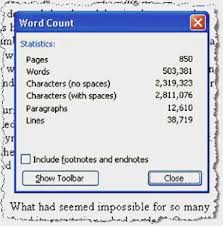 Last time I wrote about this class, I joked that, given how well many of them were doing, maybe I was being too easy on them this semester. Maybe I should up the work count next time. (55,000 words, after all, does make for a fairly short novel.) When I mentioned this in class, several said No, No, No, this is about as much work as we can handle. But the truth is, except for one student, everyone has kept up with word count and several are ahead. A couple students informed me that they intended to finish their drafts over spring break and then edit for the rest of the semester. I'm astonished and delighted at this continuing state of affairs. So, why not encourage future classes to get closer to the 80-100K average for a published novel in this country? (Closer, I'm saying, you realize. I would never ask undergraduates to write 80K.) Alternatively, I am considering assigning another model novel or two for them to read. (Short novels.) I find it very instructive to read a novel while thinking about how the writer handles the various elements of craft in the span of the book that you yourself are working through. In other words, while developing the first third of your book, to look at what the author of the model novel establishes in the first third of hers. And so on. I've tried to do some of that with the two novels I've assigned this semester, but I would need to assign at least one more to create a perfect bridge for the arc of the students' drafts.
 In short, it's been a fun, productive semester in Novel Writing. And it almost always works out that way. (Note to self: There's probably a paper to be written on why that's true.) My semester novel? I kind of sort of finished my draft two days ago, although not surprisingly there are several serious matters that need to be tended to before I can really regard it as a done first draft. My own word count is at 73,700. (Even I'm writing more than I did last time I taught the class!)


