

 2
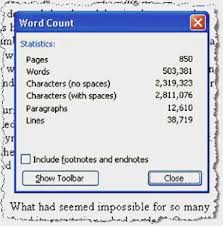
2 Over the last several days, I've been going over final folders turned in by my various creative writing classes at UCA. The contents of the folders vary according to the class. My novel writing students had to turn in reflective statements about the semester and about their peer review experiences. It's been gratifying to see exactly how much the students got out of the semester, but also eye-opening to see what worked and what didn't (which varied from student to student of course); and thrilling to see some students offer really interesting ideas for future renditions of the class. Not all the ideas are tenable, but many are intriguing. One student suggested that instead of having two novels that the whole class reads, have one shared novel and then one novel that each peer review group picks--a book that models the kind of novels that group is working on. That's a fantastic idea--and would have worked well with the peer group that student was in--but not every group included students who were writing the same kinds of novels. A more workable version of this idea would be to have each student select a model novel for himself/herself and anayze that one. Many students wanted more frequent contact with their peer groups, which I can certainly understand and may very well do next time, although I also think it's important too to have time away from those groups. Many students also wished they could have had more contact with the novels of the students not in their peer groups. But without instituting full class workshops I'm not sure how to put that into practice. One student suggested switching up the peer groups in the middle of the semester, but I think it's crucial that your review group have followed your novel from the start. Having to play catch up with a new group's novels might, I fear, overwhelm the students with work.
 Almost every student complained about No Plot? No Problem! by Chris Baty, our basic textbook. Although it has some fine craft ideas embedded in it, it's essentially a motivational book. While I think it's extremely entertaining, and it takes no time to read, some of the students didn't appreciate Baty's sense of humor; others they felt that what he was saying was too obvious. One glaring issue with the book is that it's designed for people trying to complete NaNoWriMo, in which you draft a novel in a month; we were drafting a novel in a semester, so some of the urgency of his message didn't directly apply. I guess I'll drop the book for next time, but I fear what will happen is that the students then will long for the kind of motivational speeches Baty can give, and in his rather unique style. Most students really appeciated having so much writing time afforded in class each week; others felt that they didn't need it or want it. (I have to say, though, that the differing opinions reflected how disciplined the students were or were not in making use of that time.) One student thought we should read more novels; some thought two was plenty; some thought we should discuss the model novels differently (something I agree with and will have to change for next time); a couple thought we should not read any model novels at all. Well, I can't accept that. In fact, I would go so far as to say that if one gripes about having to read novels one should not be enrolled in a novel writing class.
  Except for a single person, every student was seriously appreciative of the weekly word count deadlines and the fact that they were expected to finish a draft by the end of the semester. Having taught this class another way--in which student started novels and workshopped chapters, but didn't even get halfway through--I can tell you I'm never doing it that way again. Because 99% of them never worked a second more on their novels after the semester ended. They never understood what it meant to follow a story all the way through. That's a powerful experience; it's an educational experience. One can learn some things from craft books; one can learn a great deal from reading other writers' novels. But one learns the most about novel writing by actually writing a novel. And then another one. And then another one. That's what my students have done, and I'm not denying them that experience the next time. Here are some of their comments on what completing a full draft means:
What's important to accept is that I wrote over 55,000 words this semester. . . Many of my friends are in shock and awe at what I've done. Personally, I don't feel like I've actually done any work. But I guess if you love what you're doing it doesn't really seem like labor. Before this semester, I didn't truly define myself as a writer. I was just a student doing writing assignments. This class has made me realize that it's okay to be passionate about something, and it's okay to be confident in who you are. I now say that I am a writer. And I am damn good at what I do. --Colleen Hathaway, graduating senior
After printing out my novel, I'm honestly amazed. I look at the huge stack of papers, and I can't believe that I wrote all of that--in a semester. I keep showing all of my friends because I'm just so proud of myself. Antoher thing that amazes me is how ready I am to write another novel. During the process, I was quite honestly done with the whole novel writing idea. I didn't want to do it again, and it seemed that my dreams of becoming an author were slowing being put on the backburner. I can't explain it, but there's something so invigorating about actually finishing a draft. Sure it needs work. And sure, that work is going to take a while, but I'm just ready to feel that exhilaration again.-- Taylor Neal, graduating senior
I am grateful for many attributes of this class: that it was offered to the MFA students, that it was offered when it was, and this it was structured around a goal of completing a full draft of a novel. I have started two other novels, but I have never gotten beyond 20 pages, so I thought of it as somehting I didn't know how to stick with. This class changed how I think of myself and my abilities as a writer so much for the better, and for that I am so very grateful.--Stacey Margaret Jones, graduate student
Some changes are definitely in store for the next time I teach the course--assuming it's me that teaches it and not another professor--but the requirement to complete a draft is one thing I ain't changing! Just like Taylor, I can't wait.