Showing posts with label Island Fog book. Show all posts

Tuesday, March 17, 2015

Snow ends, tour begins

0


Boy, has it been a weird winter.  Mid-January to early-February looked practically balmy here in Arkansas, and then we got slammed with three to four straights weeks of winter junk.  Nothing like the northeast got, of course, but enough that it put a significant hit on local schools and events, including an evening at the Big Rock Reading Series (in Little Rock) that I was dearly looking foward to participating in.  Two weeks later one day of our Arkatext Writers Festival had to be be canceled, the very day when a poet I was "in charge of" was supposed to speak.

The good news is that spring, at least in Arkansas, seems to have actually and truly arrived.  (As I type this, it's 72 degrees outside.)  And not a second too soon either, because starting this Thursday morning I'm heading eastward with my family in our minivan to visit relatives and do an Island Fog mini-tour.   One has to arrange these dates a ridiculous amount of time in advance, so I'm keeping my fingers severely crossed that in the northeast, even if it's colder than here, the snow and sleet and slush are done.   No more cancellations, please!

For anyone reading this blog who lives in or around upstate NY, here are the events I'm doing in the next ten days or so.  (I'm leaving off one date with a book club in Auburn, NY, because that's private!)


Saturday, March 21, 11a-1p: Book signing at Market Block Books in Troy, NY.  A lovely, old fashioned bookstore in an historic building in a charming city just outside of Albany.   [That's Market Block in the picture above.]  My father-in-law and his wife will be there, along with several of their friends.  Come join us!


Thursday, March 26, 7p: Reading and book signing at the River's End Bookstore in Oswego, NY.  I have heard nothing but rave reviews about this store from friends who live in and around the Syracuse area.  ("You have to go to River's End and read there!")  Well, after much scheduling and rescheduling it's finally happening.   [River's End is pictured on the right.]


Friday, March 27, 7p: Reading and book signing at the Downtown Writer's Center in Syracuse, NY.  This venue hosts an ambitious schedule of reading events every semester.  As a visitor from faraway Arkansas, I'm honored to be on the program.


One thing that's thrilling to think about is that people in upstate New York are surely more familiar with Nantucket, Massachusetts--the setting for every story in Island Fog--than are people in the south, even people in a sweet upscale college town like Conway.  So come on out, up-staters, and ask me whatever questions you can think of about that little island "away offshore."

Monday, January 12, 2015

What's a virtual book tour?

0


[I'm dual-listing this post with my other blog Payperazzi.  I wanted to post it here as a followup to a note about the blog tour that I added to my last Creating Van Gogh post.  But as it deals with the
   writing life generally I thought it was appropriate for Payperazzi too.]

When the publicist I hired in the fall suggested an organized online book tour, I must admit I hesitated.  Although I should have been, I wasn't aware of this phenomenon at the time.  Of course I knew about book blogs--in fact I'd contacted dozens of them last summer trying to line up reviews and mentions--but a coordinated tour through several of them was a new form of  marketing for me.  The publicist suggested a particular tour company she knew and respected: TLC Book Tours.  Looking over their web site I saw that I could choose between a 10-blog tour and 20-blog tour; I also could, if I wanted, among other services, pay for advertisements in a newsletter the company puts out to its book club.  All the different services offer by TLC seemed attractive and potentially valuable, but a 10-blog tour was what our budget allowed, so I went with that.


It took several weeks for the tour to get fully arranged--no way could I have coordinated this all on my own--and I must admit that there days when I wondered if TLC had forgotten about me.  Ideally the tour happens very close to the official release date of your book, but since I was late to commit, the tour  couldn't happen until my book Island Fog had been out for a couple months.  I had my choice of December or January, and Trish Collins at TLC strongly recommended January, explaining that everyone is too distracted in December to pay much attention to bloggers.  I took her word for it.

So--ta dah--January successfully (and coldly) arrived, and with it came the beginning of my blog tour.  So far so good!  I must admit that it's childishly thrilling to wake up and know that a given book blog is going to exclusively profile your that day.  Thrilling, but anxious too, because you have no way of knowing what they will say.  There's no contractual agreement that the blogs have to provide positive reviews.  No, you just send each blog a copy of your book, stand back, and then simply wait for the results.  I guess it's kind of like an actor in Broadway show who, the morning after the opening, rushes to look at his copy of the Times to see what the reviewer had to say, knowing how his day--to say nothing of the fate of the show--will hang on what's printed there.  That same breathless thrill--and that same anxiety.  Except that, weekends excluded, I get to experience it for ten days! (Actually eleven, as it turns out.)  It's been great, though.  Really fun.  It helps that every review so far has been positive, and a couple have been overwhelmingly so.  Ann Walters at Books on the Table so liked the book after she read it that she shot me a series of questions to answer so that she could expand her review with an author interview.  Very gladly!  Thank you!

To make the week even sweeter, a long-since-completed interview I conducted with my colleague Garry Craig Powell finally found its way into Fiction Writers Review on Thursday.   How's that for timing?  For the very attractive look of the interview I have to thank the kind attention, and conscientious editing, of FWR publisher Jeremy Chamberlin.  Click here to read it.

As I've mentioned to a few people already, and said in the Books on the Table interview, I feel like publishing this book has taught me what to do the next time I publish a book.  (Keeping my fingers crossed on that score.)  That has been the real benefit of all these various marketing activities.  And certainly one lesson is that a book blog tour is clearly worth it.  In sales?  I don't know yet.  Maybe yes; maybe no.  In exposure?  Yes, certainly.  In thrills?  Absolutely.  In fact, I would heartily recommend TLC to anyone who asked.  That said, if anyone reading this has had a particular bad or useless experience with a book blog tour I'd be happy to hear about it.  Below find links to the reviews that have been posted on the first five blogs on my tour.  And then below that, links to the upcoming six.  (TLC kindly arranged a lagniappe for me.)  Cheers, everyone.


Last week's stops on the Island Fog book blog tour:


Monday, January 5th: The Year in Books
Tuesday, January 6th: Svetlana’s Reads and Views
Wednesday, January 7th: Books on the Table
Thursday, January 8th: Savvy Verse & Wit
Friday, January 9th: The Book Binder’s Daughter


This week's stops:  


Monday, January 12th: The Discerning Reader
Tuesday, January 13th: No More Grumpy Bookseller
Wednesday, January 14th: Lit and Life
Friday, January 16th: Peeking Between the Pages


The last two stops:


Tuesday, January 20th: Bibliotica
Thursday, January 22nd: A Book Geek

Monday, January 5, 2015

A great Hands On experience

0

I've discovered a new conference!  And it's in a great city: New Orleans.  I traveled down there shortly after Christmas for what, I found out, was only the second running of the Hands On Literary Festival and Masquerade Ball.  It could not have been a more pleasant, more friendly, more genial event--aptly organized and warmly administered by New Orleans native Jennifer Stewart-Wallace--and I found it unusually nourishing.  First of all, because the conference is only in its second year, it's still a very manageable size.  Only two sessions to choose from for each time section, one being a craft talk and the other a reading, with plenty of time allowed, and occasions provided, for socializing and interacting with new colleagues.  And not so many of them that you run into them only once and hurriedly in the hallway of some enormous conference center, or that you can't remember their names.  No, no.  The Hands On Festival is a much cozier affair.  Many of the participants had past or present connections with either the University of New Orleans or  Louisiana State University; several of them knew each other already, which created a kind of lovely reunion atmosphere at the festival.  But by no means was it an exclusive / "no new faces wanted" kind of affair.  In fact, not only did I feel welcome, but I felt I made some important new professional friends.

I also heard some excellent presentations.  One in particular sticks in my memory and is relevant to this blog.   The theme of the session was "Using Research in Long Form Writing."  Not all of the comments related to historical fiction, but some of them did.  One participant, Lania Knight of Eastern Illinois University (pictured on the right), is currently working on a novel set one hundred years in the future, a period that in her novel has suffered through considerable ecological turmoil and vast social upheaval.  What I found most interesting about Lania's presentation, however, is that nearly all of her comments were about the past and how writers understand that.  One of Lania's credos is that if one is writing about the future it is supremely important "to get the past right."  She's found in her own reading of futuristic novels that the authors' visions of the future are often drastically different, a difference she claims stems from their very different views of the past.  It only makes sense that how one interprets the past will invariably affect how one perceives the future, but the thought had not crystalized for me until Lania said it during the session.   Some authors, for instance, Lania explained, perceive the past purely through a white, European, neocolonial gaze; others perceive the past more broadly. She has been attempting, as best she can, to perceive the past comprehensively and accurately.  So her research for the novel has not been only or even mostly a matter of reading a lot of futuristic science fiction (although she has done quite a bit of that) but reading nonfiction that explains the nature and history of the various ecological phenomena that play an important role in her novel.  She stressed repeatedly that she "wants to get the past right" in order to make her vision of the future credible.

One of the other presenters was Daniel Wallace (pictured on left), fiction writer and Ph.D. candidate at the University of Tennessee-Knoxville.   Daniel is working on a novel set in eighteenth-century Scotland.  He outlined many issues he was having with how best to use the research he has carried out for the novel.  But one concern seemed most pressing: that of spoken language.  Daniel explained that at the time three separate languages would have been commonly spoken in the country: a less-than- modern-sounding version of English; Scots, a Germanic language variety only distantly related to English and spoken in the Lowlands; and Scottish Gaelic, spoken in the Highlands.  If Daniel were to be completely faithful to the facts of history, his novel would need evidence speakers of all three types.  He's worried that this could be quite confusing to contemporary readers, especially when he begins to represent these different dialects on the page.  He was not at all happy about this prospect, yet he clearly did not feel entitled to ignore the facts of history.

Of course, here again we are faced with one of the questions I've asked repeatedly on this blog: When and where is it appropriate to ignore or even alter history when writing a novel supposedly drawn from history?  In regards to Daniel's case, other conference goers came to the same conclusion I did; i.e., unless he intends to market the novel solely to a society of linguists, Daniel cannot and should not attempt reproduce precisely how his characters in real life would have spoken.  Understanding one alien dialect can be confusing enough for a reader--along with the ever-present risk that the dialect will render the character a caricature, that the reader will see only a dialect and not a person.  But multipy that by three and you only have chaos.  One possibility, given that Daniel's intended audience is native English speakers, is that he aim for a neutral form of English, one that a) is readable, b) comes across as natural for the characters, and c) is stripped of any giveaway slang or anachronistic cultural references.   I remember years ago hearing Tracy Chevalier, author of The Girl with a Pearl Earring, explain that this was her strategy for that novel.  She didn't try to imitate seventeenth-century English just because her novel was set in the seventeenth-century (in Holland, though, not England), but instead she aimed for a brand of English that sounded believable to the modern ear yet was free of obvious anachronisms.  Another possibility suggested to Daniel was that when he first introduce a character he suggest that character's language through a few choice phrases or words, thus putting the idea in the reader's mind that this character speaks in a given way, but then not to push it very much for the rest of the book.  This sounded like a different but workable solution to the problem, and one in which the underlying strategy is similar to what I usually suggest: When writing a novel, what your novel needs is paramount, not what history needs, because a reader won't care about your novel's accuracy to history if he or she can't read it--or doesn't want to.   Which is not to say--not at all--that history should always be jettisoned.  Often, one gets the best, sharpest ideas for a novel from the historical record itself.  But I've blogged about that fact in the past and I expect I will in the future too.  So we'll save that discussion for another time!

Just one example of the interesting talk that went on at last week's Hands On Literary Festival.  Can't wait to next year to go back.

                                                     *    *    *
Blog tour starts!  My new book of short stories, Island Fog, has already been featured on several book blogs and websites, but today marks the start of my officially arranged "blog tour." Over the next eleven days, not counting weekends, eleven blogs will publish reviews of my book, one per day.  It's an exciting and somewhat anxious prospect.  I have no way of knowing if they're going to like it!  But given that so far the reviews have been overwhelmingly positive, I'm going to hope for the best.  In my next post, I'll provide an update on how the tour is going, with links to the individual blogs.

                                                    *    *    *
More thrills--my wife's book club!  Tomorrow night my wife's book club meets at our house to
discuss--you got it--my book.   Talk about pressure!  Wisely I think, the club likes to pick books if they know they have special access to the author and thus will be able to ask the author questions.  Sometimes they Skype with authors; in my case, I'll be sitting in the room with them.  Again, I can't know in advance if they liked the book or what their questions will be, but it's sure to be a memorable evening.  


Monday, October 20, 2014

New Van Gogh collection!

0

When I was working on my Van Gogh novel, Days on Fire, the one source I found myself coming back to constantly was the mammoth, three volume, hardbound Complete Letters of Vincent Van Gogh, published originally by Bulfinch back in the 1950s.  It's an incredible resource: a better, fairer, clearer view into the mind and world of Van Gogh than any biography or novel (shhhh) or recollection "by those who knew him" (which are often marred by how little they really knew him).  Exacting descriptions of place he has visited; despair about his artwork and exultation about the same; resentment toward his brother and exhortations to him; disputes with his father; chatty discussions about (now long forgotten) artists or art dealers or paint supply store owners; opinions about the (countless) books he read; revelations about the women he loves and about love itself; depictions of the depressingly, growingly hopeless life at St. Paul's asylum in Saint RĆ©my--it's all there, along with so much more.  A whole adult life documented with a fantaticism of detail that is just about one of a kind, really.  As I say so often, I think surely it must be these letters--and Van Gogh's roadside eloquence--that accounts for our continued fascination with the man, just as much as his beautiful paintings and a life that was marked with so much tragedy, idealism, and stubbornness.   The one drawback to such a thorough recored, of course, is its necessary length.  The Complete Letters runs to something like 1800 pages.   Not a weekend read!  And while it's useful to watch the arc of the man's life play out over these hundreds of missives, long and short, profound and mundane, energized and bored and despairing, it's also true that not every letter is crucial to understanding Van Gogh, his time, and his milieau.  Or not crucial in the same way.  

So it's welcome news that in December a new selected edition of Van Gogh's letters will be published by Yale University Press, one with the beguiling title Ever Yours: The Essential Letters of Vincent Van Gogh.  You might have read Dan Piepenbring's early glimpse into the volume, published recently in Paris Review.  It certainly does sound like a promising new book: almost 800 pages in length, with 265 out of the extant 820 letters included, along with family photographs and 87 pages worth of reproductions from the actual handwritten letters.  At $50 it doesn't come cheap, but for a Van Gogh lover--or anyone simply curious about learning more about this fascinating person--it looks to me like money well spent. Of course, which letters you finally deem "essential" will depend on who you are and what you are trying to learn about the painter, but without yet having had the chance to review the collection I can take a pretty fair guess at some of the letters regarded as "musts": the letters written to Theo in the period of abject despair and loss of identity after being removed from his position as lay minister to miners in the Borinage region of Belgium; the letters to Theo explaining why the "no" delivered to Vincent by his cousin K was not really a "no," and why even in the turbulent state of his emotions it was better by far to feel such a powerful love than none at all; the letters to Theo glorifying the peaceful home life he enjoyed with his new life partner Sien and why, despite her being a former prostitute, Vincent regarded her as his wife and insisted the family do as well; letters describing his almost manic level of energy and the resulting "high yellow note" that marked his painting in that fitful, historic, crucial summer in Arles in 1888; the heartbreaking letter from St. Paul's in which he describes the painting he has just made in honor of the birth of his nephew (named after him) and his desire to bring it to the boy in person.  Interesting man, yes?  And let's face it, 800 pages--while hardly an inconsequential entry into Van Gogh's life and writing--is a much quicker read than 1800 pages.  This sounds like the perfect introduction to the other Van Gogh: the riveting literary artist.

                                                          *  *  *

Not to blow my own horn, but I am amazed and humbled by the fine reception my story collection Island Fog is receiving from book bloggers and other reviewers.  Here are two I found out about just yesterday: one comes from the book blog Books Are Love; the other from the Australian book blog The Bookshelft Garogyle.  (Great title, huh?)  Then there's the really positive one I got from Kirkus.You just write the stories and try to make them the best you can; then they go out there and you can't ever really (really) know if they are as good as you hope, not until such kind words come back to you.  I can't say how grateful I am.   And a little amazed.


Monday, October 6, 2014

The burden of the opinionator

0


I return to my writing classes tomorrow after canceling for a week to allow my students to attend the many different writing-related activities that went on during UCA's LGBT History Month celebration.  (See last's week's post.)  I'm grateful to return to the classroom, and eager to hear the students' impressions of the writers who came to campus, but there's one aspect of the teaching business that I won't exactly welcome back with open arms.  And that is the necessity of always having an opinion.  For a long time, but especially the last few years, this has increasingly been the single aspect of my job that I've struggled with.  One hears now and again about teacher burnout.  Usually what's evoked is misbehaving students; or meddlesome, government-enforced testing requirements; or ill-informed administrators; or a lack of financial support for important educational initiatives; or a widespread lack of respect in the community.  And I'm sure that for K-12 teachers those factors are extremely prominent.  But for a university writing teacher, especially a creative writing teacher, I thinkwhat burdens them more often is simply the matter of having to constantly deliver opinions about student writing.

Don't get me wrong.  I'm not talking about the burden of reading student writing.  I am thrilled to see what my students come up with.  Sure, not all of it is world-changing, but to see what ideas and approaches they employ can be insipring.  Just this semester, for example, the different stories my students are working on in historical fiction workshop class make a study in the variety of human curiosity: a young mother goes missing in Kansas in the 30s, a teenager goes missing in New York City in the 70s, the son of a musician struggles to cope in German-occupied Paris,  Canadian soldiers battle on the front lines in World War I, a nineteenth-century woman invents a lurid, bestselling tale about sexual abuse in a convent, a miner in the 20s falls for a woman he can't have, a patient in a dubious mental asylum in the 60s resists authority, Leah (from the bibilcal account) expresses her secret resentment of Rachel, workers riot in the 30s.  Reading these stories is never a burden.  But having to constantly lay down judgements about them, and advice for them, can be exhausting.  Not because I don't think I have good advice to offer--at least part of the time I certainly do--and not because my opinion-making is restricting the students' access to others' opinions.  (There are several possible mechanisms for feedback in a workshop course.)  But because reading with the idea that I will have to present at least one typed page of feedback on the story--and the student is waiting impatiently for such feedback--is a very different and demanding reading experience from any other reading experience in daily life.

When I read an author for pleasure, I tend to read rather forgivingly.  This is not to say that I do not notice weaknesses in some of the books and stories I read, or that I won't finally grow testy about those weaknesses, but that I tend to grant the author the benefit of the doubt for a good long time.  I tend to give a book a chance to prove itself to me on its own terms; to withhold judgement until I have a better sense of what the book is "about," what it's up to, how it's put together.   In short, I tend to read with an open mind.  But when reading in order to give opinions one must read with considerable more ferocity. Sometimes that's a good thing, because it means you are also reading with a great deal more attention.  But many times it just feels more draining.  Having to be the expert, the one with all the answers, can indeed be a burden.   Sometimes you just feel like saying, "This looks pretty good.   Keep going."  (And occasionally this is, more or less, what I say.)  But I tend to think that if that's all I say too often, the students will feel cheated of their tuition money.  And they would be right.  Indeed, the weird truth of the matter is that I am paid to have opinions.  So I do the best I can, sometimes stating what is working and what isn't with more absolutism than I actually feel.  (Other times, however, those determinations seem perfectly obvious.)

I say a second time, don't get me wrong.  I feel extremely fortunate to have the job I do and to work where I do.  Most days at most hours I am content, even quietly blissful.  But even good jobs have their tough parts; that is, the parts that don't match up so well with one's personality.  I think the fundamental problem is that creative writing--especially in the heady first draft stage--is almost entirely a matter of opening yourself up, flipping the switch so the current flows and keeps flowing.  It's not about being critical or doubting or judgmental.  It's getting started, letting yourself go, and forgiving all the temporary lapses.  It feels great,  it's absolutely crucial, and I'm convinced it's what hooks so many people so early on creative writing.  And it's what keeps us there.   Reading in order to have an opinion about what's wrong is the exact opposite mental condition.  It's like having to hold one huge muscle in my mind in abeyance while stressing another entirely, even unnaturally, almost to the point of taxation.  And it's not exactly soul-satisfying.  I don't know if this  comes as a surprise to anyone or not.  I suspect that most students think they're professors are enthralled by the idea of being the expert, the one at the front, the one with all the answers.  I suppose some professors do feel that way.  But I believe that more probably feel like I do: that being the expert can be an awful pain in the rear.  As well as being at odds with who you are and what you do.  Being an expert isn't how I get any story started.  Being an amateur explorer, a dubious risk-taker, and a weekend cliff diver is.  That way the education comes to you from the writing itself.  And so too does all the fun.

                                                       *  *  *

More book news!  (Please excuse the self-promotion.)  Island Fog is fully out!  The paperback can be purchased through Amazonbn.com, and lavenderink.org.  Meanwhile, a Kindle e-book version is available through Amazon and Amazon.co.uk.  If you do read it, please put up a review on Goodreads and/or Amazon and/or bn.com, etc.  I'd love to know how it struck you.


                                                    *  *  * 

Goodreads giveaway winners!  The Goodreads giveaway contest was a lot of fun.  Thanks to author/blogger Erika Dreifus for insisting that I get it started.   In the end, 873 people signed up, and three of them won free books: Melanie Ciaccio of Brandon, Florida; Ken Gilmour of Petersborough, Ontario; and Tasha Mellins-cohen of Bristol, England.  Congrats to Melanie, Ken, and Tasha.

                                                    *  *  *

I'll be on the radio today!  An interview I completed with KUAF radio in Fayetteville, Arkansas will be broadcast today (Oct. 6, 2014) at noon and 7 pm (central time, USA) as part of their daily Ozarks at Large program.   You can listen live via the internet at www.kuaf.com.  If you miss the live broadcast, an archived version should be avaiable soon.   Happy listening!

                                                   *  *  *

My new website!  Dang, I've forgotten to tell blog readers about my new website, gorgeously designed by UCA MFA-er Rebecca Hawkins.  Go to johnvanderslicebooks.com to get the latest news on appearances and or reviews.


Monday, September 22, 2014

Suspense builds!

0


In an odd conflation of life events, jury duty on the federal court in Little Rock, Arkansas beckons just as my book's big release is set to become a reality.  As I write this, it's Sunday, September 21, and in a few hours I make a call to a Little Rock number to find out if I must show up for duty on Monday morning.  If so, let's hope it's a quick and easy case! In the meantime, I eagerly anticipate Island Fog becoming available to order on Amazon any day now.  The official release date is, and has been, October 1, but my publisher Lavender Ink will likely make it available this week to satisfy demands for early ordering.  (In any case, one can already order the book through the Lavender Ink website.)  To top it all off, in the week of September 28-October 4 my university hosts two major visiting authors as well as a host of other speakers as we launch our first ever festivities in honor of National Diversity Awareness Month.  I am one of the co-organizers--and thus co-administrators--of the festivities.  Talk about a lot on your plate!  It's all good, but it's all huge too.

                                                             *   *   *


Pre-release reviews and other online activity seem to pop up every day or so.  At the end of last week I was notified of a review on the Oh My Bookness blog as well as the publication of a short "Books by the Bed" segment I was kindly asked by writer Cheryl Olsen to submit to the website We Wanted To Be Writers.  (The idea is to talk about what books are next to your bed or just were or will be shortly.)  She has also kindly agreed to review my book in the next couple of weeks.  Thank you so much, Cheryl.

                                                             *   *   *
Forgive another obnoxious reminder--maybe my last one!--that a Goodreads giveaway contest for Island Fog is still ongoing.  The end of the contest is imminent, however.  You only have until the last day of the month to enter.  Click this link for a chance to win one of three giveaway copies.


                                                             *   *   *


I can't know what jury service will look like or how long it will last, but I hope to write you next week with more details about UCA's weeklong festival in honor of National Diversity Awareness month.  The bad news is that both the idea of a Diversity Awareness month and our on-campus activites are long overdue.   The good news is that we have a fantastic lineup planned.  This lineup includes world-class creative talents like fiction and nonfiction writer Bernard Cooper (The Bill from My FatherGuess AgainTruth Serum) and poet Jericho Brown (The New TestamentPlease); also, the exhibition of a segment of the AIDS Memorial Quilt; a lecture on the origin and turbulent history of Conway, Arkansas's Pride Parade; artifacts from and a lecture on the late gay novelist Peter McGehee and his dark comedies of manners; the screening of two landmark documentaries about LGBT culture: Paris is Burning (1990) and The New Black (2013); a first ever reading put on by members our campus's LGBT organization, Prism; and a reading organized by Sibling Rivalry Press, a renowned and deeply respected publisher--located right here in central Arkansas, by the way--of many gay and lesbian writers.  If you're in the area the week of September 28-Oct 4, check it out!  If you're just interested in finding out more, contact Dr. Gayle Seymour (GayleS@uca.edu) or Joshua Miller (JDMiller@uca.edu) in the office of the Dean of the College of Fine Arts and Communication, University of Central Arkansas.

Monday, September 1, 2014

At long last--the historical fiction class

0


[This post is being dual-posted on my other blog, Payperazzi.   For weekly reflections on writing, teaching writing, publishing, and the writing life, check out Payperazzi.]


For years at UCA we've talked about it: running a workshop class solely devoted to historical fiction.  There seemed to be a pressing need.  After all, as I've written about repeatedly on my other blog Creating Van Gogh, historical fiction is enjoying an especially fruitful time right now: as popular as it's ever been in terms of mass market sales, while at the same time its writers routinely win or make the short lists for prestigious prizes like the Man Booker, the Pulitzer, and the National Book Award.  Most importantly, the students want to try the form out.  They want to focus on it.  They want to study it.  So really it's about time.  And, yes, now it's happening, and I'm honored to be the instructor allowed to teach it.  The crop of students in the class--a nice mix of graduate students and undergrads--are all genuinely interested in the form and eager to throw themselves into at least one, if not three different, past times in order to write a story or stories.  (I've given them the option of writing three separate fictions or one longer one.)  One of the undergrads is a history major.  Another is a business major/writing minor with an interest in the form that dates back several years, when I first had him in workshop.  Then he was writing about medieval Japan; now he's interested in Joan of Arc.  One of the graduate students is working on an historical novel for her MFA thesis; another wants to explore family stories from out of Kansas.  They're excited.  I'm excited.


Because the course was created under our Topics in Creative Writing rubric, for now it's a one-time shot.  Let's hope the class succeeds, which means the students like what they read and, more crucially, what they write.  And because it's a brand new course, it's an utter experiment, as any brand new course is--making it, from the teacher's standpoint, both thrilling and anxious at the same time.  I'm giving the students quite a mixed bag of work to do: required readings in historical fiction (including two longish novels), presentations on articles about historical fiction as a craft, the original fictions that they compose, in-class journal writings and reflections, peer group meetings, and, later in the semester, full class workshops.  It will be a full room of fifteen people and, as is usually the case with any workshop course, trying to figure how to balance all the different elements within the time alloted will be the biggest test.


I got the ball rolling last Wednesday with a short presentation on some of the issues surrounding the form.  First of all: What is historical fiction anyway?  Opinions definitely vary.  (Does historical fantasy count?  What about alternative histories?)  And: What are the "rules" of writing it? Here opinions vary even more widely.  I was hardly trying to lay down the rules myself but instead trying to suggest some of the areas of most sensitive and commited disagreement.  For instance, when employing an actual person out of history in your story, can you make things up that you know never happened?  When setting the story in a much earlier period is the writer required to describe in detail the physical setting of that period?  How closely should you--or even can you--try to mimick the way people spoke in the time period?  And what if the language they would have spoken is medieval French or Turkish or Russian, and you're writing in English for an English language audience?  How do you approximate one language through the other?  I do have my own measured opinions on these questions.  Opinions I'll certainly share with the students.  But I'm hoping and expecting that as the students write their own fictions and research what others have to say about the form, they'll uncover lots of different opinions about such questions as well as plenty of questions that I haven't yet brought before them.  It seems true, in the end, that what the governing rules are for historical fiction is something that each writer of historical fiction has to decide for himself or herself, just as the governing rules of any novel have to be determined by that novel itself.  So in the end what rules my students choose for themselves will likely be as varied as the projects they are working on.  But we're only at the beginning now; the ending is quite far off indeed.  I'm excited and anxious to see how this ride goes.

                                                                  *   *   *

Giveaway reminder:  Just another reminder that through Goodreads I'm running a giveaway promotion (on three continents!) for Island Fog, my forthcoming book of linked short stories.  The book is half historical fictions, one of which my class is reading for this coming Wednesday.   Let's hope they like it!  And if you haven't yet, let's hope you sign up for the giveaway.  Just follow this link.  The promotion ends on Oct. 1, which is the official release date for the book.


Thursday, August 7, 2014

Island Fog giveaway starts today!

0


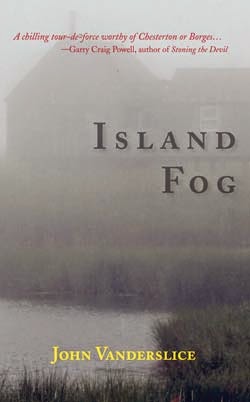
The official countdown for the October 1 release of my linked story collection Island Fog, published by Lavender Ink in New Orleansstarts today!   Beginning today and continuing until the release date, I am running a giveaway promotion on Goodreads.  Shortly thereafter I will be mailing free copies of the book to three lucky Goodreads users.  If you aren't a member of Goodreads already, you really need to be.  (Because if you read this blog I know you're a book lover.)  Unlike some social networking sites, I find myself coming back to Goodreads over and over.   

So how do I enter the giveaway?  Easy.  Just follow this link, and you'll be there.   Click on the "Enter to Win" button, provide your contact information, and you are officially entered!  

 
I'm excited, not just for my book, which I am deeply proud of, but for this chance to get it into the hands of someone who's curious about it and wants to dive in.  Or just into the hands of someone who loves books!  

Good luck to everybody who enters.  I'm eager to see who wins! 


Monday, August 4, 2014

Two years later . . .

0


[This post originated on my newer blog Payperazzi.  Check out that blog for my latest musings on writing, the writing life, and teaching writing.  I'm publishing it here too on Creating Van Gogh because I first mentioned this subject (briefly) in a CVG post a couple years back.  Consider this an update and a coda.]


Two years ago, I was all set to go into the movie business.  Well, sort of.  Here's what happened.  Early in the summer of 2012 I was contacted by an actress in London, one with reasonably serious stage and screen credits to her name.  In between acting jobs this actress had been serving as an assistant producer on some films.  Now she wanted to produce a film of her own, a short.  And she wanted to base that short on my story "My Word," which she had just read in the online journal Literary Mama.  What's more, if all went will with the short film, she wanted to expand the short into a feature.  You can imagine my surprise and delight.  A film?  Of my story?  Maybe a feature?! This opportunity felt like it had dropped out of heaven and into my lap.   The whole thing was as bizarre and amazing and exhilerating as it was unexpected.  After all, although I have a strong and abiding interesting in writing plays--and in the entire art of stagecraft--I've never, unlike so many of my undergraduate students, had the least interest in writing a screenplay or getting involved in the business of putting a movie together.  And yet here was this movie-making opportunity; from a credible, connected source.  I wasn't about to say no.   And I didn't.

Due to various delays--some unavoidable; some which struck me as quite avoidable--it took two months before the actress had a contract to show me.  But finally in early August she faxed it to me, and I signed it.  The contract would cover a period of two years.  And it would only apply to the short.  I wouldn't be paid for my story, but I would receive co-producer credit on the film, and my specified duties would include reviewing and commenting on the screenplay, which she was determined to write herself.  (I had asked around to various people in the know, and what I heard was that with a short film the writer usually just gives the story away for the sake of publicity.  "But," the same gurus said, "if she does decide to make a feature you need a new contract, one that pays you actual money.  Because if it's a feature there's going to be more money involved.")  After the delays in getting the contract finalized it looked like the project was finally about to take off.  The actress was begining a three week vacation (in America, ironically), and she had decided that it was to be a writing vacation.  In a phone call from her vacation spot, she told me that she would have a screenplay ready to show me in a week.  And she was certain that the film would not only be started but in the can in no more than a year.  Sounded great.

I checked in with her via email after a week, only to be told that she hadn't actually started writing yet.  But she was about to, she said; I should give her another week.  When I checked in the next week, however,  she said she had encountered some problems in the writing and had decided to read a novel by John Steinbeck to give her some ideas on structure.  Hmmm.  Okay.  When I emailed her a week after that I received no reply.  At some point she must have shut down her vacation and flown back to England, but she did so without sending any further word about the supposedly imminent screenplay.   That fall I emailed her semi-regularly--just light, friendly messages--hoping for good news.  I didn't actually ask about the screenplay; I just wanted to keep lines of communication open.  Mostly she didn't respond to my messages, but sometimes she did.   She only addressed the screenplay once.  She said she still hoped to get to it, but she had two or three other projects to get to first.  Oh.  Eventually she stopped responding to my emails altogether, so I just let it go.   If she really did want to do this movie, I figured, she would contact me.  But she didn't.

And she hasn't.

Now, two years later, the movie project based on my short story appears to have been long since scuttled without ever having been launched.  And now that the contract has expired there's little to no chance of the project being resurrected.  Every now and then I check the actress's IMDb resume of acting and producing gigs, in hopes of noticing some reference to our film.  But nothing's been added to her resume in over a year, so I have to wonder if she's even in the business anymore.   I guess so far this post makes me sound bitter.  Maybe I am; just a little.  But, honestly, not that much.  Even when it appeared that all systems were go and my story was about to generate a movie, the project didn't feel real to me.   It felt instead like some kind of pretend amendment to my life.  To my actual life--the one with my family--but also, just as importantly, to my writing life: which is about composing fictions.  (Btw, that August, while I was waiting on the screenplay that never came, I did reconfigure "My Word" as a one-act play.  I wanted to be able to imagine it as words and movements only, in order to be better prepared to "consult" when the time came.  I didn't really write it in order to be performed, but I did publish it last year in the online journal Foliate Oak.)

Looking back on this curious episode, I'm tempted to try to draw some lesson from it.  But the only lesson I can draw is one I already knew at the time.  That is: Know who you are and keep doing what you do.  After all, it's the only thing that's really yours; the only thing you can control.  Even as I emailed and phone conferenced with the actress, even as I hoped for and looked forward to her screenplay, even as I prepared myself to help with it, even as I was disappointed that it never came,  I kept working on stories.  I wrote new stories; I revised previous ones.  It's who I was.  It's who I am.  It's what I do.  Now, two years later, I have a book of short stories called  Island Fog forthcoming from Lavender Ink press in New Orleans, and I couldn't be happier.  Lavender Ink is clearly serious about the project.  Lavender Ink has promotional plans.  Heck, Lavender Ink answers my emails!  And still, even as I busy myself this summer with marketing work on the book--lining up reviews in magazines and on blogs, drawing up plans for a late fall book tour, consulting with the woman who will be designing my website--I'm composing new stories.  It's who I am.  It's what I do.  Any life and any career will encounter setbacks.  This includes a writing career.  And with a writing career the best way--the only way, I think--to handle any setback is to keep writing.  It's hard to concentrate on, or even remember, bitterness from a lost opportunity when you're engaged in creating a new story with new characters and all new oppoertunites.   The story of your last story falls away and all you see is the story of the new one: the potential there and the pleasure.  Suddenly you're thinking not about the recent past but the future, the future of this story.  After all, in two years who knows where it could be?


Monday, July 14, 2014

Why we write together

0

[This post originated in my newish blog Payperazzi.  I crosslist it here on Creating Van Gogh, for the sake of CVG readers and also because I provide some news about my forthcoming book Island Fog, half of which is made up of historical fictions.]


In a recent commentary in The New York TimesBonnie Tsui discusses her lifelong difficulties writing around other people and her recent breakthroughs doing just that.  (Thanks, by the way, to Erika Dreifus for another great reading recommendation.)  Interestingly, one of Tsui's discoveries stems from the fact that when she is around other people she talks more than she writes.  But that, it turns out, is a good thing.  The talking lets her flesh out various possibilities in a piece and thus decide what it is a right path and what a false trail without wasting several hours of writing before coming to the same conclusion.  (I'm not sure if, for a fictionist, any writing is truly wasted--but that's a discussion for another day.)  More intriguing is Tsui's past reasons for resisting writing in groups and the fact that despite these reservations she finally found value in it.  Some of the reasons--e.g., fear that someone will steal one of her ideas--seem almost amateurishly overblown (nothing is more commonplace than an idea); other reasons--such as the fear of distraction--strike me as more realistic.  The bottom line, though, is that Tsui has discovered a generous, supportive community that not only gives her important feedback on her work but informs her about, and connects her to, many important aspects of the writing world that lay beyond her narrow personal focus: readings, conferences, classes, etc.  Tsui has discovered that writing is both solitary and social; that the two aspects can and do feed each other.

Since in just about every class I teach I make my students spend at least some in-class time generating new material, I was heartened by Tsui's essay.  I can't remember when I first started making my students produce original work in class--I was never made to do this myself as an undergrad or a grad--but it has come to seem essential to me.  This is especially so in a forms class, in which I lead the students through a series of specifc fictional or non-fictional or poetic forms, and I want to make sure that they actively try every form we cover.  But no matter what the class, I always set aside in-class writing time.  In my mind, it's as central to a creative writing class as workshopping.  After all, if one takes a class in painting or dancing or acting or playing the piano, one expects to paint, dance, act, or play the piano in class.  One would feel cheated if denied the chance to do so.  So why should it be any different for a writing class?  Just as with painting or dancing, it's a matter of working on one's craft.  A minute spent practicing writing is about the best minute a writer can hope for, and the minute in which the writer learns the most.  And if one does that writing in the company of others and then shares that work with others--or at least hears about it from others--one learns not only about his or her own work but about someone else's and about the genre at large.  The learning is multiplied.

I always write along with my students, and I look forward to those days more than any other on the schedule.  First, as anyone who has taken a creative writing class can tell you, doing nothing but workshopping each other's stories or essays or poems all semester long can wear you out and finally even sap your creativity (because you're exercising your analytical and not your creative self).  Meanwhile, doing nothing but reading the work of masters, while an extremely valuable activity, turns the class into a literature course.  Having the element of on-site creativity affords a crucial pedogogical element of pause, of rest, of reenergizing, of rediscovery.  And far from being "just crap"or "just writing," what my students generate in class often becomes what they work on for their formal assignments.  Often what I write in class leads to a finished and published story.  I can't tell you how valuable that time has been for my career.

Over the years, nearly all my students have appreciated this in-class writing time, even my graduate students (and never more than when I teach Novel Writing Workshop). But of course this is not always the case.  Most years there is a student or two who turn their noses up at the practice, as if they are too good to waste precious time wrting in the presence of plebes.  Yes, as you can tell from my description, these students don't simply not want to write in class but, almost to a man--and they are always men--believe that they are better than that.  They glance around the room, at the other students and me--our heads bent over notebooks or laptops--with a caustic smile on their face, as if we are all dupes, or beginners carrying out grade school games.  Their writing time, you see--unlike everybody else's apparently--is special, holy, inviolate.  It must be done entirely in priviate--like some cultic religious function--or it can't get done.  In fact, again, to a man, that's what they tell me when I question them about their in-class inactivity: I have to write alone.  I became so quickly tired of this attitude that years ago I installed in my syllabus a warning (yes, I felt I had to warn them) that--gasp--we would actually be writing in this writing course.  I would remind them that my department existed in a College of Fine Arts, an arm of the university where creativity was routinely expected in classroom settings (painting, playing, dancing, etc.) and no excuses were afforded.  Finally, I felt I obliged to add this sentence:  "Being writers, this prospect ought to excite not discourage you."  

And that's really what it comes down to for me.  Of course writing is a solitary activity.  And I am someone who typically tries to keep distractions to a minimum when I write.  I don't write to music (although the vast majority of my students do); I don't write with the television or talk radio on; I don't try to write and text at the same time; I even like to keep the internet out of the way, unless I need to quick research a point directly related to what I'm working on.  I am by nature quite the solitary person.  But I learned easily enough, as soon as I started asking my students to, to compose while in the company of twenty or more people.  You do that by not being so much into yourself and about yourself and your holy rituals as into and about the work at hand.  You let the work at hand take you away.  And that can happen anywhere, in any company, no matter how large or small in number.   Finally--finally--you need to get over yourself.  That's what it's about.  For the good of your own writing, your own development, you need to.  And that includes the attitude the you can't ever learn from the people sitting in class with you; and the attitude that you can never learn a new way of composing.   To me, the writer who can't summon the necessary power of concentration to be compose--and I mean compose meaningfully--in a group of others is not more of a writer but less of one.  He is not able to do what others clear can do, and even enjoy doing.  His proud resistance is revealed to be less that of a genius than that of a misanthrope.  And perhaps, for all his haught, an insecure one at that.  Fortunately, with every year I see fewer of these types of students.  Perhaps initiatives like NaNoWriMo, with its big fat group writing parties, has shown young people the value of writing together.  Or perhaps this generation of students has just been been better taught how to work in a collaborative fashion, or at least in group settings.  But so far there are still the tenacious holdouts.  God bless them, I hope for their own sakes they leave aside the tiresome role of lone wolf, roaming the woods at night in search of inspiration, and allow themselves a step into the sunshine of immediate generation.

Quick personal note: I had a wonderful vacation last week in South Dakota, specifically in Custer State Park in the middle of the Black Hills region.  I'd never been to the Black Hills, or even to the state, before.  And now I won't ever forget it.  (Trying to figure how we can import buffalo herds down here to Arkansas.)   

Follow-up to my book marketing post:  Several weeks ago I put up a post that highighted all the marketing and promotion work I'd taken on for the sake of my book of linked stories, called Island Fog, which will be out in October from Lavender Ink press.  The last few weeks, thanks to a great reference book my wife gave me, I've been researching hundreds of book bloggers, national and international.  (Yes, I am pleased to report, there are hundreds of them out there.)  As a result, I contacted 65 or so to ask if they wanted to read and review Island Fog.  To date, 25 of these bloggers have said yes!  This is better than I could have anticipated, and now I can't wait to see the results.  A few of them are ready to go right away and I have to tell them, "Wait, it's not available for sale until October!" So I talk them down to September. I'm so glad I'm doing this all in advance.  (And I have to thank my publisher for the timely kick in the pants to get going.)  Hopefully Island Fog will be blogged galore come fall.  I'll let you all know.