Friday, January 15, 2010

Et tu, New Yorker?

0

A friend of mine at UCA, Robin Becker, kindly passed on to me a recent New Yorker article about Van Gogh and Gauguin: "Van Gogh's Ear" by Adam Gopnik. As literary people, dear readers of this blog, you've probably already scanned the article yourself. (My wife and I subscribe to the New Yorker in an off again/on again fashion, depending on how well we can bear up under the frustration of seeing issue after issue come without time to read it. Currently, we're in an "off again" phase.) If so, so much the better. You know the gist of it already. Before I say anything, I should tell you that Adam Gopnik is one of our favorite journalists. His books Paris to the Moon and Through the Children's Gate hold prominent places in our private library. And his memoir essay "Last of the Metrozoids" may well be my wife's all time favorite.

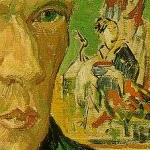
That said, Gopnik got a lot wrong in his Van Gogh article. In fact, it's a glaring and rather frustrating example of a thoughtful writer unwittingly perpetuating the Mad Artist myth. (See my earlier post, "The Real Van Gogh, Part One.") Gopnik's key point, as he argues for the "decisive break [in Van Gogh's painting]marked by the Christmas crisis," is basically this: if Van Gogh had not gone crazy in Christmas 1888, cutting off his left ear, he would never have become the artist we know and revere, and the history of modern art would have been substantially different. Gopnik emphasizes that it was Van Gogh's "madness"--he tolls at this word repeatedly--that led him to new directions, that enabled him to create his most idiosyncratic and influential pictures.

Gopnik also passes on a newfangled argument by two German art historians that is getting a lot of press recently; namely, that it was Gauguin who actually cut off Van Gogh's ear (with a sword). The evidence for this, which Gopnik calls "arresting," seems awfully thin, and reeks of conspiracy thinking: private codes, enforced secrets, interpretations of latin phrases. But I'm far less concerned about his endorsing this peculiar version of what happened on December 23, 1888 then I am the above mentioned fallacy. First, most of the art historians I consulted when researching my novel agreed that Van Gogh's powers were at their peak in the summer and early fall of 1888. To me, looking at the paintings, this is self-evidently true. In fact, in letters from the hospital in Saint-Remy Van Gogh referred nostalgically to the "high yellow note" he previously worked in, explaining that since the sharp decline in his health it was not a style he could aspire to again. Indeed, the colors in his Saint Remy pictures are far muted, less striking; they do not scream off the canvas in quite the same way as the colors in his Arles pictures. This is not to say that Gogh did not paint impressives pictures at Saint-Remy and Auvers-sur-Oise; Gopnik names some of them; but it is to say that most of the pictures we know the man for, that we look at as breakthroughs--"The Sower," "The Sower with the Setting Sun," "Vincent's Bedroom," the "Sunflower" series, "The Night Cafe," "The Cafe at Night," "Starry Night Over the Rhone," his portraits of the postman Roulin and of the peasant farmer and of a zouave and of the Belgian Eugene Boch--were all completed prior to the arrival of Paul Gauguin in Arles in October of 1888. If he had simply stopped painting after the "Christmas Crisis" his place in art history would have bee more than secure, his influence already established.

[Next time, because I've already kept you for too long: What Gopnik got most wrong.]


Wednesday, January 13, 2010

The Real Van Gogh, Part Two

0


Near the end of the walkway that leads to the visitor's entrance to St. Paul's Hospital in Saint-Remy one finds a bronze statue of Vincent Van Gogh. In his left hand he holds a bouquet of gargantuan, oversized sunflowers; his right hand hangs limp and emptily at his side. His face, meanwhile, is fixed with a far off expression, the look of a man too involved with extraworldly concerns to survive in this unforgiving valley of tears. It's an artfully constructed, and I'm sure for most people affecting, statue, but when I look at it I can only think "Ughh." I griped last time about cliched ideas regarding artists and madness, specifically the idea that Vincent Van Gogh was mad and for that reason--rather than in spite of it--he became a great artist. But there's another, almost equally strong, myth about Van Gogh, one that I see motivating the statue at St. Paul's: the myth of the Artistic Saint. The opposite of the myth of the Mad Artist, this myth insist on seeing Van Gogh as a symbol of almost inhuman purity. Keepers of the myth see him as fundamentally a victim: of his times, of artistic conventions, of poverty, of illness, of anonymity. He was a beautiful soul tortured by ideals too high for this world, creating in the midst of his sufferings those sweet, bright paintings for which he is best known. Listen to Don McLean's cloying "Vincent" (you probably know the song as "Starry Starry Night") to hear the perfect expression of this myth. Like a saint tortured for his belief, Van Gogh suffered for his idealism; and like a saint rewarded for his trials by entering heaven in the afterlife, Van Gogh has gone on to his own eternal reward: artistic immortality.

Yuck.

The Artistic Saint may be an even more aggravating myth than Vincent the Madman, perhaps because it is as impicitly condescending while at the same time pretending sympathy. No doubt Vincent Van Gogh suffered. The path he finally chose for his life--after an extended period of false starts--was not an easy one. But here's the deal: He did choose it. He knew what he was getting into. Anyone who has read Van Gogh's letters knows what a shrewd (in the best sense) and canny man he was. He wanted pity from no one, especially not from his family. In his mind, nothing he did, and none of the physical and emotional trials he went through, deserved pity. They were simply what one could expect when one devotes oneself completely to one's craft. All he ever really wanted from others was the recognition that he knew what he was doing. Which he self-evidently did. Neither was Van Gogh a saint of any kind. He could be short tempered, self-involved, and petty, even toward his brother, whose monthly contributions he literally could not have survived without, and certainly toward his parents. In fact, as I drafted my novel I felt a growing sympathy for Van Gogh's father, who Vincent often potrtayed in letters as a dunderhead and tyrant of respectability. The fact is, Vincent Van Gogh was not an easy person to deal with, even if one loved him and was trying to help him. His whole life he demonstrated an innate fury--he was an Aries, for anyone who cares about such things--that drove him both to extremes and to discoveries. Not until late in his life, physically exhausted and morally depressed by the epileptic attacks that came at regular intervals and clearly would keep coming, did the tone of his correspondence become more despondent and that fury dampen. In their 1955 book Passionate Pilgrim, one of many I've consulted in my research, Lawrence and Elisabeth Hanson argue that it wasn't until he was confined in St. Paul's that Van Gogh, his rough edges worn away by illness and defeat, showed the sympathetic personality so commonly associated with him. Now, Passionate Pilgrim is a deeply flawed book, with some grotesque factual errors and an unfortunate carping tone, as the authors go out of their way to say more or less one thing: Vincent Van Gogh was not a pleasant man. Personally, I think the Hansons oversell their case; they overlook a great deal of evidence that suggests Van Gogh was a loyal friend, a cheerful correspondent, an intelligent and determined craftsman, a remarkably astute reader of the contemporary art scene, and--it must be said--a real sap when it came to women he was infatuated with. But they are right about this: Van Gogh was not a saint. If he were, he would not be such an engaging character to fictionalize--and that he surely is proving to be.

Monday, January 11, 2010

The Real Van Gogh, Part One

0

I'm trying to accomplish several things with my Van Gogh novel. First, I'm hoping to conquer the challenging, painstaking genre of literary historical fiction. This is my first foray into the historical novel, and I want to create something of which I can be proud. Second, I'm simply trying to make a good read. The cardinal rule of all writing, a grad school teacher once told me, is Thou Shalt Not Be Boring. (While he was a terrible teacher in nearly every aspect, I agreed, and still do agree, with him on that point.) I'm hoping readers are drawn into the world of my novel and do not want to be pulled out of it. Third, and just as important, I'm trying to create what I think is a more true Vincent Van Gogh.


While there may not be a better known painter in the last two hundred years than Van Gogh, there is also no painter who has been more mythologized in the popular imagination. The only painter who might rival him in this regard is Jackson Pollock, and even Pollack comes up short. It's no doubt true that in the case of both Van Gogh and Pollock the work they created is central to our interest; their radical breaking through to new ground and new techniques, their battles against the conventions of painting in their times. (Click here to watch a short documentary made in 1951 in which Pollock discusses his technique.) But we all know that is not the only reason for our interest in these painters. That cannot be the only reason why we write poems and pop songs about them, why we make documentaries about them, why we plaster their pictures on neckties and baby bowls and t-shirts, why we name brands of liqueurs after them and travel to visit their hometowns like worshippers on religious pilgrimages. In Van Gogh's case, our mythologizing stems from an obvious source: our fascination with madness. Everyone seems to know and love the image of the Mad Artist. To some, usually people who have done no artistic work in their lives, it's an axiom that artists must be deranged or alcoholics or sexual perverts, or all of the above. So that Van Gogh "went crazy" and cut off his own ear is simply accepted as a natural byproduct of his artistic greatness. And it makes us love him all the more. And finally it explains our unrelenting interest in him.


But it's also a myth. As with many alluring stories, it's simply wrong. Or at best half a truth. Yes, Van Gogh did indeed experiences attacks in which his normal sense of self disappeared; and during the first of these he famously cut off his left ear. But he was never simply "crazy." The attacks were the physical result of a physical ailment. (Today's current best estimate is that he suffered from a rare form of epilepsy.) More to the point, in between attacks he was as lucid as the next man. In fact, if you consider his whole life he was more lucid than the next man. His extraordinary letters bear this out. Even more to the point, the attacks didn't even begin until after he had passed his artistic highpoint. It's a commonly held idea--I've actually heard people say this--that Van Gogh couldn't have created the great paintings he did if he were not crazy. Well, my answer is that not only was he never "crazy," but his physical ailment actually diluated his well of creativity and brought an end to the period of his life when he could work with sustained brilliance. In short, my novel is not the life story of a crazy man, but the story of a unique and extremely driven man, one who milked every once of talent in his bones to make the paintings he did. I'm hoping to debunk the myth of the madman--cut off its ear, if you will--and put in its place the picture of a canny, empathetic, and even prophetic person who at the same time could be short-sighted, quick to anger, and fantastically self-centered. Do these qualities make Van Gogh crazy? No! But they make him richly complicated as a fictional character, and much more real to me--way more real than poor Vincent, the Suffering Insane Genius.

Saturday, January 9, 2010

Confirmed by Mythbusters

0


I've blogged before about struggling with those nusiance details of history, hoping to avoid anachronisms that are bound to set certain readers off. I'm not really complaining. It's part of the duty--and the pleasure, really--of being a writer of historical fiction, who in his best incarnation is both radically imaginative and someting of a wonk.

Anyway, another of the details I've debated over while drafting my book is the matchstick. During early drafts of the novel, when I needed Vincent or another character to light something, I did so vaguely, with indefinite references to "flint," assuming for some reason that matches didn't exist in the 1850s to 1880s. With everything else I was juggling with as I composed the book I decided not to worry about it right away, but over time and a little research I came to realize that some form of matchstick probably did exist in Van Gogh's time. So I went ahead and just had him light a match when necessary. Simple, direct. Everybody gets it. What this match looked like I wasn't sure and had to leave it for the reader to decide (normally bad writing advice), but I assumed it would be something akin to those thin wooden sticks, a couple of inches long, that you find sold in rectangular cardboard boxes in drug stores and grocery stores, rather than the paper "matchbook" match, which was what everyone used when I was growing up in the 70s--when smoking was more widespread and every bar and restaurant in America gave away matchbooks as advertising. (In my house, there was always a matchbook around, probably within a few feet of wherever you were.) In addition to not really being sure what these matches looked like, I still wasn't 100% sure that what I think of as a match is what I could really count on as being contemporary with the second half of the 19th century. Until recently, the best confirmation I got was a reference to "lucifers" in Peter Carey's historical novel True History of the Kelly Gang. That seemed confirmation enough, although questions still dangled in the back of my mind that I knew I needed to answer sooner or later, once and for all. Just as soon as I solved a million other mysteries.

What a thrill then that, while watching a recent episode of Mythbusters, a little factoid came up telling me that the first friction match was invented by Englishman John Walker in the 1826! Eureka! Thank you, Adam and Jamie! Another nagging question put to bed. If you've see the Mythbusters on the Discovery Channel--and who in America hasn't at this point--you know how entertaining it is to see the gang on that show test commonly held notions about products and situations and even species. Great to know that Mythbusters is also a resource for novelists.

Thursday, January 7, 2010

The Top of Provence

0


While researching and drafting my novel, I took three separate trips to southern France. There are a few sites I have made a point to visit on each trip, mostly because of their connection to Van Gogh, but also because I find them unmatchably serene, visits worth making for their own sake. One of these is the "Pont Van Gogh" (which I blogged about last month); another is St. Paul's Hospital in Saint-Remy, where Van Gogh lived for over a year following the onset of his epileptic attacks. A third location is the Abbaye de Montmajour, located a couple miles north of Arles. The abbey, long abandoned even in Van Gogh's time, is mentioned in various biographies I've read and occasionally too his letters, but it really came to my attention during a guided walking tour I took around Arles in the summer of 2005. At the top of one street, the guide pointed to an impressive structure off in the distance and explained that Van Gogh often hiked up there to paint. I knew I had to go, and so I did a few days later, and it turned out to be one the highlights of the trip.

The abbey, a mammoth structure, is a tourist spot but an enormously quiet one. Visitors come, but in modest twos and threes, and the occasional loner (like me), with intervals between them. The place never feels overrun and for the most part people stay silent, even when outside. For how old it is, the abbey, which dates from the early medieval era, is well preserved and has an interesting history. It's worth the trip just to linger in its huge stone halls and read about the uses of each room. Too, there always seems to be an art or photo exhibition going on.

But impressive as it is, the inside is not why I go to Abbaye de Montmajour or why I stay. In fact, each time I surge through the interior, head to the upper floor, and out a doorway to reach the "courtyard" (for lack of a better term). From there, one enjoys gorgeous views of Arles in the distance, and, closer in, the area known as La Crau, featuring long fertile fields that Van Gogh painted repeatedly (see first photo above). People linger out here, leaning over the stone walls, taking in the scenery. If they speak, they speak at a low murmur. And then they stroll on. Except not me. In an effort to blend my experinece with Vincent's, I've always brought along a sketch pad and pencils. I find a comfortable if stony place to sit and start drawing. It's not that I'm a artist. It's not that I make good drawings. I just want the experience of rendering the place in pictures rather than words. I want that physical sensation. Occasionally, I get a curious stare, but almost without fail people leave me alone, as if this were the most natural thing in the world to do. The courtyard has different levels and you can gradually move to higher spots for different vantage points. The abbey also features a soaring stone tower, built for defense not religious purposes in the late middle ages. A circular stone staircase takes you to the top, from which you can enjoy the views of Arles and La Crau from a much higher altitude as well as catch glimpses Fontvieille and Tarascon, far in the distance and at different points on the compass. Anyone with a fear of heights might find this part of the visit a bit too thrilling (there's a thin opening where the floor of the tower top meets the wall, and you can see all the way down), but in my opinion if you go to the abbey you have to go up the tower.

When I visit the Abbaye de Montmajour I find that a couple hours just melt away like nothing. You wonder where the time went. I leave satisfied but also wistful: wishing I could stay longer, eager for my next visit back. I imagine that's exactly how Vincent felt.

Tuesday, January 5, 2010

A return to teaching

1


Today, after my morning writing session, I head to the office to firm up plans for my spring classes and start finalizing my syllabi. Our semester at UCA begins on January 14. I greet this semester with uniquely mixed feelings. Last year, after ten years of full time university teaching (i.e., a 4/4 load) I was feeling the first singes of burn out. But for last fall I was granted a sabbatical, which allowed me weeks of unbroken concentration on my novel and a chance, in larger ways, to regroup, even to begin new initiatives--like this blog. Now, with my sabbatical over and facing full time teaching again, I certainly am wistful for the lost free time but neither am I bitter. I can't be. If anything I feel blessed. While on sabbatical, my novel took huge and important strides forward. It's on a course now to be done; maybe even done soon. More importantly, I feel existentially rested and ready to teach again.

I've never subscribed to the easy, self-serving equation that separates attention to teaching from attention to writing and publishing, as if one could somehow aspire to teach a subject that one does not actively engage in every day. If I were a student I'd want to know that my professor doesn't just talk a good game but actually practices what he or she preaches. I would listen to the ones who do, and keep an arm's length from the ones who don't. And, as it turns out, that's exactly how our students do think. They get it. And speaking from the other side of the metaphorical podium, I have to say in the process of preparing for and teaching four sections a semester, I probably get even more out of the classes than my students do. The writing I do with them in class I take as seriously as any other I do in my life. In fact, several published stories and poems have started in UCA classrooms writing along with my students after I have handed out prompts. In the textbooks I've used over the years, I've discovered stories and poems by other writers that will stick with me forever. And in the writing of critiques for my students' work I've enjoyed discovering exactly what is I think and believe.

No, I'm not looking forward to the bureacratic hurly burly of office life: the endless protocol of meetings to attend and reports to file (yes, we have those in academia as much as anywhere), the clash of egos, personalities, and personal agendas that inevitability rears its head at any human institution. But I can never regret engaging a group of students about the act of writing: its pleasures, its challenges, the walls of useful suggestions surrounding it, and at the same time its utter lack of rules. I can never regret see those thrilling pieces of fiction, nonfiction, or poetry young authors generate. I can never regret the learning and the fellowship that occurs during the give and take of workshop. No, I don't and could never regret our students, who are so shrewd, canny, and talented--way more than I was at their age--that it's humbling to be called their professor. The completion of my novel awaits, but a return to teaching can only make that completion a better, sharper, more learned endeavor. So don't worry about me. I'm ready.

Sunday, January 3, 2010

A little gem

0


After a round trip of 3000 miles and twelve rather overfull days, in which by planning or accident my wife and I saw most members of the immediate family tree, I've returned to home base in Arkansas. That means Creating Van Gogh is up and running again--and looking forward to Spring 2010. For my first post of this new year, however, I thought I should return to some unfinished business from last month; namely, another recommendation for a novel to read (as if you don't have enough novels you want to read already). If you've been checking into this blog even semi-regularly you know that while I work on my Van Gogh novel, I've been making a special effort to read more historical fiction. One book I really enjoyed when I read it last month, so much so that I want to tell you about it, was Ethan Canin's Carry Me Across the Water (2001). This cannot strictly be called a historical novel since the book's setting is contemporary and the very interior conflict that afflicts the main character is mostly acted out in the present. However, it is a book which evokes the burden of history, especially as how that burden affects the individual. In this case, the burden stems from World War Two, which, Canin's book reminds us, became and remained life's focal point for the generation of Americans who fought in that conflict. No matter what they went on to accomplish--Canin's Kleinman becomes a successful, wealthy beer manufacturer--it is their wartime experiences which inevitably define them. For Kleinman, understandable if regretable actions he took while fighting on a Pacific island leave him with a store of both guilt and curiosity that a lifetime cannot extinguish, not until as a senior citizen he finally travels to Honshu in Japan.

That's all the plot you need to know. Meanwhile, there is much to admire in Canin's storytelling method, from his provocative way of scattering his scenes to his dramatization of Kleinman's experiences as a soldier. The wartime scenes contrast neatly with the equally well-realized ones in which the older Kleinman battles against his son's lack of trust in his abiltity to take care of himself or act as an effective babysitter for his grandson. While that might sound like a rather banal domestic tension, at least compared with World War II, Canin makes it engaging through use of sharp details as well as Kleinman's self-possession and wry sense of humor. And it's entertaining to watch the uniquely symapthetic relationship between Kleinman and his son's non-Jewish wife. Too, one can only admire the economy with which Canin manages to suggest Kleinman's whole life, from his childhood in pre-war Germany to his family's escape to the U.S. to the history of his marriage and career as a businessman after the war. No parts of this history, not even his present squabbles with his son, are finally untouched by what happened to him as a GI.

The book is a quiet little gem. Perhaps because I am delighted by its crusty if intuitive "hero," or perhaps because in this book Canin seems to have escaped himself and the obsessions of his own generation, the novel is far more satisfying than the two other Canin novels I've read: Blue River and For Kings and Planets. Both of those, I hate to say, were thoroughly lackluster efforts (no matter what the reviews said). There seemed nothing of consequence going on in the latter book. However, if, like me, you know and love Canin from his fine short story collections Emperor of the Air and The Palace Thief, this is one of his novels that you don't want to skip.