Monday, October 22, 2012

Learning about Hilary

0


No, not that Hillary, which is spelled differently anyway.  There's a probing profile in the most recent New Yorker magazine of English novelist Hilary Mantel, who is doing quite well for herself since she won the 2009 Man-Booker prize for her historical novel Wolf Hall.  I must shamefully admit that I have not yet read Wolf Hall--that is, until I started it yesterday. (So far so good.)  The profile, authored by Larissa MacFarquhar, is chock full of fascinating information about, and insights from, Mantel as well as some rather pointed commentary about historical fiction.  There's too much of interest in the profile to cover in one little ol' blog post, so go get the magazine and read it.  (Maybe you have already.)  But a couple things really stood out for me that I'd like to discuss.   First, MacFarquhar provides this rather loaded statement early in the article: "These days the historical novel is not quite respectable.  It has difficulty distinguishing itself from its easy sister the historical romance.  It is thought to involve irritating ways of talking, or excessive descriptions of clothes.  The past, in fiction, has more prestige than the future, but as with the future, its prestige declines with its distance from the present."  Really?  Really?  Are literary opinions really as myopic as that?  After Atonement and Girl with a Pearl Earring and Quiet Americans and The Book of Salt and Memoirs of a Geisha and Oscar and Lucinda and Cold Mountain and Ragtime?  Even after Wolf Hall itself and its followup Bring Up the Bodies, which won--just five days ago--the 2012 Man-Booker Prize?  (This is the first time, by the way, that both a novel and its sequel have won the award.  Kind of like the Godfather movies.)

Maybe so.  I hate to say it, but maybe it's so.  After all, Mantel enjoyed a long career as writer of mostly contemporary realist novels before she started Wolf Hall.  And the reason she wrote mostly contemporary realist novels was because her very first fictional project, a historical novel set in the French Revolution, something she labored over painstakingly and lovingly for four years, was rejected out of hand by agents and publishers.  As in without even reading it.  As in without reading past the first sentence of her query letter.  In the profile, Mantel tells a horrible if telling story: "'I wrote a letter to an agent saying would you look at my book, it's about the French Revolution, it's not a historical romance, and the letter came back saying, we do not take historical romances. . . They literally could not read my letter, because of the expectations surrounding the words 'French Revolution'--that it was bound to be about ladies with high hair.'"  I've encountered the same blind prejudice, and much more recently than 1979, when Manel's first book was so soundly beaten back.  Just weeks ago, I received a rejection letter in the mail from a magazine that is expressly commited to longer stories.  The long short story may be the hardest fictional form to publish these days, so it's disheartening when one of the few periodicals seriously devoted to the form--a form which may be my favorite--delivers a laundry list of what it will and will not accept in terms of content.  One thing it will not accept, the rejection slip explained, is "genre fiction"; and under the many kinds of fiction listed as "genre" there was "historical."  Oh, really?  So if I write a serious story about characters I care about and set it in the present, that's okay.  But if I write a serious story about characters I care about and set it in the past it becomes "genre fiction"?  Since when is human experience a "genre"?  I have never in my whole career ever thought of myself as writing genre fiction, even when I wrote a novel that includes as part of its reality the idea of humanity being watched by an extraterrestrial race.  (No, I'm not crazy, and, yes, it's actually a very serious book.  Think of it as literary realism with aliens.)

This gets to the unique double nature of historical fiction, its "unstable reputation," as MacFarquhar puts it.  Historical fiction is both a means of writing pulp and of getting to the most serious psychological realities of some of the most fascinating people and periods of the past.  I just don't understand why a two-headed creature should so constantly be defined by only one of its heads.  Especially by those who should know better.

Side notes: #1 The article on Mantel got me thinking of various other matters, related and unrelated to the author herself.  One interesting tidbit that comes up in the profile is that prior to composing Wolf Hall, Mantel's favorite of her own novels was The Giant, O'Brien, a mythological treatment of Ireland.   I am not one to ever tell an author (not even one of my students; especially not one of my students) as to where his or her imagination is "allowed" to go, but I have to admit to a certain disappointed sigh when I read Mantel's commentary on her book.  I think Ireland has been mythologized by the English quite enough already, thank you.

#2 For historical fiction's sake, to say nothing of Mantel's, I'm glad that Wolf Hall and Bring Up the Bodies have earned such acclaim.  I hope the same is true of the third book in the trilogy, upon which she is currently working.  But I can't help but notice--on both sides of the Atlantic, but maybe especially on our side--an enduring fascination with Englands that no longer exist, whether that be Arthurian England, the England of feudal castles, the England of the Tudors, the England of the Enlightenment, Victorian and Edwardian England, the England of E.M. Forster, or the England of the great manor houses, those institutions that so famously came to an end not long after World War I.   In short, the England of costumes and of Empire.  Something about this has long pestered at me.  As much as I love Shakespeare and the literature of his contemporaries; as much as I love eighteenth century novels; as much as I love Austen and George Eliot and the Brontes and Wordsworth; as much as I was charmed by those Merchant-Ivory period films in the 1980s and 90s; as much as I think television shows like Downton Abbey are craftily written and brilliantly acted (and probably a hell of a lot of fun to be involved with), I hope we can all recognize that it's a good thing that the world depicted in such films and shows is gone.


It's been a while since I spent a serious stretch of days in England--2006 really--but when I go there I'm always struck by the same idea: England's best days aren't back then; they're right now.  This is not to underestimate the fiscal difficulties the country has recently suffered through.  I am well aware of such difficulites--we started them!  But England ranks not only as the leader of the EU but as one of the leading socialist democracies in the world; arguably the leading socialist democracy that is also significantly mulit-cultural.  In the various quality-of-life and happiness surveys that get released periodically, the Scandinavian countries inevitably come out on top.  But they are relatively small and relatively homogeneous entities.  As an American, I tend to think that heterogeneity is valuable on principle, something to aspire to whatever its drawbacks.  In recent decades, England has faced--and met--the extraordinary challenge of remaining both heterogeneous and socialist.  It's a country from which the United States could learn a lot--if we could ever get over the seductive lie that being American always means being Better.  It's a country in which, right now, probably the highest percentage of its citizens ever enjoy a passably comfortably life and a passably good education--a far higher number than under the Tudors, at least.   That is no small feat.  It is--and should be--a source of national pride.  And it's why I'm glad that for every Merchant-Ivory costume drama or The Tudors or Merlin there's a Four Weddings and a Funeral or a Love Actually to remind Americans that there happens to be a vibrant England of NOW.  I'll take that England over Forster's anyday.  Except you can keep the rain.  


Monday, October 15, 2012

Good news all around

0


As a writing teacher, you are regularly bombarded with requests to review this or that manuscript: to critique them, to edit them, to suggest publication venues for them.  These requests, understand, don't come from your own students--who get enough of your opinion anyway--but usually from total strangers, people in the public who make cold calls to Writing or English department offices, begging the secretaries to suggest names of faculty they should contact; or occasionally they come in the form of a mass email from a colleague who has been put in touch with one such stranger; and sometimes it's literally a matter of a person walking the halls of your building, manuscript in hand, hoping someone will listen to him.  Almost always it comes as a shock to these folks to hear that editing manuscripts is a time-intensive affair, work for which people actually get paid good money in the real world.   Almost always, word of having to pay for the service is enough to guarantee that the person hangs up, doesn't write back, or leaves your office.  Often with a mumbled reply along the lines of "Well, I don't really have much money to spend, and I didn't think I would be asked to actually . . ."  (Exactly what do they think writing professors do all day anyway?  Apparently, we are just staring out our windows, puffing contemplatively on our pipes, waiting for the next person with a project to come knocking, because god knows we don't have enough to do critiquing our students' work!)


This scenario took a different, better turn several weeks back when from my office desk I spied an older, nattily attired gentleman in the hallway knocking unsuccessfully on another faculty member's door and looking noticeably disappointed when no one answered.  I asked him if I could help him.  As it turned out, the man had written an essay that was quite important to him, and he was seeking editorial assistance.  Plus, he had brought along a short story written by his wife decades earlier, something they had discovered at the bottom of her desk drawer during a recent clean-up.  He thought his wife's story was a stellar piece of work, and he wanted some feedback about it.  Despite the fact that he stated up front he was willing to pay for the editing services--he was a retired professor himself, he explained, and he knew what a professor's time was worth--I resisted. As a writer there is always another writing project you need to get started on, and as a teacher there's always the next class to prepare for, so this resistance has become a necessarily automatic reflex.   However, as the man visited with me and told me more of his life's story, I became interested.  He'd grown up in Arkansas's delta region, in a home with an alcoholic father who on a regular basis drank up his meager paycheck, leaving his wife almost nothing with which to hold the house together.  Determined to escape from that home and that environment, the gentleman before me had--every day for four years straight--hitchhiked from his small town to the nearest university, which was twelve miles away.  (And not once, he declared proudly, was he late for class.)  His college education allowed him to become a science teacher in the local school system--just the escape he had worked so long and hard for--and years later he became a university professor.  This experience of making it through college at long odds was the subject of his essay.  As he sat in my office and told me these things about himself, it occurred to me that I was the one who should be helping the man with his essay.  And I wondered if I should offer to do it for free.  When he left, I told him I would spread word among the rest of the faculty to see if anyone among us was interested in picking up editing work, but I already knew which among us would probably be doing that.

As it turned out, I didn't do the work for free, but I did suggest a rather paltry fee--which this genteman immediately quintupled.  "Uh, okay," I mumbled, astounded.  How often is the counterbid higher?  His essay was certainly rough, but it had potential; obviously important stories were embedded in it.  In the critique I wrote for him, I encouraged him to bring out these latent stories, to put flesh on the skeleton of what he'd created.  When about a week later he came to my office to pick up my critique (and the critique for his wife's short story), he thanked me politely, paid me immediately, chatted for a few minutes, and then left.  For weeks I wondered if he thought he'd gotten his money's worth.  Well, it was to my true delight that he came by last week to inform me that my critique had helped him a great deal and that he had indeed revised and expanded the essay.  He was starting to understand, he said, what it needed.  He asked if I would look at it again; again for a fee.  Of course I said yes, and I was thrilled to see that he had made wonderful improvements to the piece.  There were still a few small matters to attend to, but it was so much better grounded, better realized now.  When I met with him a couple days later, he told me he hoped to publish it, and he even had three perfectly sensible venues in mind.  I encouraged him to send it out.  With the extra work he'd put in, he'd done justice to his own story; and in its new state it deserved to be heard.  He kindly took my joke that he'd proven himself to be one of my best students, and he asked if I would consult with him about a few other of his life stories he'd like to tell.  Certainly, I said.  Any time.


Lagniappe #1:  More good news for my Van Gogh novel!  One short chapter--it depicts a kind of stand off between Vincent and his exhausted, exasperated younger brother in Theo's cramped Paris apartment--has been accepted for the anthology The Man Date: Fifteen Bromances, forthcoming from Prime Mincer Press in 2013.  An up-and-coming outfit headquartered in Illinois, Prime Mincer is set to release its first title after several years of publishing Prime Mincer Literary Journal.  I'm very excited about this development, because the anthology will feature some impressive writers--Rick Bass for
one--and the competition to get in was fierce.  When I saw the announcement for submissions, I immediately thought of Vincent and Theo, those literal brothers, struggling to survive together in a one-man space in the spring of 1887.  The dark side of "bromance."  It seemed like a different, but appropriate, fit for the theme.  I'm glad Prime Mincer agreed!  For anyone interested, another chapter from the novel was published last year in New Delta Review.  Hit this link to read it.

Lagniappe #2:  I had the pleasure of attending a wedding of a former student this past weekend.  She was easily one of the best young writers I've ever taught, and the theme for the entire wedding was writing.  The bride even sported a pair of shoes with pages from The Odyssey dĆ©coupaged on them.  The ceremony featured several fine poems.  I don't know about you, but I find reading poems at weddings to be a dicey, dangerously treacle business.  But all the poems in this ceremony were terrific.  One just blew me away.  It's from the inimitable e.e. cummings.  Like a great number of cummings's poems, it's a sonnet in diguise and known by its first line: "I carry your heart with me."  Who else but cummings could be at once so sweet and so profound?  

Monday, October 8, 2012

Unreal university

6


I had some great historical fiction news to pass on to everyone this week, but given certain developments at my university I think I will hold off on those until next time.   Some facts have come to light about a recently resigned UCA administrator that are so disturbing--so mind boggling--that I'm having a hard time thinking about anything else.  So for those not particularly interested in university politics, you might just want to skip this post.  Still with me?  If you've read this blog before, you might remember a post from early in the summer in which I complained that adminstrators at my university see themselves, and only themselves, as the real university and everyone else--meaning the actual academic departments--as something decidedly less real.  [To my knowledge only a single current administrator--our provost (whom I respect and thank for this)--has set foot in my department's building in the last two years.] Well, new information has come to light that suggests that the administration's conception of life outside Wingo Hall isn't just dismissive; it's unreal.

The week wasn't going very well anyway after a local newspaper revealed the nature of raises given to UCA athletic coaches last spring.  These raises were at the least a very tacky thing to do, given that faculty are told over and again that NO MONEY exists for raises.  It was probably this tacky quality that made our president keep mum about the raises until September.  But it didn't help that he then tried to claim that the raises were funded mostly with "private money."  No, actually, according to the newspaper report, they were funded mostly with public monies, monies derived at least partly from a fraudulent tutoring scheme in which coaches were supposedly being paid for supposedly delivering supposed tutoring, tutoring that was actually delivered by subordinates--for no pay at all.  We were originally told that the public portion of the raises came from monies available because the atheltic department had not used all of its salary allotment for the year.  That may or may be true, but even so it's a fact that no academic department at UCA can simply hold on to unspent salary money and direct it to other of its employees in the form of raises or bonues.  The administration regards such money as its own and takes it back.  An academic chair who tried to give a raise to an employee in this way would be slapped down.  Hard.   But at UCA it's a been a recent tradition--going back through three presidents--that when it comes to atheltic salaries, the rules that the rest of the university follows are rendered meaningless.  (A previous president allegedly laundered money through an advertising agency in order to give our football coach a raise.  His successor maintained a policy in which student fees designated for non-athletic purposes were funneled without apology to the athletic department.)

So as UCA shenanigans goes, this is pretty standard fare.  What's disheartening isn't really the raises themselves--which the coaches, like nearly all UCA employees, probably deserve in the abstract--nor even the fact that UCA's faculty never get raises, but that whenever funding is needed for any academic initiative the answer is inevitably no.  This could mean funds to hire a faculty member to replace another who has left so that we can continue to deliver important classes to our students; this could mean adding additional faculty members with important new skill sets in order to deliver vital new classes to our students; this could mean offering travel money to faculty so that they can attend conferences at which they disseminate their own reseach and hear about research done by others; it could mean replacing old and/or failing equipment so that academic departments can simply carry on their daily business.  (Right now, the laser printer in my department's work room is inoperable.  Why?  Because it needs a single black toner cartridge, and no money exists in our budget to buy one.  Yep.  You heard right.  We can't afford a toner cartridge.)  The underlying problem is that the reflexive response of this adminstration to academic needs is always to say no, even while it apparently bends or breaks the rules of the university in order to say yes to athletics.  Listen, I love football.  I've watched my university's footballl team several times and always enjoyed it.  But apparently the administration needs reminding that while the athletic department impacts part of the student population, academic departments impact 100% of the student population.  Without a football team, the university's academic mission, and the lives of nearly all its students, would continue unaffected.  But without UCA's academic side, its football team would have no reason to exist.


This less-than-real state of affairs turned unreal late in the week when the activites of one former administrator, who resigned early last summer, were made public.  This man, a close friend of our current president and until recently the second highest-ranking official at the university, one who had a job with the Nixonian title of "Chief of Staff," allegedly made a habit of loaning out the master keys to the university to young male "friends" so that these people could break into faculty offices and burglarize them.  These thefts allegedly included the theft of examinations, which the thieves then sold to other students.  According to the police affidavit, the chief of staff once even ACCOMPANIED his young male "friend" on one of these raids.  Now think about that for a minute.  He is the second highest ranking official at the university (and formerly its chief legal officer) and he is allegedly participating in a criminal assault on a faculty office.  According to the affadavit, these raids happened not once but several times, with faculty from across the university being victimized.  Such alleged actions go beyond a gross indifference to the academic mission of the university; they amount to open warfare upon that mission.  By someone at the highest levels of the university's administration.

I think it's a fair question to ask, as was asked of Mr. Nixon about a different break-in: What did the president know, and when did he know it? After all, the alleged key-loaner was the president's close friend, his old college pal,  and his chief of staff.  I am not suggesting that information currently exists that proves the president knew.  I certainly have no such information.  I am simply saying that it seems unlikely the president could not have had even the slightest sense of what someone so close to him did on a regular basis.  To questions about this new scandal, the president so far has only offered a stony "No Comment."  A more appropriate response would be: "This is disgusting, sickening behavior, utterly unbecoming an official at a university he puports to serve and a violation of the principles of my administration.  I'm glad he's not working here anymore."  But apparently all the president can say is, "No Comment."  Not a good sign.  We already know, by his own admission last summer, that this president was told by his chief of staff, midway through last academic year, that the master keys to the university were "lost."  The president knew that the security of the entire campus was compromised, and he apparently told no one for months.  He only revealed this security breach several weeks after the chief of staff''s young "friend" was caught on camera stealng prescription drugs out of a university office.  What did our president say immediately after the theft happened and his chief of staff promptly resigned?  "We thank him for his service to the university."  Thank him?  How about we thank the police investigators who have since uncovered this man's alleged criminal acts (there are more I haven't mentioned) and will soon have him behind bars awaiting bail?  That's who I'd like to thank: someone in public service who is actually doing his job.


As a contrast, let me point to Dr. Teresa Sullivan, the president of my alma mater, the University of Virginia.  Early last summer, Dr. Sullivan--who earned her Ph.D. in sociology from the University of Chicago--submitted to a forced resignation rather than enact certain academic cuts and redirections being forced upon her by the university's Board of Visitors, cuts and redirections that violated the nature, spirit, history, and mission of the university.   In short, she chose to be fired rather than do something that violated her own, and the university's, academic integrity.  Well, the entire campus, along with UVA's substantial network of alumni, rallied around Dr. Sullivan, and she was eventually reinstated.  The Board backed off.  Academic honor won the day.  The case created glowing headlines around the country for Dr. Sullivan and the special academic place that is "Mr. Jefferson's University."  Compare that to how quickly UCA administrators are and have been willing to throw academics under the bus.  Compare that to the kinds of headlines UCA administrators have been earning for their university over the last eight or nine years.  Anybody see a difference?

Life will go on at UCA, of course.  It always does when our administrators make a criminal mess of things.  We're pretty well used to it at this point.  As always, it will be faculty who will pick up the pieces, who will teach and advise students, who will grade papers, who will fill out graduation forms and who will generally hold the university together--and without raises.  What still remains to be seen is how many administrations my university must suffer through before we find one that understands that academics is at the center of any university's raison d'etre, that sees academics as something other than a sideshow that only exists in order to be robbed.

Monday, October 1, 2012

Cooking-writing-cooking

0


You've probably noticed that it's the rare creative person who is only creative in one aspect of his life.   The impulse to make new things--and make things new--can take on many faces in any one individual.   We can all think of the singer who is also an actor, the actor who is also a writer, the poet who is also a graphic artist, the comedian who is also a painter, the painter who is also a songwriter, the novelist who is also a terrific web designer.  Heck, I know people who wear five or six different creative hats.   For me, when I'm not writing, the creative impulse most often takes the form of cooking.   Not that I'm constantly concocting the most avande-garde dinners or trying for flavors so new they are alien.  With cooking and me, it's creativity in the most fundamental sense: it's the satisfaction of making something with my own two hands.   (And maybe a few knives.)


I can't understand people who say they "don't cook."  (So you're committing yourself to eternal take-out?)  Cooking is one of those essential life skills, isn't it; one of the reasons homosapiens have survived this long?  More to the point: What's not to like?  More to the point of this blog: It has lessons to teach about writing.  (You knew that was coming.)   True confession: Possibly my favorite two to three hours of the week are Saturday evenings in the kitchen, listening to NPR or Pandora, sipping from a beer, and assembling an interesting meal.  Cooking is a very centering activity; it's extremely peaceful, except perhaps at the very end when you are trying to making sure your plat principal, your salad, and your loaf of bread all are ready at the same moment.  (And after a little practice, that's no real sweat either.  Just takes a little planning.)  There's almost no aspect of food preparation that I don't appreciate.  There's nothing like the feeling of knowing that the garlic and onions you are putting into the pan with the heated oil were cut with your own hands.  And it's not simply a matter of food freshness--although that's undeniable.  What's most important is the feeling that you are participating as fully as possible in the creation of your own meal.  No, I don't can my own tomatoes, and I've never handmade my own pasta (although I probably should), but I've certainly passed on the presliced mushrooms at the grocery store in favor of the whole ones, simply because I wanted the pleasure--and the participation--of cutting them myself.  I've passed on pre-shredded cheese because I prefer both the taste of the stuff I shred myself and the knowledge that I did so.  I won't go near bottled alfredo sauce (or almost any bottled sauce except soy), and it's been a long time since I bought one of those silly lime-shaped containers of lime juice.  It takes two seconds to juice a lime, and the flavor of the fresh juice is more than worth it.

Do these activities add time to your meal prep?  Of course they do, but what's the rush?  You've got a beer, and your Pandora station is on.  Life is good.   Since when do we all have this notion that meals are supposed to be prepared quickly, and, even worse, that if a meal takes longer to prepare it is automatically degraded in some culinary existentialist equation?  For the French, longer is better.   For the Italians, slower necessarily means more supple flavors.  Only Americans seem to suffer from this strange notion that good meals can be created instantly.  No, they can't.  And even if they could, that wouldn't make life any better.  At least not for me.  That would take away my favorite two to three hours of the week.  It would also strip me of at least half the satisfaction I take when I bite into one of my Saturday night meals.  (Here I should probably clarify that I do cook during the week as well: more "weeknight style," but even weeknights don't justify instant meals.)  


There's a quotation I put outside my office door last spring.  It's from the nineteenth-centuryAmerican sculptor Augustus Saint-Gaudens, a famously painstaking perfectionist.   He said, "A good thing is not better for having been made quickly."  (I suspect what he really was trying to say was: "Almost everything made quickly is pointless.")  This seems true not only of sculpture, and not only of cooking, but also of writing.  Especially novel writing.  Most especially historical novel writing.  Sure, there are cases of great but quickly wrought poems or stories or essays.  Even novels.  But there are many more cases of quickly wrought poems and stories and novels that are terrible, or unappetizing, or simply insufficient.   The writer was in too much of a hurry to be done.   Good cooking certainly requires skill; it requires experience and the knowledge that comes with it; it requires intuition; it requires concentration.  But it also requires patience.  Rushing a meal can ruin it.  It's never worth it, whatever the circumstances.  And I feel that way about my own writing.  Whenever I've rushed off a manuscript to a magazine or to an editor, thinking the manuscipt was good enough, it's never been a successful move.  The flaws that are evident to me are triply so to outside readers.  Better to take the time--and maybe that's a hell of a lot of time--to get the manuscript as best as it can be in your own two hands.  Because that's the only way the manuscript stands a chance.  More importantly, that's the only way it ends up being worth reading.  It took me some time to come to this understanding, but it's perfectly clear to me now that no one gets recognized or respected for their middling work, no matter how much of it is published.  The only thing worth recollecting--and the only thing that we do recollect--is the truly great stuff.  So take your time, chop your own mushrooms, and afford yourself the necessary patience to make something worth eating and worth recollecting.

Monday, September 24, 2012

East of Somewhere

0


Last August, a friend recommended John Steinbeck's East of Eden, a book I've always been aware of but hadn't felt driven to read.  I suppose, like so many high schoolers who even today invariably encounter Of Mice and Men in the 9th or 10th grade, I felt like I'd already "done" Steinbeck.  In my case, it wasn't just a high school experience with George and Lennie but my summer work as a lifeguard a few years later.  With nothing much else do on breaks from the guard's chair, I plowed through books, including several of Steinbeck's.  I started with the shorter novels--Cannery Row, Tortilla Flat, The Pearl--but the next summer, when I managed a pool at an adults-only apartment complex, and thus had no business for hours at a time during the weekdays, I threw myself into his great big dustbowl epic The Grapes of Wrath, a book that I felt deserved every bit of praise it ever got and then some.  I had expected the novel to encompass an unforgettable period of twentieth century American history, but what I didn't expect was how lively and even daring was its narration.  It's one of those books that is a classic for a reason.

But I never picked up East of Eden.  Probably I figured one epic per author was sufficient, and so I moved on to other books and authors that until then, given my crappy high school literary education, had eluded me: The Scarlet Letter, The Jungle, A Farewell to Arms,  Heart of Darkness,  Armies of the Night, Main Street, a few others.  It was a great summer of reading, except for A Farewell to Arms, which I remember thinking was emotionally puerile, sophomoric in its portrayal of the heroine and the romance.  (This is not a knock against Hemingway generally, and I should admit that I haven't gone back to the book to see if I'd feel any different about it now.)  Back then, my vague impression of East of Eden was of an ambitious but peculiar book, one that had received a very uneven reception when it appeared in 1952.  I don't know how I might have known that, but I think I did, and with too many other books I needed to catch up on, I passed Eden by.  It remained passed for me until this summer.  I'm happy to have made the correction.


East of Eden is indeed a peculiar book, almost impossible to categorize.  A historical novel?  A family memoir?  A biblical allegory?  A tourist guide to west-central California?  A cautionary tale against the zeolatry and violence that the author knew was to distinguish the middle part of the century (and did too the later, unforunately)?  Yes, it's all that.  And maybe the difficulty in categorizing it led reviewers to resist it at first.  The biblical imagery in it can be rather heavy-handed with the Cain and Abel story pressing down on the novel in many ways, both directly and indirectly (such as in the title itself).  Yes, the narrator can be clumsily editorial in passages; yes, there's just a hint of big novel melodrama in a few of the scenes and maybe a tendency toward preachiness that readers (and writers) tend to resist these days.  Yes, the language the characters use occasionally feels dated.  But as a fiction writer, and one who's dabbled a bit in historical narratives, I wonder at how seamlessly Steinbeck wraps all the various elements into his narrative.  All in all it's amazing how fresh, how vivid, how real it all feels.  The novel contains as many unforgettable characters as any book I can think of--devastatingly acute psychological portraits that only show you how little the world has changed in a hundred years.  To name just a few: Cathy Ames, Adam Trask, Adam's man-servant Lee, Charles Trask, Cal Trask, Abra Bacon,  Tom Hamilton, and Sam Hamilton, the most engaging character in the whole novel and perhaps in all of Steinbeck's work.  Each crafted with unerring precision and in-sight.  


What's fascinating to consider too is that the Hamilton family is Steinbeck's real-life own.  (The young John appears as a minor character in the novel.)  Steinbeck himself is the first person narrator.  So there's a palpably personal element to the book that is absent from many of his other novels.  And yet, this isn't simply a family history; it's certainly not Steinbeck's.  It's a fiercely shaped novel, with the Hamiltons befriending and butting up against the Trasks, the fictional story of whom really comes to dominate the book and establish its biblical themes.  Steinbeck takes the story of these two families back as far as the Civil War and runs their story all the way past the end of World War One, making it a fine example of historical fiction in a couple ways.  The ninteenth century material is literally historic for the writer (who was born in 1902) and, in a more general sense, the book tries to provide, and does, a vivid portrayal of a stretch of time in the life of the country.  But, again, how seamlessly.  The fictional characters are no less real than the real ones--in some ways they are even more real--and both real and fictive are equally affected by contemporary history even as they add to that history.  Perhaps the greatest character of all is the Salinas Valley, the nature, topography, and geography of which affects nearly every action and outcome in the novel.  When it was published, Steinbeck claimed East of Eden as his best book, one that showed all he had learned about writing after more than two decades of practice.  That statement might reflect an artist's natural excitement for his latest project, but it also rings true.  If you want a read a historical novel in which the weight of history--personal, familial, eceonomic, regional, national, and international--is all but inescapable, this is a book you want to read.  But you'll be glad you read it for lots of other reasons too.

Monday, September 17, 2012

Only in the multiverse

2


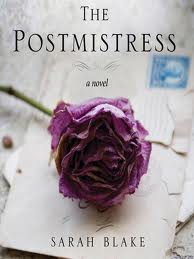
Last weekend, my wife and I were discussing the 2010 novel The Postmistress, a book she consulted in order to see how other writers handle fictional material set in World War Two.  She feels there are many positive aspects to The Postmistress, but one important facet of the novel seems troubling.  The book's hero, in an integral twist of the plot, travels to Europe with a portable recording device.  (This is early in the war, before direct U.S. involvement.) There she records accounts of ordinary people taking part in a widespread exodus from Nazi-controlled territories. The problem?  The recording technology the character uses was not invented until several years after the end of the war.  Okay, you might say, that's an anachronism--apparently a pretty big one--but they happen sometimes, don't they, in historical fiction?  If a writer is too sure of her own conception of reality, one shaped by the era she lives in, and if she isn't sufficiently thorough in her research, mistakes happen.  Yes, they do.  And inevitably readers catch those mistakes and advertise them, and sometimes they disable a book's essential credibility--or the author's.  But from whom did my wife find out that the portable recording technology was not invented until well after the end of the war?  The author herself!  In the author's own afterword!  Yes, Sarah Blake, author of The Postmistress, wrote an afterword in which, while describing the extensive research she undertook for the sake of the book, she also admits that the recording technology depicted in her World War Two novel did not exist during World War Two.  One can only conclude that Ms. Blake is more upset by the possibility that readers would think she's ignorant than by the possibility that they think she's being deceitful.


Wait a minute.  Sorry about that.  One should never talk about aesthetic decisions in moralistic terms.  This is an author's choice, not a crime.  But we should admit that there's a kind of historical fiction code that Ms. Blake broke along the way to completing The Postmistress.  Let me step back for a second and admit--as I have in several occasions before--that my historical fictions are not always 100% accurate to biographical fact.  The most glaring example of this is inventing a whole  (and extremely short-lived) second attempt at an art dealing career that the historical Vincent Van Gogh never tried.  In that case I was guilty of knowingly departing from the historical record, something that certain authors of historical fiction claim one can never do under any circumstances.  But it seems to me there's a crucial difference between depicting something that didn't happen but could have and depicting something that could never have happened.  One of my professors in graduate school, a fine writer named Wendell Mayo, spent regular time in, and frequently wrote about, Lithuania.  His stories were sometimes criticized as being unlikely, unbelievable, too extraordinary.  Wendell didn't immediately dismiss the claims.  If someone who knew Lithuania well (like, say, a Lithuanian) objected to a plot element on grounds of credibility, he tried out to find out more from the person.  "You mean this could never happen?" he might ask. Sometimes the answer was yes.  And that, for Wendell, was a legitimate concern.  Most of the time, however the answer was something closer to: "No; it's not impossible; it's just not likely.  I can't see it."  Or: "Well, I've never heard of it happening!"  That was good enough for Wendell.  As long as a situation was theoretically possible, it was fair game for fiction; which is, after all, fiction.


Applying Wendell's rule of thumb, you can see the problem with The Postmistress.  Ms. Blake hasn't developed an improbable plot but an impossible one.  Unless, that is, she's writing not for and about our commonly shared and understood reality but the reality of the multiverse, in which, due to its infinite number of universes and infinite number of chronologies, every possibiity, even the impossible ones, are somewhere realized.   But that certainly isn't how writers of historical fiction typically define what they do--or ever define what they do.  And it's certainly no claim made anywhere else in The Postmistress, which, last I heard, was not being talked about as science fiction.

Monday, September 10, 2012

Lies or truth

0


We had an interesting discussion in writing class the other night, a discussion stemming from John Gregory Brown's wonderful essay, "Other Bodies, Ourselves: The Mask of Fiction."  Most of Brown's essay seemed inarguable and long overdue when he published it in Julie Checkoway's Creating Fiction over a decade ago.  Brown's thesis is quite simple: As fiction writers we tend to avoid presenting in our novels and stories the facts of our lives; typically, we employ characters that in significant, meaningful ways are different from ourselves, characters with biographies that are all but alien from--and probably way more bizarre than--our own.   However (and here's the rub), even as we invent and extend these fanciful stories about people whose lives are so unlike are own, we may at the same time--certainly not always but at least some of the time--be literally laying ourselves bare for the whole world to see.  Does this sound like a contradiction?  Of course it does.  Because it is.  But it's also true.  As Brown explains, the contradiction is based in the fact that the author rarely if ever intends to lay himself bare or even realizes he is doing so.  Brown gives the example from his own career about a novel he was writing during the period that his wife gave premature birth to twins, one of whom did not survive and the other of whom had to remain in the hospital, strapped to machines, for several weeks running.  Early in the morning, he composed new sections of his novel, and then he and his wife made the long, sad drive to the hospital to visit their lone surviving child, the one kept alive by machines.   During these trips his wife read and commented on what Brown wrote that morning.  Brown explains that while he never realized it at the time, looking at the book now he sees nothing in his protagonist's inner life but the shock and grief he himself was struggling through then.  Understand, there is no dead baby and no sick baby in the protagonist's life, but her form of sadness is identical, Brown says, to his own at the time.  He wrote his life into the novel unconsciously and unintentionally.  But, I suppose, inevitably.

It's a common notion, and a true one, that a writer invests many of her characters with different pieces of herself, so much so that everyone in the story can be said to be a form of the writer even when they are extremely unlike one another.  I've heard this point made--it was made the other night by one of my students--and I understand it.  I've done just this thing myself many times, maybe every time.  But it's also a more conscious effort, and a more purposeful kind of kinship, than what Brown describes in "The Mask of Fiction."  Brown is talking about how the metaphors and parallels we subterraneously employ are truer  to the facts of our lives than any actual facts we could write.  I had an experience similar to Brown's several years ago with a story I wrote not long after my father died (tragically and accidentally).  The story features a former circus bear who lives in a big picture window at the front of a hardware store.  The hardware store owner sees this set-up as a kindness to the bear, whose career is over, its fame used up.  The narrator's father takes a shining to the bear and in the process takes a shining to the hardware store owner, a man he has never had much patience for.  But as the story winds down, the bear dies, upending at least three separate lives in the world of the story, leaving the picture window newly and nakedly empty.  Well, I swear to you that all I thought I was doing when I composed that story was taking a pleasantly perverse idea--an ex-dancing bear who lives in a hardware store window--and running with it to a dramatically satisfying end.  Not until I presented the story to a friend's class and answered questions about it did it hit me what I had been doing: writing down the raw shock of the loss of my father.  The story screams it; it's in every line.  But no one who does not know me privately would ever be able to see it.  Because I never intended to do it in the first place.

The question we finally got to in class, however, is even more sticky: Does such representation (really masking) count as a truth or a lie?  Brown repeats and repeats in the essay that oft cited claim: "fiction writers are great liars."   That notion has never sat very well with me, and I'm in a mindset now where, as much as I love Brown's essay, I think he's completely wrong on the point.  It's not a lie if I'm telling you from the get-go that what you're reading is a story.   If I call something a "short story" when I present it to a magazine that means something significant to me, and the reader is to blame if the reader assumes that the specific events of the story really happened.  A lie, by definition, is a purposeful deception.  There's nothing purposeful in the deceptions of fictions, which can't be counted as deceptions anyway but mutually agreed upon fabrications.  Besides, I try to suggest above, the most deeply deceived person can be the fiction writer himself.  Often times when we study stories in my classes, my students will ask "Did this really happen?" Or they might say "This reads like a memoir not a fiction" (which usually just means that it is a first person narrative).  In response I say the same thing to them every time: "I cannot tell you if any of this is factually true.  But the textbook--or the magazine or the story collection--has identified this piece as 'fiction,' which means that is how the author identified it.  I am going to respect that designation and assume every single thing in the piece is imaginary unless told otherwise."   And what I added the other night, and meant from the very bottom of my heart, was this: "It's the writer of narrative nonfiction who tells a hundred lies on every page--way more lies than any fiction writer ever will--because the writer of nonfiction claims her essay to be factually true when as writers we know that many details, even those from our own lives, especially those from our own lives, must be invented.  Memory itself is an invention."  As for the broader and deeper and more naked truths about the author that his fiction reveals, I tend to stay silent, because that's not what the student is really asking when he asks, "Did this really happen?"  As for those truths, as Brown's essay shows, all one can say is this rather unhelpful this: No it never happened; it never happened at all; it actually happened a lot worse.